
Defining the Two Terms Clearly
These two words are used interchangeably in fitness circles, but they describe different physical qualities. Understanding the difference helps you train more deliberately - and get better results.
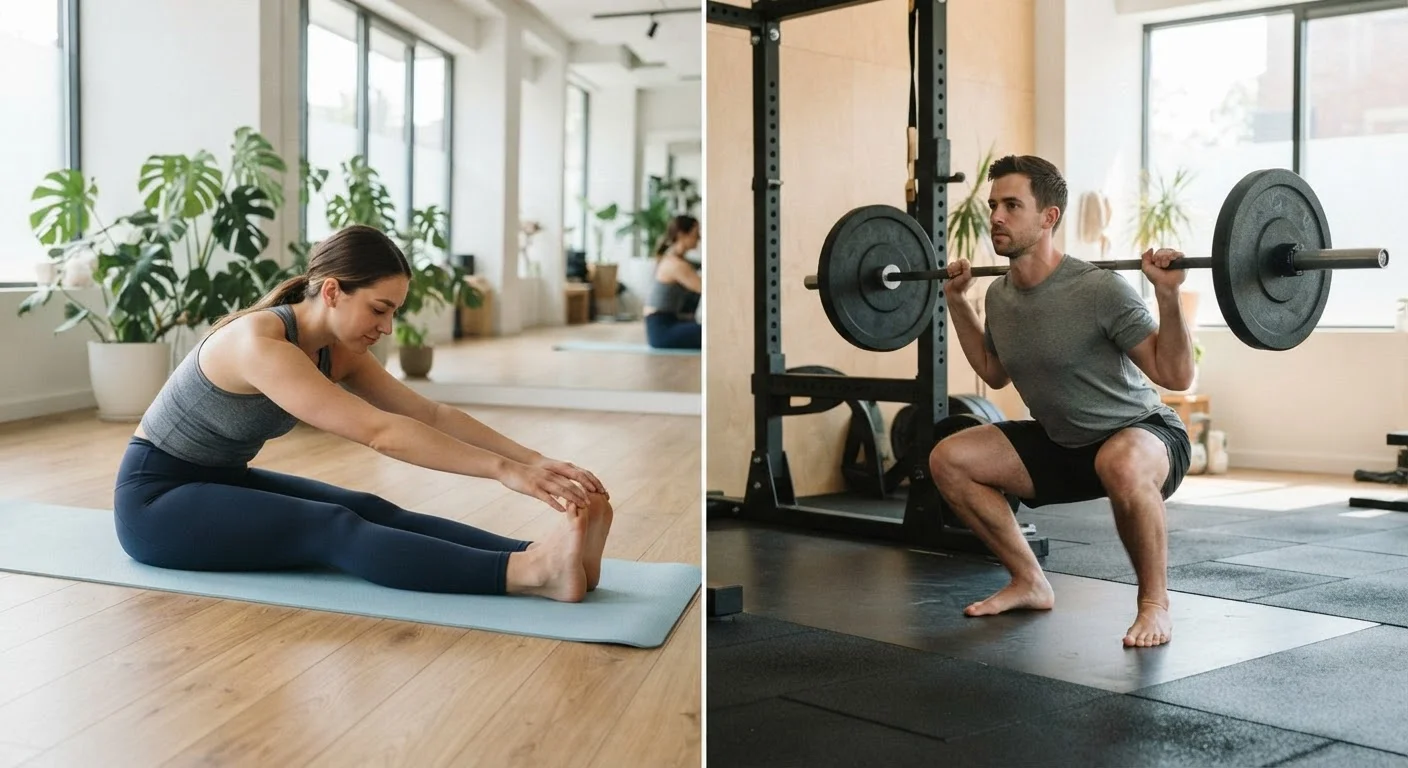
Flexibility is the ability of a muscle or muscle group to passively lengthen. Think of it as the raw range your muscle can reach when an external force - gravity, a strap, or a partner - assists the stretch. A classic example is a seated hamstring stretch: you lean forward, and your hamstrings lengthen toward their limit.
Mobility is the ability to move a joint actively through its full range of motion with control. It requires strength, coordination, and neuromuscular awareness - not just length. A deep squat is a mobility exercise: your hips, knees, and ankles must all move through wide ranges while your muscles actively stabilise the position.
The key distinction: flexibility is passive, mobility is active. You can have good flexibility - long hamstrings - and still lack the hip mobility needed to squat cleanly. Length without control has limited functional value.
| Criterion | Flexibility | Mobility |
|---|---|---|
| Core definition | Passive muscle lengthening | Active joint control through full range |
| Requires muscular effort? | No - gravity or assistance does the work | Yes - muscles engage throughout |
| Primary training method | Static and passive stretching | Dynamic drills and active range-of-motion work |
| Best time to train | Post-workout cool-down | Pre-workout warm-up and standalone sessions |
| Injury prevention role | Moderate - reduces muscle tightness | High - improves joint stability and control |
| Functional movement benefit | Indirect - creates length potential | Direct - improves how you actually move |
Why the Difference Actually Matters
For beginners, this distinction shapes which exercises to prioritise. Many people focus exclusively on static stretching and assume that becoming more flexible will automatically make them move better. That is only partially true.
Flexibility lays the groundwork - if a muscle is so tight it cannot lengthen, mobility is limited by default. But once adequate length is present, the limiting factor shifts to control. Your nervous system needs to learn how to use that range of motion safely and powerfully.
This is why functional fitness training places heavy emphasis on mobility. Movements like bending to pick something up, reaching overhead, or climbing stairs all require joints to move through ranges your muscles must actively govern. Passive flexibility alone will not cut it.
~25%
Decline in joint mobility by age 70
Research in exercise science consistently shows significant age-related reductions in range of motion, underscoring why proactive training matters.
2-3x/week
Recommended mobility training frequency
The American College of Sports Medicine recommends flexibility and mobility work at least two to three days per week for measurable improvements.
Mobility training also plays a direct role in injury prevention. When a joint cannot move properly, neighbouring joints and tissues compensate - a common cause of chronic lower-back and knee problems. Restoring mobility reduces this compensatory load.
How to Train Each Quality
The good news: both flexibility and mobility respond well to consistent, progressive training. Here is how to approach each.
Training Flexibility
- Static stretching: Hold a stretch for 20-60 seconds after exercise when muscles are warm. Common targets include hamstrings, hip flexors, chest, and shoulders.
- Passive stretching with props: Straps, blocks, and rolled towels allow you to reach deeper positions without muscular effort.
Training Mobility
- Dynamic stretching: Controlled, rhythmic movements - leg swings, arm circles, hip circles - that move joints through their range before exercise.
- Active range-of-motion drills: Exercises like deep squat holds with active engagement, cat-cow movements, or thoracic rotations build strength within a range, not just length.
- Yoga and movement flows: Many yoga styles develop both qualities simultaneously, making them effective dual-purpose tools.
As part of a broader program, these complement cardio and strength training to support a complete, well-rounded approach to fitness.
A Note for Special Populations
If you have a joint condition, a history of injury, or chronic pain, flexibility and mobility exercises that feel appropriate for healthy adults may not be right for you without modification. Consult a physiotherapist or qualified exercise professional before starting a new stretching or mobility program. This content is general health information and is not a substitute for personalised medical advice.