
Why Hormone Myths Persist — and Why They Matter
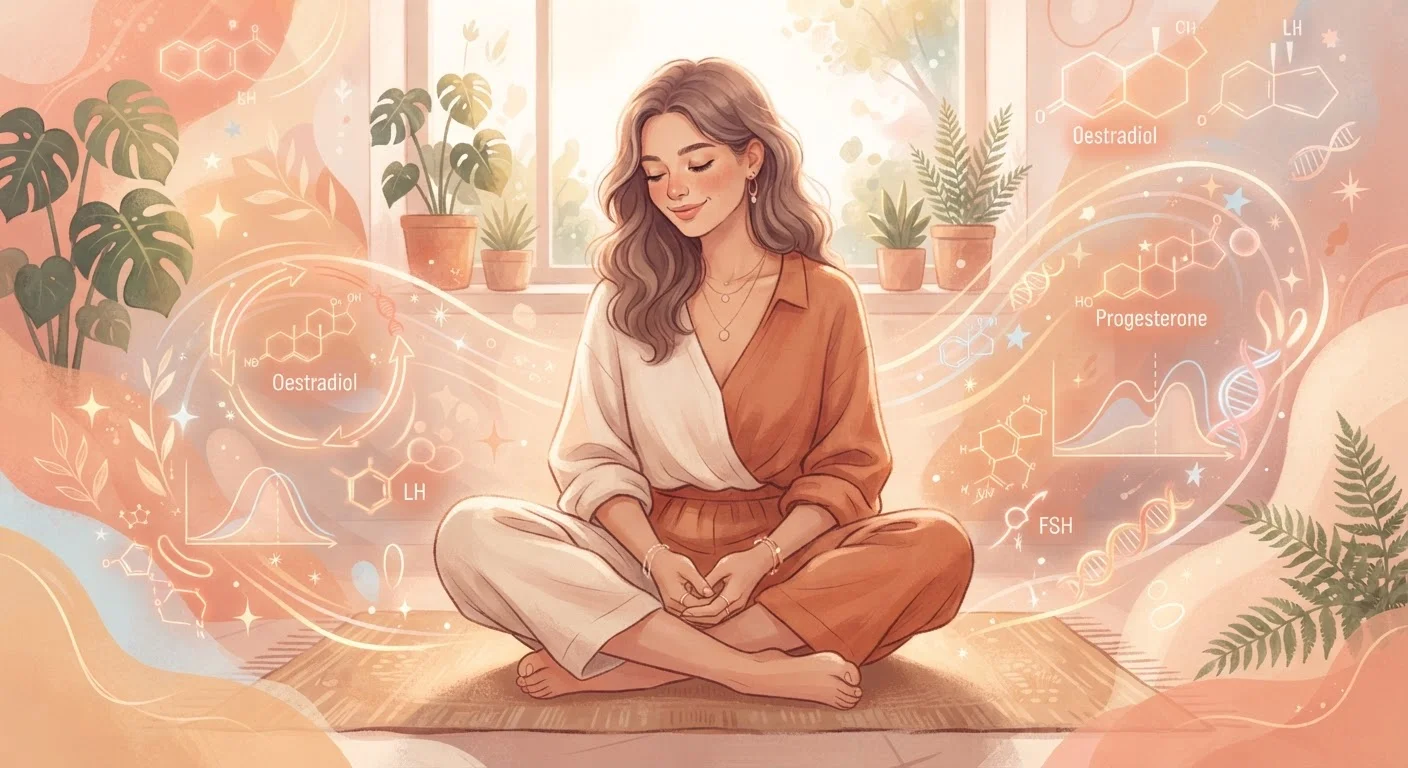
Female hormones have long been misrepresented — used to explain away emotions, pathologize normal biology, or oversimplify complex health experiences. These myths are not harmless: they can delay appropriate care, fuel stigma, and leave women second-guessing real symptoms. Getting the facts straight isn't just an academic exercise; it shapes how women advocate for themselves in clinical settings and everyday life.
Below, we work through five of the most pervasive misconceptions — and what the science actually supports.
Myth
Women are controlled by their hormones, especially when it comes to emotions.
Fact
Hormones influence emotional processing, but they don't override a person's agency, reasoning, or emotional experience.
This myth reduces complex human experience to a single biological variable — and it simply doesn't hold up. Estrogen and progesterone do interact with neurotransmitter systems involved in mood, such as serotonin. But research consistently shows that emotional responses are shaped by a constellation of factors: life circumstances, sleep quality, social support, stress levels, and individual psychology. Attributing a woman's feelings solely to hormones is both scientifically inaccurate and dismissive. For a deeper look at how emotions work, see our article on common myths about emotions.
Myth
PMS is mostly psychological — women dramatize or exaggerate it.
Fact
Premenstrual syndrome (PMS) is a clinically recognized condition with documented physiological underpinnings.
PMS affects an estimated 20–40% of women of reproductive age, according to research published in peer-reviewed gynecological literature. Symptoms — including bloating, breast tenderness, fatigue, and mood changes — are linked to shifts in estrogen and progesterone during the luteal phase of the cycle. In more severe cases, premenstrual dysphoric disorder (PMDD) involves significant neurological sensitivity to these hormonal changes. Dismissing these experiences as exaggeration delays appropriate care and reinforces harmful stigma.
Myth
If your hormones fluctuate throughout the month, something is wrong.
Fact
Hormonal fluctuation across the menstrual cycle is entirely normal and necessary for reproductive health.
Estrogen, progesterone, luteinizing hormone (LH), and follicle-stimulating hormone (FSH) all rise and fall in predictable patterns throughout a healthy cycle. These changes drive ovulation and prepare the body for potential pregnancy. Variation is not dysfunction — it is the system working as designed. Concerns arise when levels fall significantly outside established clinical ranges, or when symptoms disrupt daily functioning. Understanding what each hormone actually does can help you interpret your own cycle more clearly.
Myth
Testosterone is a male hormone — women don't really need it.
Fact
Testosterone is produced naturally in women and plays meaningful roles in energy, libido, bone density, and muscle function.
While women produce testosterone in smaller quantities than men — primarily in the ovaries and adrenal glands — it is far from irrelevant to female health. Research indicates that testosterone contributes to sexual desire, mood stability, cognitive function, and maintaining lean muscle mass. Levels naturally decline with age, particularly around menopause. Framing testosterone as exclusively male ignores the hormonal complexity present in all bodies.
Myth
Irregular periods always mean a serious hormonal disorder.
Fact
Cycle irregularity has many possible causes, ranging from stress and nutrition to sleep disruption — not all of them pathological.
Occasional cycle variation is common and doesn't automatically signal a disorder like polycystic ovary syndrome (PCOS) or thyroid disease. Intense physical stress, significant changes in body weight, sleep deprivation, and illness can all temporarily disrupt the hypothalamic-pituitary-ovarian (HPO) axis that regulates the menstrual cycle. That said, persistent irregularity lasting multiple cycles warrants clinical evaluation. Misreading hormonal health information is a common problem — our article on how people misread hormonal health information explains the most common pitfalls.
What "Hormonal Imbalance" Actually Means
Few phrases circulate more freely in wellness culture than "hormonal imbalance" — and few are used more loosely. In clinical practice, a hormonal imbalance refers to a measurable deviation from established reference ranges, often confirmed through blood panels interpreted alongside a patient's cycle timing, symptoms, and medical history.
Don't Self-Diagnose a "Hormone Imbalance"
Online content frequently uses "hormonal imbalance" as a vague explanation for fatigue, mood shifts, or weight changes. These symptoms can have many causes. Seeking a proper clinical assessment — including blood work interpreted in cycle context — is the only reliable way to identify what's actually going on.
Conditions such as PCOS, hypothyroidism, and hyperprolactinemia all involve specific, testable hormonal disruptions. Broad, unqualified claims that vague symptoms like tiredness or low mood reflect a "hormone problem" frequently lack diagnostic grounding. If you're navigating menopause and hearing conflicting information, our piece on menopause misconceptions that delay support addresses similar evidence gaps.
20–40%
Women of reproductive age affected by PMS
Estimates from peer-reviewed gynecological research suggest PMS affects a significant proportion of menstruating women, with symptom severity varying widely.
~5–8%
Women meeting clinical criteria for PMDD
The American College of Obstetricians and Gynecologists recognizes PMDD as a distinct, diagnosable condition affecting a smaller subset of women with severe premenstrual symptoms.
This article is for informational purposes only and is not a substitute for professional medical advice, diagnosis, or treatment. Always consult a qualified healthcare provider with questions about your health.