
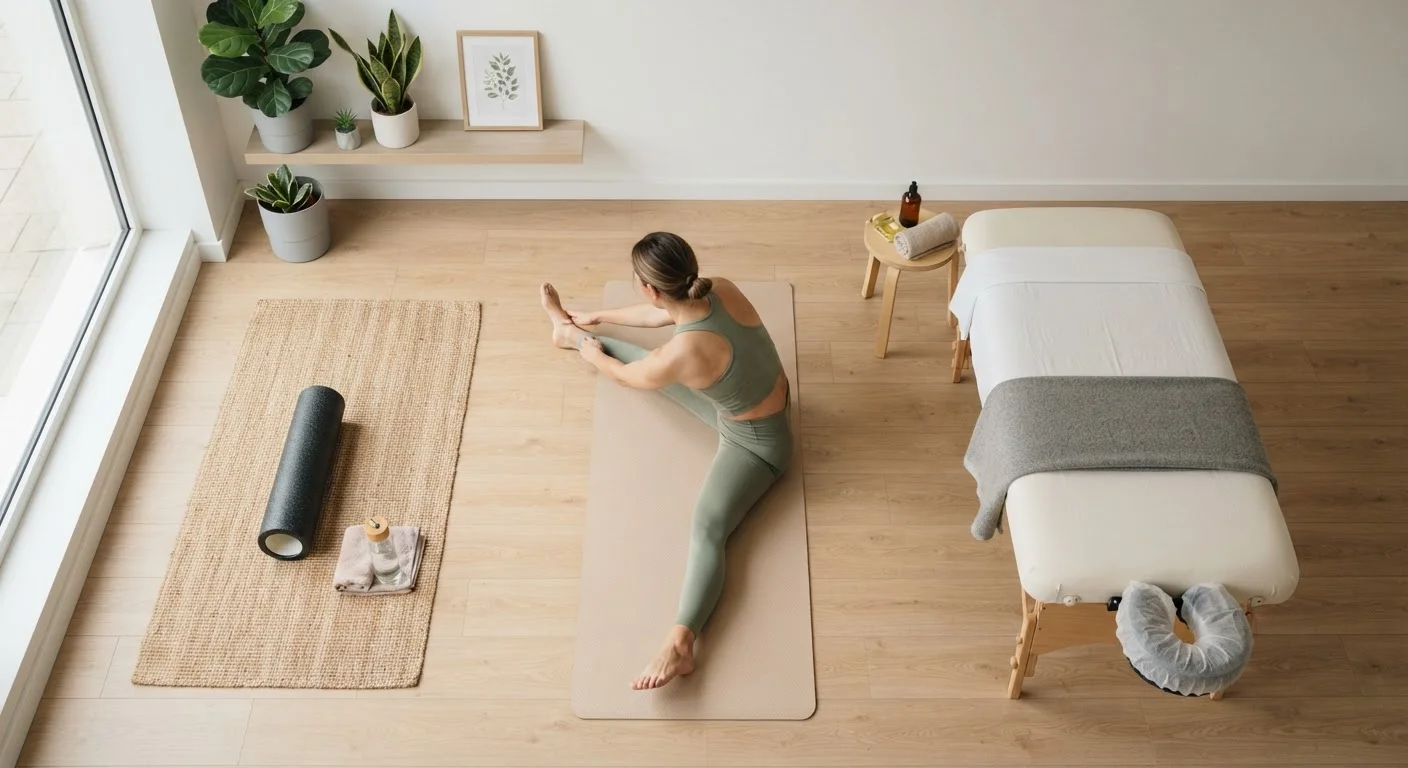
Why Recovery Deserves Your Attention
Many beginners invest heavily in their workouts and barely nothing in recovery. Yet recovery is the phase when your body actually adapts - muscles repair, strength builds, and endurance improves. Without it, progress stalls and injury risk climbs.
Physical recovery methods like foam rolling, stretching, and massage are three of the most widely used tools for supporting this process. They're not interchangeable, though. Each works through a different mechanism and suits different situations. Understanding what each one actually does helps you use them more intentionally. For a broader picture of what recovery involves, see our complete guide to workout recovery.
How Each Method Works
Foam Rolling - also called self-myofascial release - uses a cylindrical foam tool to apply sustained pressure to muscles and connective tissue. The theory is that this pressure helps release tension in the fascia (the web of tissue surrounding muscles) and may improve blood flow to the area. Research suggests foam rolling can reduce muscle soreness after exercise and temporarily improve range of motion, though the exact mechanisms are still being studied.
Stretching involves deliberately lengthening a muscle or group of muscles. Static stretching (holding a position for 20-60 seconds) is best suited to post-workout cooldowns and flexibility work. Dynamic stretching (controlled movement through a range of motion) is more appropriate before exercise to prepare joints without reducing muscle power output. Stretching consistently over time may improve joint mobility and reduce stiffness.
Massage - whether performed by a licensed massage therapist or through guided techniques - uses manual pressure, kneading, and movement to work on soft tissue. Compared to foam rolling, massage can access deeper tissue layers and be more precisely targeted. Some research supports massage for reducing delayed-onset muscle soreness (DOMS) and perceived fatigue, though effects vary by technique and individual.
| Foam Rolling | Static Stretching | Dynamic Stretching | Massage | |
|---|---|---|---|---|
| Primary benefit | Releases fascial tension, reduces soreness | Improves flexibility and cooldown | Prepares joints for movement | Reduces soreness, aids tissue recovery |
| Best timing | Before or after exercise | After exercise or rest days | Before exercise | After exercise or rest days |
| Cost | Low (one-time equipment) | Free | Free | Moderate to high (professional) |
| Requires professional | No | No | No | Recommended for deep work |
| Evidence strength | Moderate | Moderate | Moderate | Moderate to good |
| Suitable for beginners | Yes, with basic guidance | Yes | Yes | Yes, with licensed therapist |
When to Use Each One
Timing matters as much as technique. Here's a general framework - though what works best for you may differ based on your fitness level and goals:
- Before a workout: Dynamic stretching is preferred to warm up joints and muscles. Foam rolling briefly before exercise may help ease tightness in specific areas.
- Right after a workout: Static stretching and light foam rolling are both well-suited to this window when muscles are warm and pliable.
- On rest days: Any of the three methods can be used gently. Massage is particularly useful here when soreness from a tough session lingers.
If you're new to fitness and unsure how recovery fits into your schedule, this beginner's guide to building recovery into your routine lays out a simple structure to follow.
Combine Methods for Better Results
Foam rolling and stretching work well together - try two to three minutes of foam rolling on tight areas, then follow with static stretches targeting the same muscles. This sequence may help you get more out of each technique than using either alone. Consistency over weeks matters more than any single session.
Practical Considerations and Limitations
No recovery method eliminates the need for sleep, hydration, and nutrition - these remain foundational. Physical recovery techniques work best as complements to those basics, not replacements. You can explore how sleep supports full recovery as part of your overall wellness plan.
It's also worth being skeptical of bold claims. Some marketed recovery tools overstate the evidence. Our article on recovery myths that may be holding back your fitness separates what's well-supported from what's still speculative.
Avoid Foam Rolling Over Injuries
Foam rolling directly over a recent injury, inflamed joint, or bruised area can worsen the problem rather than help. If a specific area is acutely painful, skip it and consult a healthcare provider before resuming. More pressure does not always mean more benefit - uncomfortable pressure that causes you to hold your breath is generally too much.
Finally, these methods are general wellness tools - not medical treatments. If you have an injury, chronic pain, or a health condition, speak with a qualified healthcare professional before adding new recovery techniques to your routine.
This article is for informational purposes only and does not constitute medical advice. Always consult a qualified healthcare professional for guidance specific to your health needs.