
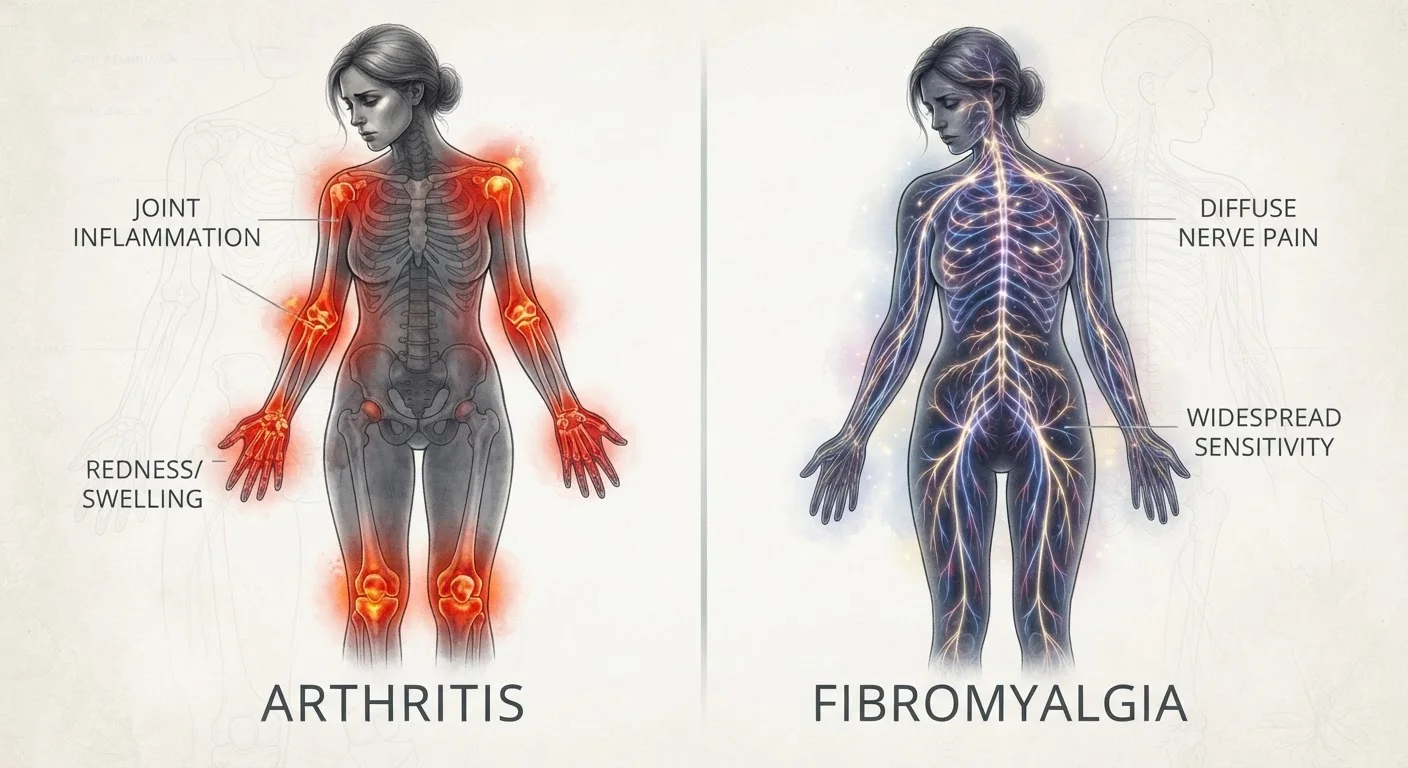
What Each Condition Actually Is
Chronic pain is not a single phenomenon - it has many causes, mechanisms, and presentations. Arthritis and fibromyalgia are two of the most common chronic pain conditions in the United States, and they are frequently confused because both can cause persistent, debilitating discomfort. However, they arise from fundamentally different processes in the body.
Arthritis is an umbrella term for more than 100 conditions that involve joint inflammation, damage, or deterioration. The two most common types are osteoarthritis - where cartilage (the cushioning tissue between bones) breaks down over time - and rheumatoid arthritis, an autoimmune disease in which the immune system mistakenly attacks the joint lining. In both cases, there is a structural or immunological basis for the pain that can often be detected through physical examination, blood tests, or imaging like X-rays and MRIs.
Fibromyalgia, by contrast, is not a joint disease. It is a condition characterized by central sensitization - a process in which the brain and spinal cord amplify pain signals, making the nervous system hypersensitive to stimuli that would not normally cause pain. There is no tissue damage driving the pain. Instead, the pain processing system itself is dysregulated. This distinction is crucial, because it shapes how the condition is diagnosed and managed.
This article is for general informational purposes only and is not a substitute for professional medical advice, diagnosis, or treatment. Always consult a qualified healthcare provider with questions about your symptoms.
How Doctors Tell Them Apart
Differentiating between arthritis and fibromyalgia begins with a careful history and physical examination. Because fibromyalgia leaves no detectable structural damage, doctors largely rely on the pattern, distribution, and character of symptoms rather than lab findings alone.
| Criterion | Arthritis | Fibromyalgia |
|---|---|---|
| Primary cause | Joint inflammation or structural damage | Nervous system pain amplification |
| Pain location | Localized to specific joints | Widespread, bodywide |
| Detectable on imaging | Often yes (X-ray, MRI) | No structural abnormality |
| Blood test markers | May be elevated (inflammatory/immune markers) | Typically normal |
| Fatigue and sleep issues | Common but secondary | Core defining features |
| Cognitive symptoms ("brain fog") | Less typical | Very common |
| Diagnosis method | Clinical + lab + imaging | Symptom criteria only |
Arthritis typically presents with joint-specific pain - stiffness that is worst in the morning and improves with movement (in inflammatory types), swelling, warmth, or reduced range of motion in affected joints. Blood markers such as rheumatoid factor, anti-CCP antibodies, or elevated inflammatory markers (CRP and ESR) can support a rheumatoid arthritis diagnosis. Osteoarthritis may show characteristic changes on X-ray.
Fibromyalgia, under the American College of Rheumatology's widely used 2010 diagnostic criteria, is identified by widespread pain lasting at least three months, along with symptoms such as fatigue, unrefreshing sleep, and cognitive difficulties (sometimes called "fibro fog"). Importantly, standard blood work and imaging typically return normal results, which can be frustrating for patients who feel their pain is being dismissed. It is not - normal tests simply reflect that the problem lies in pain signaling, not tissue damage.
Understanding what is often misunderstood about chronic pain can help patients navigate these diagnostic conversations with greater confidence.
Managing Each Condition: Key Differences
Because the underlying mechanisms differ, the most effective management strategies also differ - though there is meaningful overlap in lifestyle approaches.
58.5M
U.S. adults with arthritis
The CDC estimates approximately 58.5 million American adults have been diagnosed with some form of arthritis.
4M
U.S. adults with fibromyalgia
The CDC estimates roughly 4 million U.S. adults - about 2% of the population - are affected by fibromyalgia.
2-7 years
Average fibromyalgia diagnosis delay
Research published in rheumatology literature suggests patients with fibromyalgia often wait years from symptom onset to confirmed diagnosis.
For arthritis, treatment typically focuses on reducing joint inflammation and preserving function. This may include anti-inflammatory medications, disease-modifying drugs for rheumatoid arthritis, physical therapy to maintain joint mobility, and in advanced cases, surgical interventions. Weight management is particularly important in osteoarthritis, as excess weight increases mechanical load on joints.
For fibromyalgia, management centers on calming an overactive pain-processing system. Evidence-based approaches include aerobic exercise (shown in multiple clinical studies to reduce fibromyalgia symptom severity), cognitive behavioral therapy (CBT), sleep hygiene improvements, and certain medications that act on neurotransmitter systems. The FDA has approved specific medications for fibromyalgia, though a healthcare provider must determine what is appropriate for each individual.
Both conditions benefit from multidisciplinary care - meaning a team approach involving primary care, rheumatology, physical therapy, and sometimes mental health support. Stress management, pacing activity, and building consistent sleep routines are broadly helpful across both diagnoses. Readers managing either condition may also find it useful to review common misconceptions about chronic pain management to avoid pitfalls that can delay effective care.
Treatment decisions should always be made in partnership with a licensed healthcare provider who can evaluate your individual health history and needs.