
What Chronic Kidney Disease Is - and Why It Matters
Chronic kidney disease (CKD) occurs when the kidneys are progressively damaged over time and can no longer filter blood as effectively as they should. Unlike an acute kidney injury that may resolve, CKD is a long-term condition that tends to worsen gradually - often without any obvious warning signs in its earlier stages.
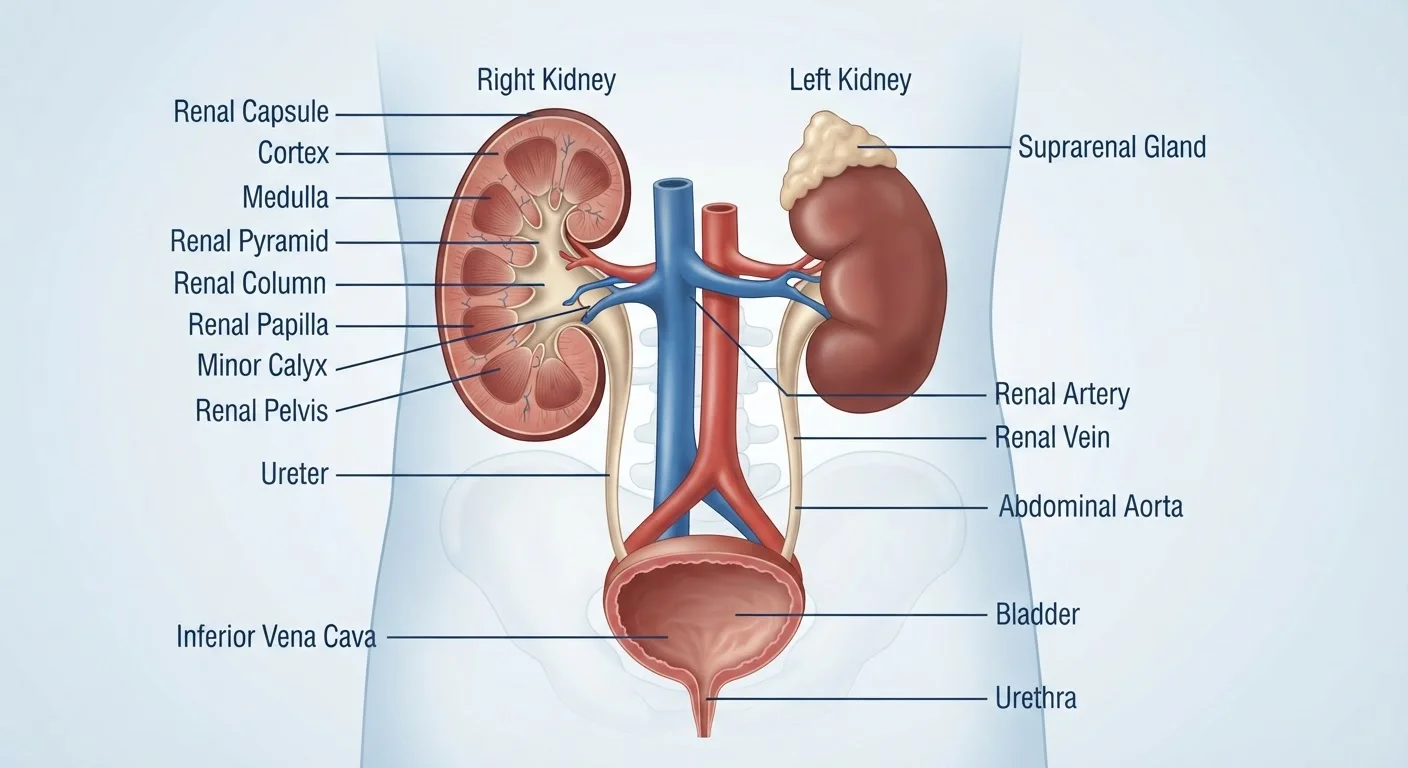
The kidneys perform essential functions: removing waste and extra fluid from the blood, balancing minerals like sodium and potassium, producing hormones that regulate blood pressure and red blood cell production, and helping maintain bone health. When these functions decline, the effects ripple across nearly every system in the body.
Because CKD often develops silently, it is considered a major public health concern. Understanding what living with a chronic condition actually means can help frame why early detection and consistent monitoring matter so much.
| Estimated US adults with CKD | ~37 million (National Kidney Foundation) |
| Awareness among those affected | ~9% know they have it (CDC Chronic Kidney Disease Surveillance System) |
| Leading causes of CKD | Diabetes and high blood pressure (National Institute of Diabetes and Digestive and Kidney Diseases (NIDDK)) |
| Number of CKD stages | 5 stages (G1-G5) (KDIGO 2022 Clinical Practice Guidelines) |
| Key diagnostic test | eGFR blood test + urine albumin-to-creatinine ratio (American Kidney Fund) |
The Five Stages of CKD: What Each One Means
CKD is classified into five stages based primarily on a measurement called the estimated Glomerular Filtration Rate (eGFR) - a blood test result that estimates how many milliliters of blood the kidneys filter per minute. Doctors also consider the degree of protein in the urine (proteinuria) when staging the disease.
Glomerular Filtration Rate (GFR)
A measure of how well the kidneys filter waste from the blood per minute. It is the primary number used to determine CKD stage; lower values indicate reduced kidney function.
Creatinine
A waste product produced by muscle activity that healthy kidneys filter out. Elevated creatinine in the blood is a key marker that prompts further kidney testing.
Proteinuria
The presence of abnormal amounts of protein (particularly albumin) in the urine. It signals that the kidney's filtering units are damaged and is an early warning sign of CKD.
End-Stage Renal Disease (ESRD)
The most advanced stage of CKD (Stage 5), in which the kidneys can no longer sustain life on their own. Treatment requires dialysis or a kidney transplant.
- Stage 1 (eGFR ≥ 90): Kidney function is normal or near-normal, but there is evidence of kidney damage - such as protein in the urine. No symptoms are typical at this stage.
- Stage 2 (eGFR 60-89): Mildly reduced function with signs of kidney damage. Still largely symptom-free. Risk factor management is the primary focus.
- Stage 3a / 3b (eGFR 45-59 / 30-44): Moderately reduced function. Some people begin experiencing mild fatigue, changes in urination, or mild fluid retention, though many still feel well.
- Stage 4 (eGFR 15-29): Severely reduced function. Symptoms become more likely - including fatigue, swollen ankles, shortness of breath, and difficulty concentrating. Planning for kidney replacement therapy typically begins here.
- Stage 5 (eGFR < 15): Known as kidney failure or ESRD. The kidneys can no longer sustain the body's needs. Dialysis or a kidney transplant becomes necessary to survive.
Progression through these stages is not inevitable or uniform. Many people with early-stage CKD, especially those who manage underlying conditions like diabetes or high blood pressure effectively, do not advance to later stages.
Recognizing Symptoms - and Why Silence Is Misleading
This Article Is General Health Information
The content here is intended for educational purposes only and does not constitute medical advice. CKD affects each person differently. If you have concerns about your kidney health, risk factors, or lab results, please speak with a qualified healthcare provider.
One of the most clinically significant aspects of CKD is how few symptoms it produces until function is substantially reduced. This is because the kidneys have considerable reserve capacity - meaning the body can compensate until a large portion of function is lost.
When symptoms do appear, they may include:
- Persistent fatigue and weakness
- Swelling (edema) in the legs, ankles, or feet
- Changes in urination frequency, color, or foaminess
- Shortness of breath
- Difficulty concentrating or "brain fog"
- Nausea, loss of appetite, or unintended weight loss
- Muscle cramps, especially at night
- Itchy or dry skin
These symptoms are non-specific - meaning they can be caused by many conditions. That is why symptoms alone are an unreliable screening tool. Routine blood and urine tests remain the most reliable way to detect CKD early, particularly for people with diabetes, high blood pressure, a family history of kidney disease, or those over age 60.
37 million
Americans estimated to have CKD
According to the National Kidney Foundation, most are undiagnosed because early stages produce no noticeable symptoms.
90%+
Of kidney function that can be lost before symptoms appear
The kidneys have a significant reserve capacity, which is why routine screening is so important for at-risk individuals.
~50%
Of CKD cases attributed to diabetes
The NIDDK identifies diabetes as the single largest contributor to chronic kidney disease in the United States.
Monitoring, Management, and What to Expect
A CKD diagnosis does not automatically mean dialysis is imminent. For most people - particularly those identified in Stages 1 through 3 - the priority is slowing progression and protecting remaining kidney function. This typically involves:
- Controlling blood pressure, often to a specific target your doctor will set
- Managing blood sugar carefully if diabetes is present
- Adjusting diet as recommended by a healthcare team (some people with CKD work with a renal dietitian)
- Avoiding medications or substances that can stress the kidneys, such as certain over-the-counter pain relievers
- Regular monitoring of eGFR and urine protein levels
As CKD advances to Stage 4 or 5, conversations with a nephrologist (a kidney specialist) about kidney replacement therapy - dialysis or transplantation - become an important part of care planning. Starting these conversations early allows time for informed decision-making and preparation.
If you or someone you care for has been told their kidney numbers are abnormal, or if you have risk factors for CKD, speaking with a healthcare provider about routine screening is the most important first step. Early-stage CKD, caught and managed well, offers the best opportunity to protect kidney health over the long term.
This article is for informational purposes only and does not constitute medical advice. Always consult a qualified healthcare professional for guidance on your specific health situation, test results, or treatment options.