
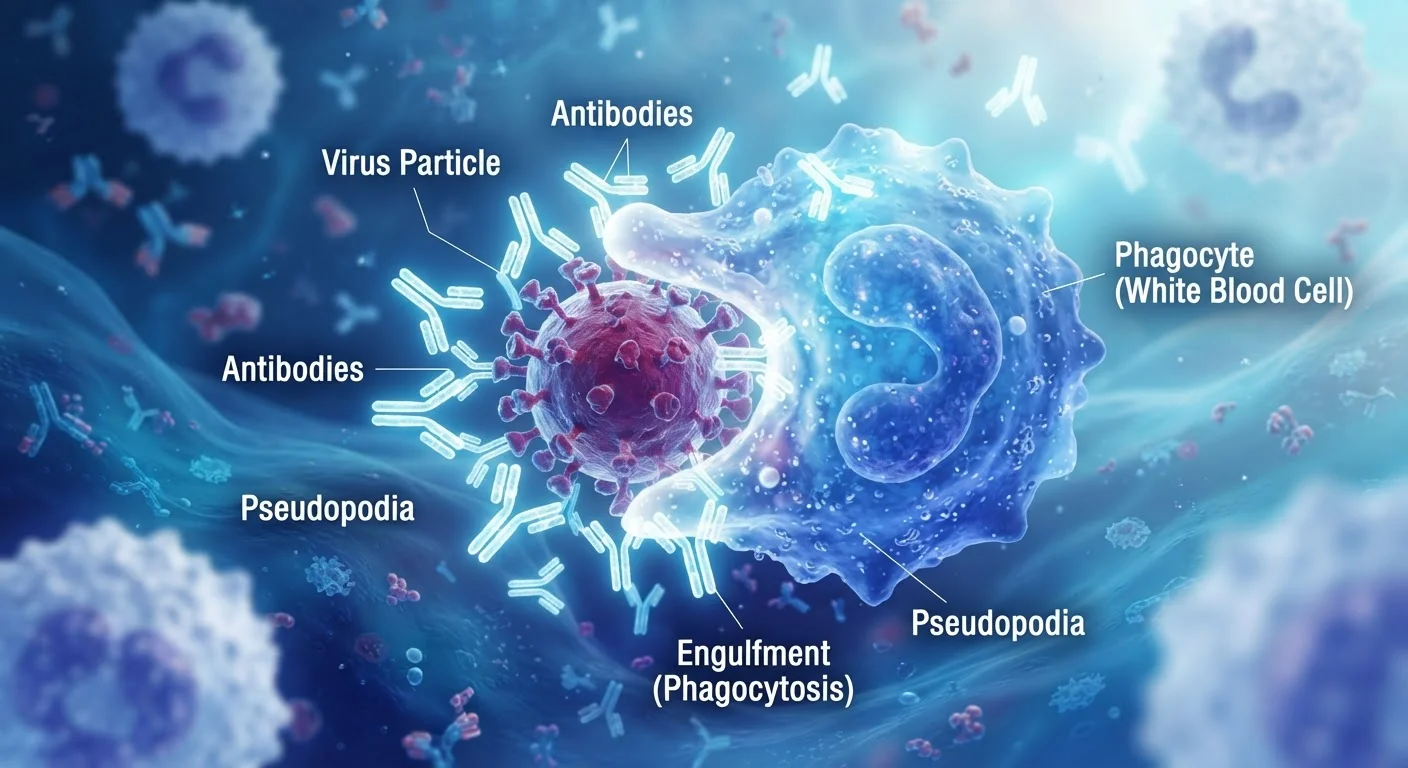
What the Immune System Actually Does
The immune system is the body's dedicated defence network - a collection of cells, tissues, proteins, and organs working together to identify and eliminate threats. Rather than a single organ, it is a distributed system. Key players include white blood cells (leukocytes), the lymphatic system, the bone marrow, the spleen, and physical barriers like skin and mucous membranes.
Its primary job is surveillance: distinguishing the body's own healthy cells from foreign material. When something unfamiliar - a virus, a bacterium, or a toxin - enters the body, immune cells detect molecular markers called antigens (substances that trigger an immune response) and begin a coordinated effort to contain and destroy the threat.
Antigen
A molecule - usually a protein on the surface of a pathogen - that the immune system identifies as foreign and mounts a response against.
Pathogen
Any microorganism or agent - such as a virus, bacterium, fungus, or parasite - capable of causing disease in a host.
Antibody
A Y-shaped protein produced by B cells that binds specifically to an antigen, neutralising it or flagging it for destruction.
Innate immunity
The immune system's rapid, general-purpose first line of defence that responds to threats immediately without targeting a specific pathogen.
Adaptive immunity
The slower, highly targeted branch of the immune system that learns to recognise specific pathogens and retains that knowledge as immune memory.
Inflammation
A controlled biological response - involving redness, heat, swelling, and pain - that signals the immune system to mobilise resources to a site of infection or injury.
Immunocompromised
Describes a state in which the immune system cannot respond normally to threats, due to disease, medication, or other factors.
Memory cells
Long-lived B and T cells that persist after an infection is cleared, allowing the immune system to respond faster if the same pathogen is encountered again.
For a plain-language reference on the terms used throughout this guide, see the Infectious Disease Glossary.
How Infections Enter and Spread Inside the Body
Infectious diseases are caused by pathogens - organisms or particles that can harm a host. The four main categories are bacteria, viruses, fungi, and parasites. Each uses distinct strategies: bacteria may release damaging toxins; viruses hijack host cells to replicate; fungi thrive in warm, moist environments; parasites often have complex life cycles involving multiple hosts.
Pathogens gain entry through several routes: the respiratory tract (inhaled droplets or aerosols), the gastrointestinal tract (contaminated food or water), breaks in the skin, the mucous membranes of the eyes or genitals, and bites from insects or animals. Environmental factors - crowding, ventilation quality, and sanitation infrastructure - significantly shape how quickly a pathogen moves through a community. The reasons infections spread faster in some environments are well-documented and worth understanding.
Once inside, a pathogen must evade initial defences, find suitable cells or tissues to colonise, and replicate in sufficient numbers to cause symptoms. The period between exposure and symptom onset - known as the incubation period - varies from hours to weeks depending on the organism involved.
The Two-Layer Defence: Innate and Adaptive Immunity
Immunologists describe the immune response as operating in two interconnected layers.
Innate Immunity: The Fast-Response Force
The innate immune system reacts within minutes to hours. It does not distinguish between specific pathogens - it responds to general signs of threat, such as unfamiliar molecular patterns. Physical barriers (skin, cilia in airways, stomach acid) form the first line. Behind them, innate immune cells such as neutrophils and macrophages engulf and destroy invaders in a process called phagocytosis. This layer also triggers inflammation - redness, heat, swelling, and pain - which is a controlled alarm signal designed to isolate the threat and recruit more immune cells.
Adaptive Immunity: The Precision Strike
If the innate system cannot resolve the infection alone, the adaptive immune system activates over days. It is highly specific: B cells produce antibodies that bind to a particular antigen, while T cells either directly kill infected cells or coordinate the broader response. Crucially, after an infection is cleared, some B and T cells persist as memory cells. If the same pathogen is encountered again, the response is dramatically faster and stronger - the basis of both natural immunity and vaccination.
Vaccination Trains Your Adaptive System
Vaccines work by presenting the adaptive immune system with a harmless representation of a pathogen - such as an inactivated virus or a specific protein fragment - so memory cells can be created without causing disease. This means that if you later encounter the real pathogen, your body recognises it and responds far more quickly. Keeping vaccinations up to date is one of the most evidence-backed ways to support infection resistance.
For a detailed look at how these immune processes play out during a respiratory infection, see our guided overview of respiratory infections.
When the Immune System Is Overwhelmed
Most of the time, the immune system clears infections without the person even noticing. But in certain circumstances, pathogens gain the upper hand - or the immune response itself becomes the problem.
Sepsis is a life-threatening condition in which the immune response to an infection spirals out of control, damaging the body's own tissues and organs. It is a medical emergency requiring immediate care. Chronic infections occur when a pathogen evades clearance and persists - as with some viral hepatitis infections or HIV. Immunodeficiency - whether inherited, caused by disease, or induced by medication - leaves individuals vulnerable to pathogens that a healthy immune system would handle easily.
Sepsis Is a Medical Emergency
If you or someone near you develops a sudden high fever, rapid heart rate, confusion, extreme fatigue, or difficulty breathing following an infection or injury, seek emergency medical care immediately. Sepsis progresses rapidly and requires urgent hospital treatment - it should never be managed at home or left to resolve on its own.
Autoimmune conditions present another challenge: the adaptive system mistakenly targets the body's own cells. While this is distinct from infectious disease, it illustrates that immune regulation is as important as immune strength.
Everyday Choices That Influence Immune Function
No lifestyle choice can guarantee immunity, but research consistently links certain behaviours to better immune competence. Sleep is one of the most important factors: during sleep, the body produces cytokines - signalling proteins that coordinate immune responses. Chronic sleep deprivation is associated with reduced production of these proteins. Balanced nutrition, particularly adequate intake of vitamins C, D, zinc, and iron, supports immune cell production and function. Regular moderate-intensity physical activity has also been shown to have a beneficial effect on immune surveillance.
Stress management matters too. Prolonged psychological stress elevates cortisol levels, which can suppress immune activity over time. Avoiding tobacco and limiting alcohol are likewise linked to better immune outcomes in population-level studies.
For a practical look at specific habits, see our article on everyday habits that support infection prevention. And if you want to go further, our foundational guide to sexually transmitted infections covers how the immune system responds to a specific and often under-discussed category of pathogens.
This article is for general informational and educational purposes only and does not constitute medical advice. Always consult a qualified healthcare professional for personal health concerns, diagnosis, or treatment decisions.