
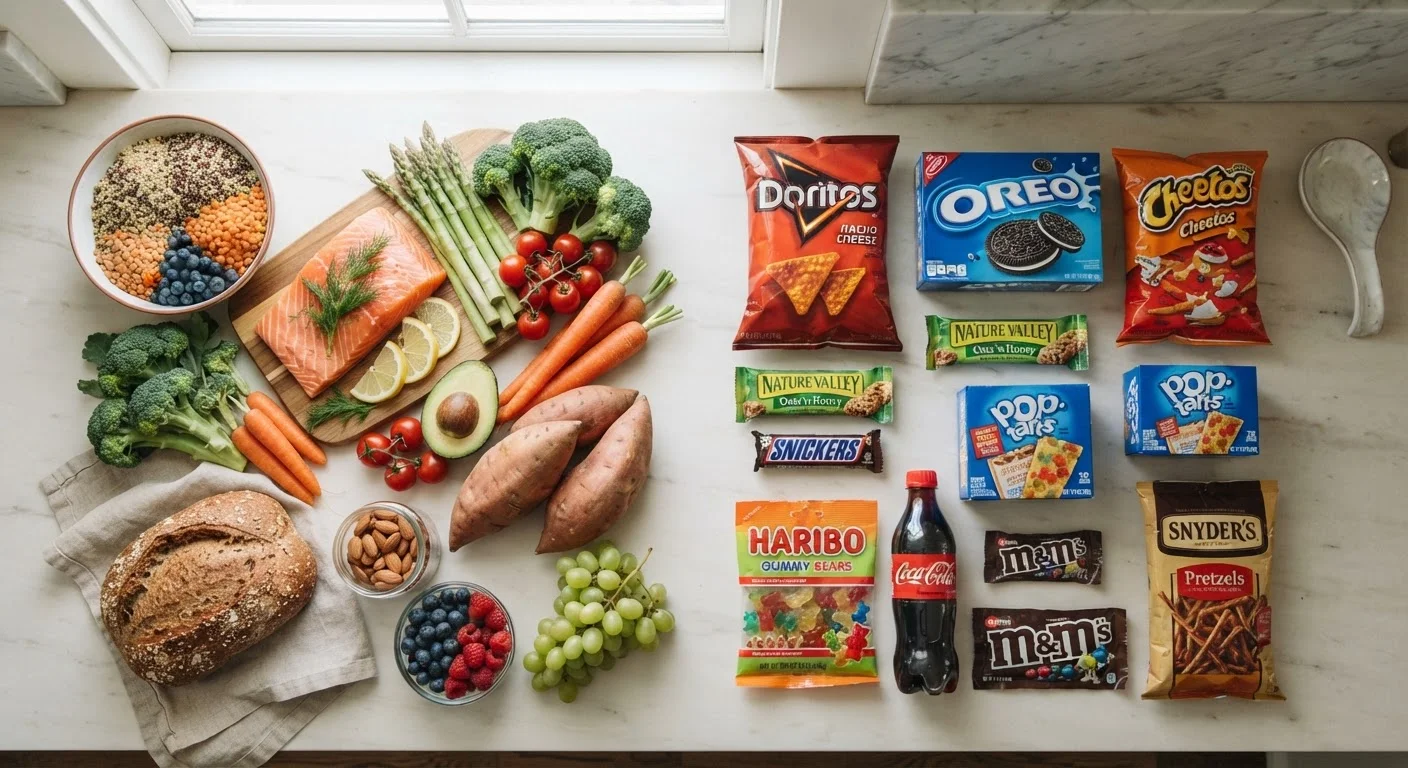
Defining the Terms: A Spectrum, Not a Binary
The phrase "processed food" covers an enormous range - from a bag of washed spinach (technically processed) to a shelf-stable snack engineered for maximum palatability. The NOVA classification system, developed by nutrition researchers at the University of São Paulo, organizes foods into four groups based on the extent and purpose of processing. This framework is widely cited in public health research and helps explain why lumping all processed foods together obscures more than it reveals.
At one end: minimally processed foods like plain frozen vegetables, canned fish in water, or rolled oats. At the other: ultra-processed products (UPPs) formulated with industrial ingredients - emulsifiers, flavor enhancers, artificial colors - rarely found in home kitchens. These two ends of the spectrum behave very differently in the body and in long-term health outcomes.
Whole foods, by contrast, are those consumed in or close to their natural state: fruits, vegetables, legumes, whole grains, nuts, eggs, and unprocessed meats. They haven't been fractured or reformulated. Their nutrient content is largely intact, and they tend to arrive packaged with fiber, water, and bioactive compounds that influence how the body absorbs and uses what's inside them. For a broader look at healthy eating habits, the principles below provide a useful starting point.
Nutritional Trade-Offs: What You Gain and Give Up
Whole foods consistently outperform ultra-processed options on nutrient density - the amount of vitamins, minerals, and beneficial compounds relative to calories. A bowl of oatmeal with blueberries delivers fiber, manganese, and antioxidants. A packaged breakfast pastry with a similar calorie count typically delivers refined carbohydrates, added sugar, and little else of nutritional note.
| Criterion | Whole Foods | Processed Foods |
|---|---|---|
| Fiber content | Naturally high in most varieties | Often low, especially in UPPs |
| Micronutrient density | High, with co-nutrients intact | Variable; some fortified, many depleted |
| Added sugar and sodium | Minimal to none | Often elevated in UPPs |
| Preparation time | Requires more planning and prep | Generally quicker and more convenient |
| Shelf life | Shorter for fresh varieties | Typically longer |
| Cost per calorie | Can be higher, especially fresh produce | Often lower per serving |
| Satiety | Generally higher due to fiber and water | Often lower; engineered for palatability |
| Long-term health associations | Linked to lower chronic disease risk | UPPs linked to higher metabolic risk |
The gap is particularly notable for dietary fiber, which most American men fall significantly short of. Fiber supports digestive regularity, feeds beneficial gut bacteria, and plays a measurable role in blood sugar regulation and cardiovascular risk. Ultra-processed foods are almost uniformly low in fiber, even when fortified with isolated vitamins to appear nutritious on the label.
That said, some processed foods genuinely serve nutritional purposes. Fortified cereals have helped reduce certain micronutrient deficiencies at a population level. Plain canned tomatoes deliver lycopene effectively. The research supports nuance here - it's the ultra-processed end of the spectrum that drives the most consistent negative associations in epidemiological data, not processing itself. For a deeper dive into how nutrients behave differently depending on their source, see our article on getting nutrients from food rather than supplements.
Convenience, Cost, and Real-World Dietary Patterns
Nutrition science doesn't exist in a vacuum. Men working long hours, managing families, or living with limited grocery access face real constraints that make a whole-food-only approach difficult to sustain. Acknowledging this isn't defeatist - it's realistic, and it's where practical dietary guidance earns its value.
The Ultra-Processed Distinction Matters
Public health researchers increasingly separate "processed" from "ultra-processed" foods in their analyses. Minimally processed items like plain yogurt, canned beans, or frozen edamame retain most of their nutritional value and behave more like whole foods in practice. The strongest negative health associations in current research apply specifically to ultra-processed products - not to all foods that have undergone any form of processing.
Processed foods are often more affordable per calorie and have longer shelf lives, which matters for food security and waste reduction. A pantry stocked with canned legumes, whole grain pasta, and low-sodium canned fish is neither expensive nor nutritionally bankrupt - and it's more sustainable for many households than a daily fresh produce haul.
Where the equation shifts is with ultra-processed convenience foods consumed as dietary staples. Evidence from large cohort studies - including research published in journals such as The BMJ and JAMA Internal Medicine - consistently links high UPP consumption to elevated risks of obesity, type 2 diabetes, and cardiovascular disease, independent of overall caloric intake. The mechanisms under study include effects on appetite signaling, gut microbiome composition, and low-grade systemic inflammation.
One of the most evidence-supported shifts a man can make is cooking more of his own meals. It doesn't require culinary expertise - it requires access and a modest time investment. Our article on cooking at home more often explores what that shift realistically looks like.
57%
Share of U.S. calories from ultra-processed foods
Research published in BMJ Open estimated that ultra-processed foods account for more than half of daily energy intake among U.S. adults.
~17g
Average daily fiber intake for American men
According to dietary intake data, most American men consume roughly half the recommended daily fiber, largely due to low intake of whole grains, legumes, and vegetables.
This article is for general informational and educational purposes only and does not constitute medical or dietary advice. Individual nutritional needs vary. Consult a registered dietitian or qualified healthcare professional before making significant changes to your diet, particularly if you have an existing health condition.