
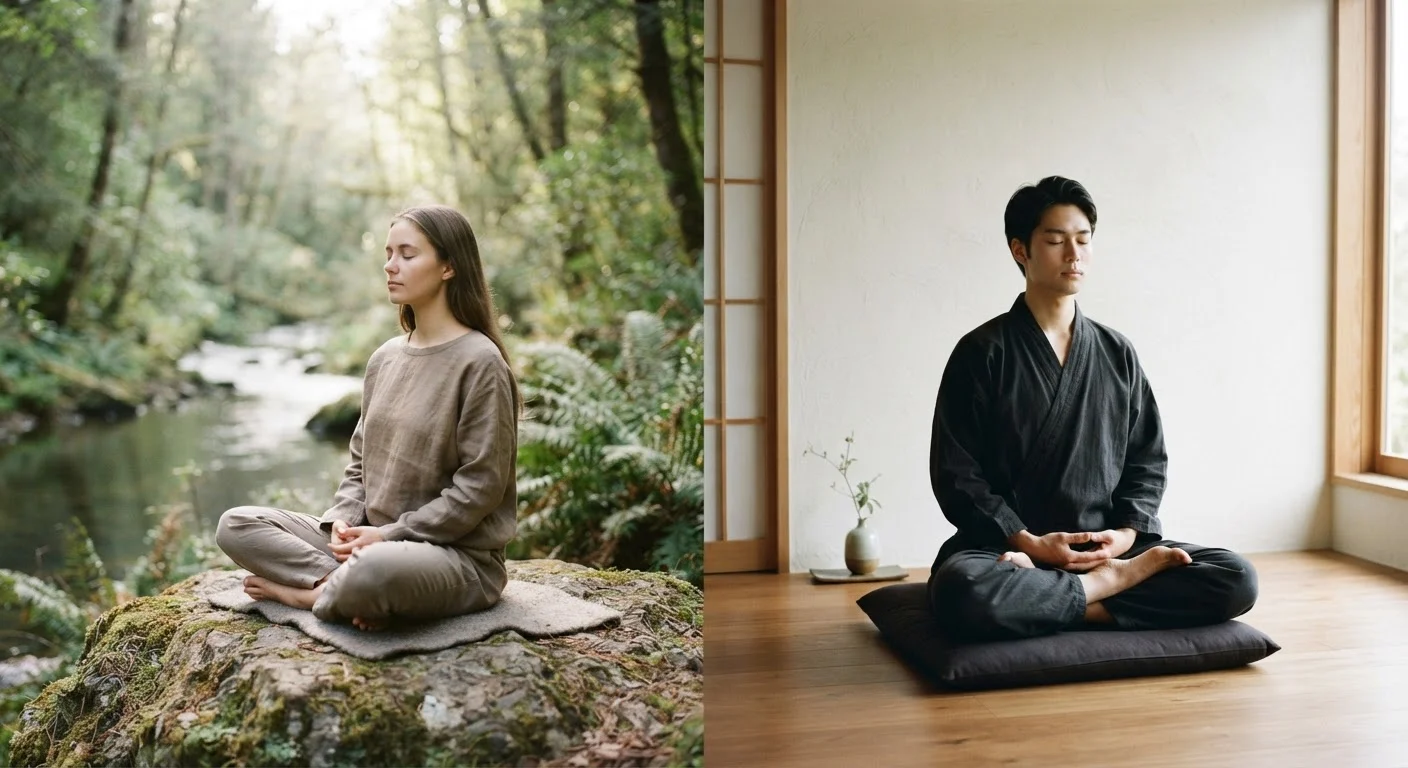
What's the Actual Difference?
The terms mindfulness and meditation are often used interchangeably, but they describe distinct things. Mindfulness is a quality of attention — the ability to notice what is happening right now, in your thoughts, body, and surroundings, without immediately judging or reacting. You can practice mindfulness while washing dishes, walking, or waiting in line.
Meditation, in contrast, is a formal practice — a set period of time you deliberately set aside to train the mind. Most meditation techniques use a specific focus point, such as the breath, a phrase, or a visualization, to cultivate concentration or awareness. Mindfulness-based meditation is one style within this broader category, but other forms (loving-kindness, transcendental, body scan) also exist.
Think of it this way: mindfulness is the skill; meditation is one reliable way to build it. Understanding this distinction helps you choose an approach that genuinely fits your life rather than one you abandon within a week.
The Evidence for Each Approach
Both practices have meaningful research backing for stress relief, though the depth and context of that evidence differs slightly.
Mindfulness underpins several structured therapeutic programs. MBSR, developed by Jon Kabat-Zinn at the University of Massachusetts, has been studied extensively and is associated with reductions in perceived stress, anxiety symptoms, and cortisol levels. A landmark meta-analysis published in JAMA Internal Medicine found moderate evidence that mindfulness programs improved anxiety, depression, and pain.
Meditation — particularly breath-focused and loving-kindness styles — has similarly been linked to measurable changes in stress markers and emotional regulation. Research published in journals such as Psychological Science suggests even brief meditation practice can reduce mind-wandering and improve sustained attention, both relevant to stress vulnerability.
~30%
Reduction in anxiety symptoms
A meta-analysis in JAMA Internal Medicine found mindfulness programs produced moderate reductions in anxiety and stress across multiple studies.
8 weeks
Typical MBSR program length
The standard Mindfulness-Based Stress Reduction course runs eight weeks and is one of the most researched structured mindfulness interventions.
It's important to note that research quality varies across studies, and neither practice is a cure or substitute for professional mental health care. They are tools — effective ones — within a broader wellbeing strategy. If you're managing persistent or severe stress, see our related piece on understanding acute vs. chronic stress to help frame what you're dealing with.
Comparing the Two Approaches
The table below breaks down how mindfulness and meditation differ across practical factors that matter most to beginners.
| Mindfulness | Meditation | |
|---|---|---|
| Format | Woven into daily activities | Dedicated, timed session |
| Time commitment | Moments throughout the day | Typically 10–30 minutes at once |
| Learning curve | Low — start immediately | Moderate — benefits from guidance |
| Best stress type | Acute, in-the-moment stress | Chronic, ongoing stress |
| Equipment needed | None | None (apps optional) |
| Research support | Strong (MBSR programs) | Strong (multiple styles studied) |
| Flexibility | Very high | Moderate |
Neither column is inherently superior. Your stress pattern matters here: acute, situational stress may respond well to a quick mindfulness reset in the moment, while chronic, background stress often benefits from the deeper cognitive training that a consistent meditation habit builds over time.
How to Choose — and How to Start
Start Small and Stay Consistent
Research suggests consistency matters more than duration when starting a mindfulness or meditation practice. Even five minutes of intentional, daily attention is more beneficial than an occasional hour-long session. Choose a cue — like making your morning coffee — to anchor the habit so it becomes automatic rather than aspirational.
If your schedule is fragmented and unpredictable, mindfulness is an easier on-ramp. Choose one recurring daily activity — your morning coffee, your commute, eating lunch — and practice giving it your full, non-judgmental attention for its duration. No app required.
If you prefer structure and can reliably carve out 10–20 minutes each day, guided meditation offers a clear framework. Free, evidence-informed resources from academic medical centers (such as hospital wellness programs) or reputable public health organizations can help you begin without commercial pressure.
Many people ultimately find value in both. Formal meditation strengthens your baseline awareness; informal mindfulness lets you apply that awareness throughout the day. You might also explore how these fit alongside other approaches — physical activity as a complementary stress tool is worth understanding too.
For longer-term stress resilience, consider pairing either practice with a structured self-check-in habit. Our guide on building a personal stress check-in routine offers a practical starting point. And if you're wondering whether working with a therapist might help, questions worth asking before choosing a therapy approach can help you think it through.
This article is for general informational purposes only and does not constitute medical or psychological advice. If you are experiencing significant stress, anxiety, or mental health concerns, please consult a qualified healthcare or mental health professional.