
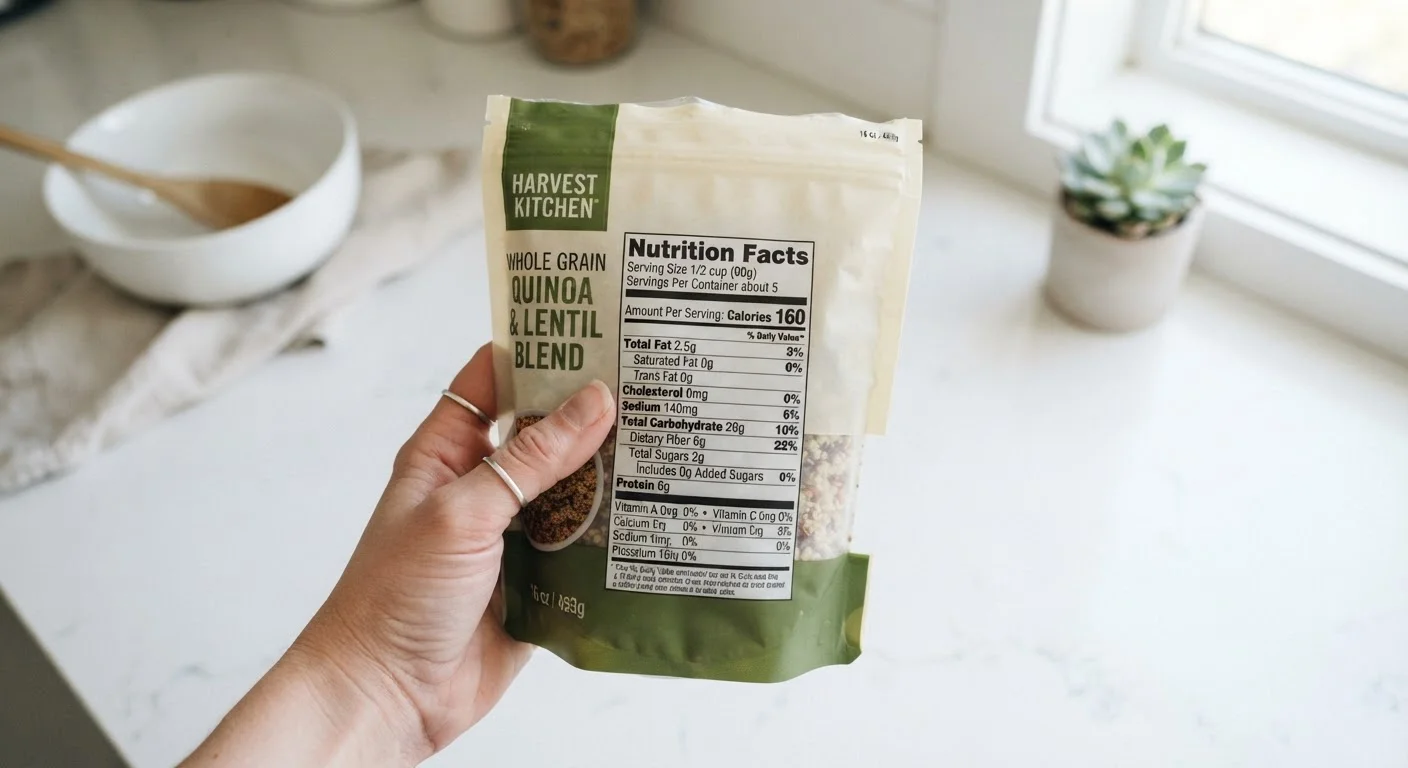
Why Nutrition Labels Exist and What They Actually Show
Nutrition Facts labels on packaged foods are regulated by the U.S. Food and Drug Administration (FDA). Their purpose is straightforward: to give consumers standardized, comparable information about what they're eating. The current label format — updated in 2020 — was redesigned to make key information easier to find, including a larger calorie display and a separate line for added sugars.
What a label does not tell you is whether a food is inherently good or bad. It's a tool for awareness and comparison, not a grading system. Understanding its structure helps you use it that way.
What you will need
If you're also curious about how vitamins and minerals appear across different food and supplement contexts, the Vitamins & Minerals hub provides solid foundational reading.
Front-of-Package Claims Can Mislead
Words like 'natural,' 'light,' or 'multigrain' on the front of a package are marketing terms and are not always regulated the same way as the Nutrition Facts panel. Always flip the package and read the actual label rather than relying on front-facing claims to judge a food's nutritional value.
How to Read a Nutrition Label Step by Step
Working through a label from top to bottom is the most reliable approach. Each section builds on the one before it — serving size informs calories, calories contextualize macronutrients, and the ingredient list explains what's actually driving those numbers.
Find the serving size
The very first line of any Nutrition Facts panel lists the serving size and the number of servings per container. Every number that follows — calories, fat, sodium — is based on this one serving amount, not the whole package.
Check whether what you typically eat matches the listed serving. A bag of chips showing 150 calories might contain three servings, meaning the bag totals 450 calories if eaten in full.
Check the calorie count
Calories measure the energy a food provides per serving. The label displays this prominently. Calories matter for overall energy balance, but they don't tell you anything about food quality on their own — 200 calories from almonds and 200 calories from a cookie deliver very different nutrients.
Use calories as one data point, not the only one.
Review the nutrients to limit
The middle section of the label lists nutrients most Americans tend to consume in excess. Pay attention to:
- Saturated fat — linked to cardiovascular risk when consumed in high amounts consistently
- Sodium — relevant to blood pressure management for many adults
- Added sugars — distinct from naturally occurring sugars; aim to keep this low
The % Daily Value (%DV) column shows how much one serving contributes toward a general daily reference amount. Aim for lower %DV for these nutrients.
Look for nutrients to prioritize
Below the nutrients to limit, labels list nutrients many people under-consume:
- Dietary fiber — supports digestive health and satiety
- Vitamin D, calcium, iron, and potassium — commonly listed because deficiencies are widespread
For these, a higher %DV is generally favorable. Look for foods that contribute meaningful amounts without being offset by high saturated fat or sodium. For a deeper understanding of how these fit into daily eating, see Reading a Nutrition Label Through the Lens of Essential Nutrients.
Read the ingredient list
Ingredients are listed in descending order by weight — whatever appears first is present in the greatest quantity. A bread listing 'whole wheat flour' first is nutritionally different from one listing 'enriched flour' first, even if the packaging looks similar.
Shorter ingredient lists aren't automatically better, but scanning the first three to five ingredients gives you a quick sense of what makes up most of the food.
Use the label to compare, not to judge
Nutrition labels are most powerful when used side by side. Comparing two similar products — same category, same serving size — lets you make a more informed choice without needing to memorize complex numbers.
Once you're comfortable reading food labels, you may find it useful to extend that skill to supplement label literacy as well, where the terminology differs. And when you're ready to apply what you've learned, building a nutritionally complete meal is a practical next step.
Use the 5% and 20% Rule
The FDA offers a simple guideline: 5% Daily Value or less is considered low for a nutrient, and 20% or more is considered high. Use this shortcut when scanning labels quickly — it works for both nutrients you want more of (like fiber) and those you want less of (like saturated fat).
Labels Are Not Medical Prescriptions
Nutrition labels provide general reference information based on a 2,000-calorie daily diet, which does not apply equally to every person. Individual calorie and nutrient needs vary depending on age, sex, activity level, and health status. If you have a medical condition, are pregnant, or are managing a specific health goal, consult a registered dietitian or healthcare provider before making significant dietary changes based on labels alone.
This article is for informational purposes only and is not a substitute for professional medical or dietary advice. Always consult a qualified healthcare provider or registered dietitian for guidance tailored to your individual health needs.