
What Iron Actually Does in the Body
Iron is a trace mineral, meaning the body needs it in relatively small amounts compared to minerals like calcium or magnesium. But small doesn't mean unimportant. Iron plays a central role in producing hemoglobin — the protein inside red blood cells responsible for picking up oxygen in the lungs and delivering it to every tissue in the body.
Iron is also a component of myoglobin, a protein that stores oxygen in muscle tissue, and it contributes to energy metabolism at the cellular level. This is why a shortage of iron doesn't just make you feel a little tired — it can affect your ability to concentrate, exercise, and recover from daily exertion.
To understand where iron fits among all the minerals your body depends on, see our guide to macrominerals and trace minerals.
Iron Absorption Is Affected by More Than Diet
Certain gastrointestinal conditions — such as celiac disease or inflammatory bowel disease — can reduce the body's ability to absorb iron from food, even when intake appears adequate. Medications, including some antacids, may also interfere with iron absorption. If you have a known digestive condition, discuss iron status with your healthcare provider rather than relying on dietary adjustments alone.
Why the Iron–Fatigue Link Isn't Always Simple
Fatigue is one of the most commonly reported health complaints — and one of the least specific. Tiredness can result from disrupted sleep, chronic stress, thyroid dysfunction, vitamin B12 deficiency, vitamin D insufficiency, or even over-exercising. This means that assuming low iron is the cause of your fatigue without testing can lead you to miss the actual issue.
Even within iron deficiency itself, there's a spectrum. Iron stores (measured by a protein called ferritin) can fall well before hemoglobin drops into the anemia range. Some people experience symptoms during this earlier stage; others don't notice much until deficiency is more pronounced. This variability makes self-diagnosis unreliable.
If persistent fatigue is your concern, our article on signs the body gives before nutrient deficiency becomes serious outlines the broader picture of what nutrient gaps can look like — and when to seek professional input.
It's also worth noting that fatigue related to intense physical training follows a different pattern. Overtraining syndrome has overlapping symptoms with iron deficiency, which is why a clinical assessment matters before drawing conclusions.
“Fatigue is one of the most nonspecific symptoms in medicine. Without objective testing, it is very difficult to attribute persistent tiredness to any single nutritional cause, including iron deficiency.”
— National Institutes of Health, Office of Dietary Supplements, U.S. federal health authority on dietary supplement research and consumer information
Dietary Iron: Two Forms, Different Rules
Not all dietary iron behaves the same way in the body. There are two distinct forms:
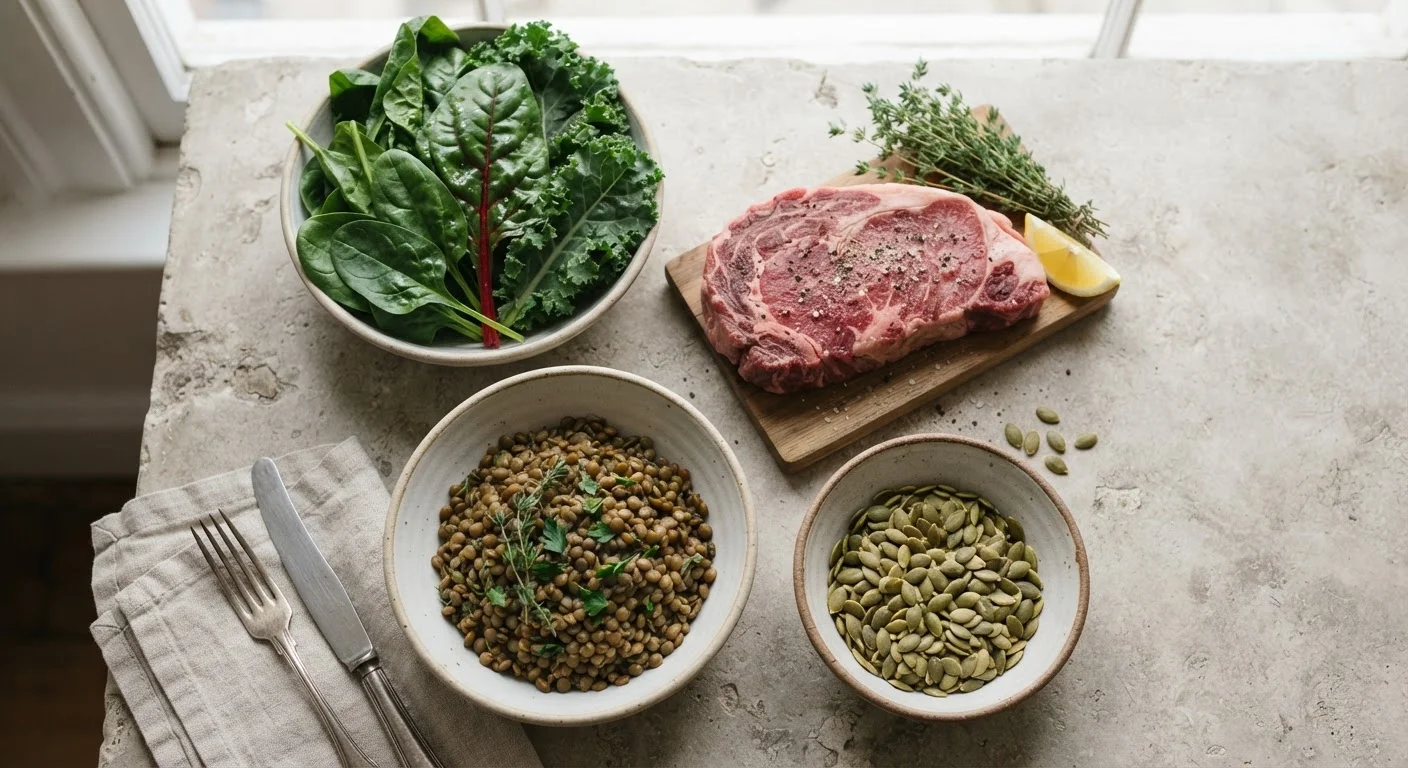
- Heme iron — found in animal-based foods such as red meat, poultry, and fish. The body absorbs heme iron efficiently, typically at rates of 15–35%.
- Non-heme iron — found in plant-based foods such as lentils, beans, fortified cereals, tofu, and dark leafy greens. Absorption rates are generally lower (2–20%) and are more influenced by other factors in the diet.
Certain compounds can inhibit non-heme iron absorption — calcium-rich foods, tannins in tea and coffee, and phytates found in whole grains may all reduce how much iron you absorb when consumed at the same meal. On the other hand, vitamin C (ascorbic acid) can meaningfully enhance non-heme iron absorption when eaten alongside iron-rich plant foods.
For women, iron needs can be particularly significant. Our article on key nutrients for women offers a broader look at how iron fits into women's nutritional needs alongside other essential minerals.
Pair Plant-Based Iron With Vitamin C
If you rely primarily on plant sources for iron, try combining them with vitamin C-rich foods in the same meal — for example, adding bell pepper or tomato to a lentil dish, or squeezing lemon juice over spinach. This is one practical, well-supported way to help your body absorb more of the non-heme iron you consume. Avoiding tea or coffee with iron-rich meals may also be beneficial.
Getting Clarity: Testing, Not Guessing
The only reliable way to understand your iron status is through a blood test ordered by a healthcare provider. A standard iron panel typically includes:
- Ferritin
- Reflects stored iron in the body. Low ferritin is often the earliest measurable sign of iron depletion.
- Serum iron
- Measures the amount of iron currently circulating in the blood.
- Hemoglobin and hematocrit
- Indicate whether iron deficiency has progressed to anemia by assessing red blood cell function.
Results need to be interpreted in context by a qualified clinician — reference ranges vary by age, sex, and health status. Self-treating with iron supplements without confirmed deficiency is not recommended, as excess iron can accumulate and cause harm.
If you're curious about other symptoms that may point to nutritional gaps, this overview of signs associated with common deficiencies is a helpful starting point for understanding what to discuss with your doctor.
This article is for general informational and educational purposes only and is not a substitute for professional medical advice, diagnosis, or treatment. Always consult a qualified healthcare provider with any questions about your health or before making changes to your diet or supplement routine.