
Why Supplement Labels Feel Confusing — And Why That Matters
Walk down any pharmacy aisle and you will find hundreds of supplement bottles, each packed with abbreviations, percentages, and unit measurements that most people were never taught to interpret. This confusion is not trivial. Misreading a label can mean taking a dose that is far higher than needed, doubling up on nutrients you already get from food, or missing a form of a nutrient that your body absorbs poorly.
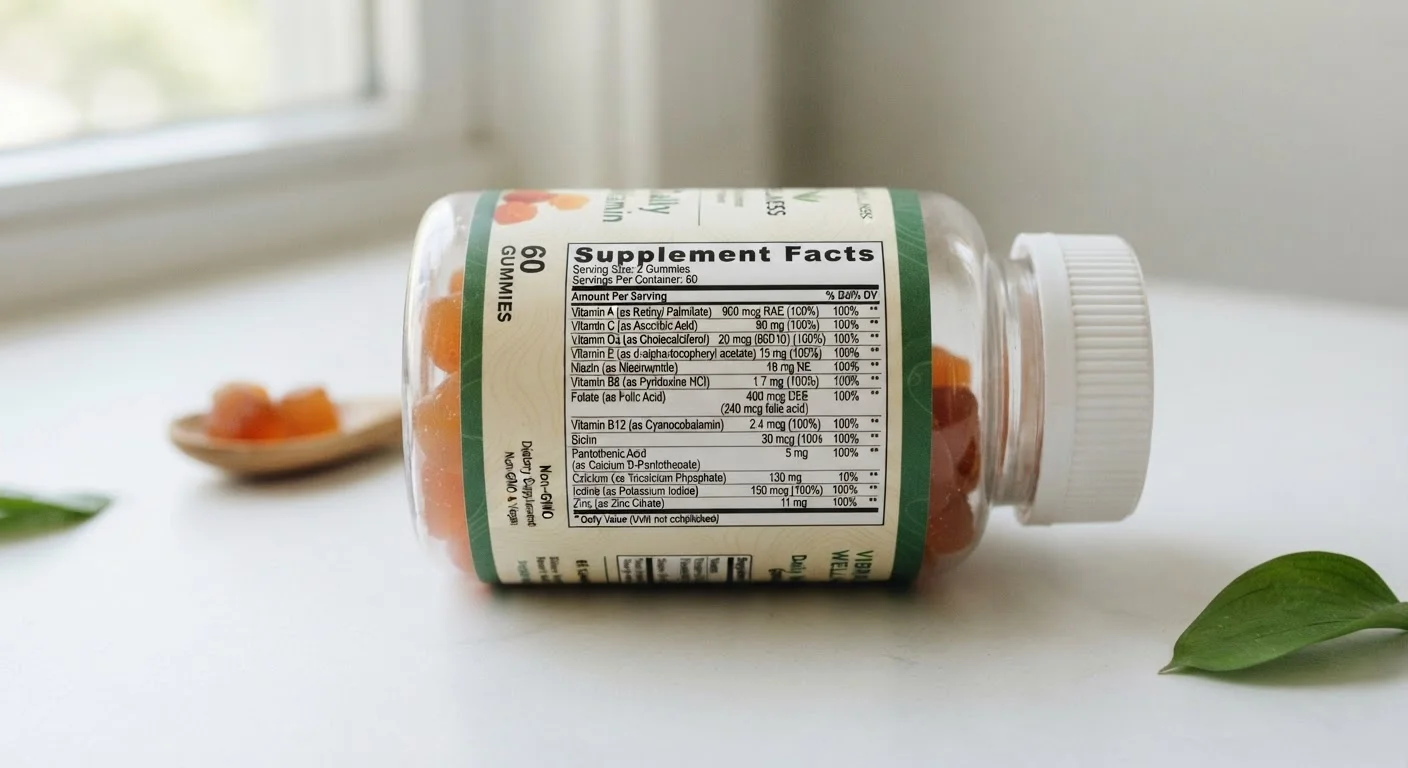
Supplement labels in the United States follow FDA regulations, which means they follow a consistent structure — once you know the structure, any label becomes readable. This guide walks you through that structure step by step. For broader context on how nutrients fit into your overall diet, the Essential Nutrients hub covers the full landscape of what your body needs daily.
What you will need
What the Label Is — and Isn't — Telling You
A supplement label communicates quantity and form of nutrients — it does not confirm that the supplement will produce a specific health outcome. By law, supplement manufacturers cannot claim their product treats, cures, or prevents any disease. What you may see are structure/function claims — statements like "supports immune health" or "promotes bone strength." These are permitted but are not the same as proven medical claims.
Proprietary Blends Limit Transparency
Some labels list a 'proprietary blend' with a combined weight but no individual ingredient amounts. This makes it impossible to know how much of each component you are actually getting. If transparency matters to you, look for labels that disclose individual ingredient quantities.
Understanding this distinction is part of becoming a confident label reader. The numbers in the Supplement Facts panel are objective — the marketing language surrounding them is not. For a broader look at nutrition vocabulary, this nutrition reference guide explains key terms in plain language.
More Is Not Always Safer
Many vitamins and minerals have established Tolerable Upper Intake Levels (ULs) set by the National Institutes of Health. Regularly exceeding these levels — especially with fat-soluble vitamins like A, D, E, and K — can cause toxicity. Do not assume a higher dose means greater benefit. Speak with a qualified healthcare provider before choosing a supplement dose.
Cross-Check With Your Food Intake
Supplements are designed to fill gaps, not replace food. Before purchasing, consider what nutrients you may already be getting from your diet. Our Essential Nutrients hub is a helpful starting point for understanding your daily baseline needs.
This article is for informational purposes only and does not constitute medical advice. Always consult a qualified healthcare professional before starting, stopping, or changing any supplement regimen.