
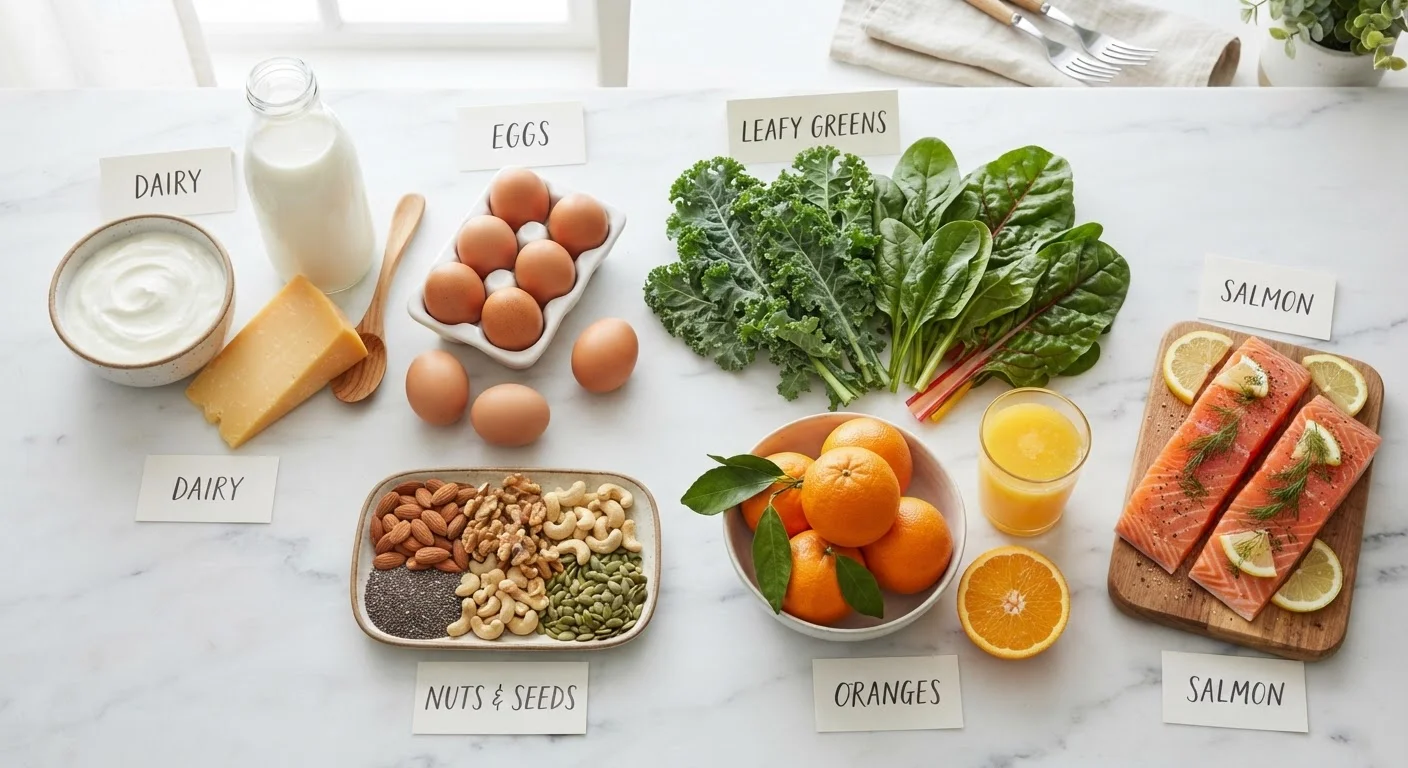
Why Vitamins Are Labeled A Through K
If you've ever wondered why vitamins skip from E straight to K, you're not alone. Vitamins were named in the order scientists discovered them — and some letters (like F and G) were later reassigned or folded into existing categories. What remained is the alphabet we use today: A, C, D, E, K, and the eight B vitamins.
Vitamins fall into two broad categories based on how your body handles them. Fat-soluble vitamins (A, D, E, and K) are stored in body fat and the liver, so they accumulate over time. Water-soluble vitamins (C and the B group) are not stored in meaningful amounts and need to be replenished more regularly through food. For a deeper look at this distinction, see how fat-soluble and water-soluble vitamins differ.
This guide is designed as a plain-language lookup reference — not a supplement recommendation. Always consult a qualified healthcare provider before making changes to your diet or starting any supplement regimen.
| Total recognized vitamins | 13 essential vitamins (National Institutes of Health (NIH)) |
| Fat-soluble vitamins | A, D, E, K |
| Water-soluble vitamins | C and the 8 B vitamins |
| Most common deficiency in US adults | Vitamin D (NIH Office of Dietary Supplements) |
| Vitamin especially critical in pregnancy | Folate (B9) (CDC Folic Acid Recommendations) |
| Vitamins at highest risk for plant-based dieters | B12 and D (Academy of Nutrition and Dietetics) |
The Fat-Soluble Vitamins: A, D, E, and K
Because these four vitamins are stored in the body, they don't need to come from food every single day — but getting too much (especially from high-dose supplements) can cause problems. Food sources rarely pose this risk.
Retinol
The preformed, ready-to-use version of vitamin A found in animal-based foods. Unlike beta-carotene, it does not need to be converted by the body.
Beta-Carotene
A pigment in orange and green plant foods that the body converts into vitamin A. It is considered safer than retinol supplements because conversion slows when the body has enough.
Antioxidant
A substance that helps neutralize unstable molecules (free radicals) that can damage cells. Vitamins C and E are well-known dietary antioxidants.
Fortified Food
A food product to which vitamins or minerals have been deliberately added during processing — for example, vitamin D added to milk or folic acid added to flour.
Cobalamin
The chemical name for vitamin B12. It supports nerve function and red blood cell production and is found almost exclusively in animal-derived foods.
Phylloquinone
The plant-derived form of vitamin K (also called K1), found mainly in dark leafy greens. It is the most common dietary form of vitamin K.
Vitamin A
What it does: Supports vision (especially in low light), immune defense, and healthy skin cell turnover. It also plays a role in reproduction and fetal development.
Where to find it: Liver, dairy products, and eggs provide preformed vitamin A (retinol). Orange and dark-green produce — carrots, sweet potatoes, kale, spinach — supply beta-carotene, which the body converts into vitamin A as needed.
Vitamin D
What it does: Helps the body absorb calcium, supports bone density, and plays a role in immune and muscle function. Many people in northern climates are deficient, particularly in winter months.
Where to find it: Fatty fish, egg yolks, and fortified foods (milk, some cereals). The skin also produces vitamin D when exposed to UVB sunlight.
Vitamin E
What it does: Acts as an antioxidant, protecting cells from oxidative damage. Also involved in immune function and helps widen blood vessels to prevent clotting.
Where to find it: Nuts, seeds, plant oils (sunflower, wheat germ), and leafy greens like spinach.
Vitamin K
What it does: Essential for normal blood clotting and bone metabolism. Comes in two main forms — K1 (phylloquinone) from plants, and K2 (menaquinone) mainly from fermented foods and some animal products.
Where to find it: K1 is abundant in leafy greens (kale, broccoli, spinach). K2 is found in natto, certain cheeses, and egg yolks.
Vitamin C and the Eight B Vitamins
Water-soluble vitamins are excreted in urine when consumed in excess, which means toxicity is less common — but it also means consistent daily intake from food matters more.
Vitamin C
What it does: Builds and repairs connective tissue (collagen), supports immune function, and acts as an antioxidant. It also improves absorption of non-heme iron from plant foods.
Where to find it: Citrus fruits, bell peppers, strawberries, broccoli, and kiwi are especially rich sources.
The B Vitamins
The B group contains eight distinct vitamins that often work together to help the body convert food into usable energy and support cell health.
~42%
US adults estimated to be vitamin D deficient
According to research published in the journal Nutrients, vitamin D insufficiency is widespread across the US population.
~6%
US adults deficient in vitamin B12
The NIH Office of Dietary Supplements notes B12 deficiency is more prevalent among older adults and those following plant-based diets.
400 mcg
Daily folate recommended for people who could become pregnant
The CDC recommends this amount to significantly reduce the risk of neural tube defects during early fetal development.
- B1 (Thiamine): Converts carbohydrates into energy; supports nerve function. Found in whole grains, legumes, and pork.
- B2 (Riboflavin): Involved in energy production and cellular growth. Found in dairy, lean meats, eggs, and green vegetables.
- B3 (Niacin): Supports metabolism and DNA repair. Found in poultry, fish, peanuts, and fortified grains.
- B5 (Pantothenic Acid): Helps synthesize hormones and metabolize nutrients. Widely distributed — found in almost all foods.
- B6 (Pyridoxine): Critical for protein metabolism and neurotransmitter production. Found in poultry, fish, potatoes, and bananas.
- B7 (Biotin): Supports fat and carbohydrate metabolism; often associated with hair and nail health, though evidence for supplementation is limited. Found in eggs, nuts, and sweet potatoes.
- B9 (Folate/Folic Acid): Vital for DNA synthesis and cell division. Especially important during early pregnancy to reduce the risk of neural tube defects. Found in dark leafy greens, legumes, and fortified grains.
- B12 (Cobalamin): Supports nerve function and red blood cell formation. Found almost exclusively in animal products — making it a key consideration for people following plant-based diets.
For women seeking more detail on folate, B12, and other nutrients relevant to their health, this guide to key nutrients for women is a useful companion resource.
This article is for general informational purposes only and does not constitute medical advice. For personal health concerns or questions about supplementation, consult a qualified healthcare professional.