
What Self-Help for Mental Wellness Actually Means
Self-help for mental wellness refers to intentional, self-directed practices that support emotional balance, stress resilience, and overall psychological wellbeing — without necessarily involving a therapist or clinical intervention. These are everyday tools anyone can explore, regardless of whether they are currently in therapy or not.
It is important to set a realistic frame from the start: self-help strategies are most effective as a complement to professional care, not a workaround for it. If you are new to thinking about your emotional health, the beginner's roadmap to emotional health is a helpful foundation to read alongside this guide.
Mental wellness
A state of emotional and psychological balance that allows a person to cope with everyday stress, maintain relationships, and function effectively — not the absence of all difficulty, but the capacity to navigate it.
Self-directed practice
Any activity you intentionally engage in on your own — such as journalling or breathing exercises — to support your emotional or psychological health.
Mindfulness
The practice of paying deliberate, non-judgmental attention to your thoughts, feelings, and surroundings in the present moment, rather than dwelling on the past or worrying about the future.
Peer support
Mutual help and encouragement shared between people with similar lived experiences, often in a group setting, with no clinical professional required to lead the exchange.
Expressive writing
A journalling technique in which you write freely about thoughts and feelings, shown in research to help process emotions and reduce psychological stress over time.
Self-compassion
Treating yourself with the same kindness and understanding you would offer a good friend, especially during difficult moments or perceived failures.
The goal here is not perfection or transformation overnight. It is building a small, sustainable toolkit you can return to consistently — and that is where real benefit tends to come from.
Core Practices Worth Starting With
Psychological research supports several self-directed strategies for mental wellness. None require special equipment or prior experience — just a willingness to try and adapt.
Journalling
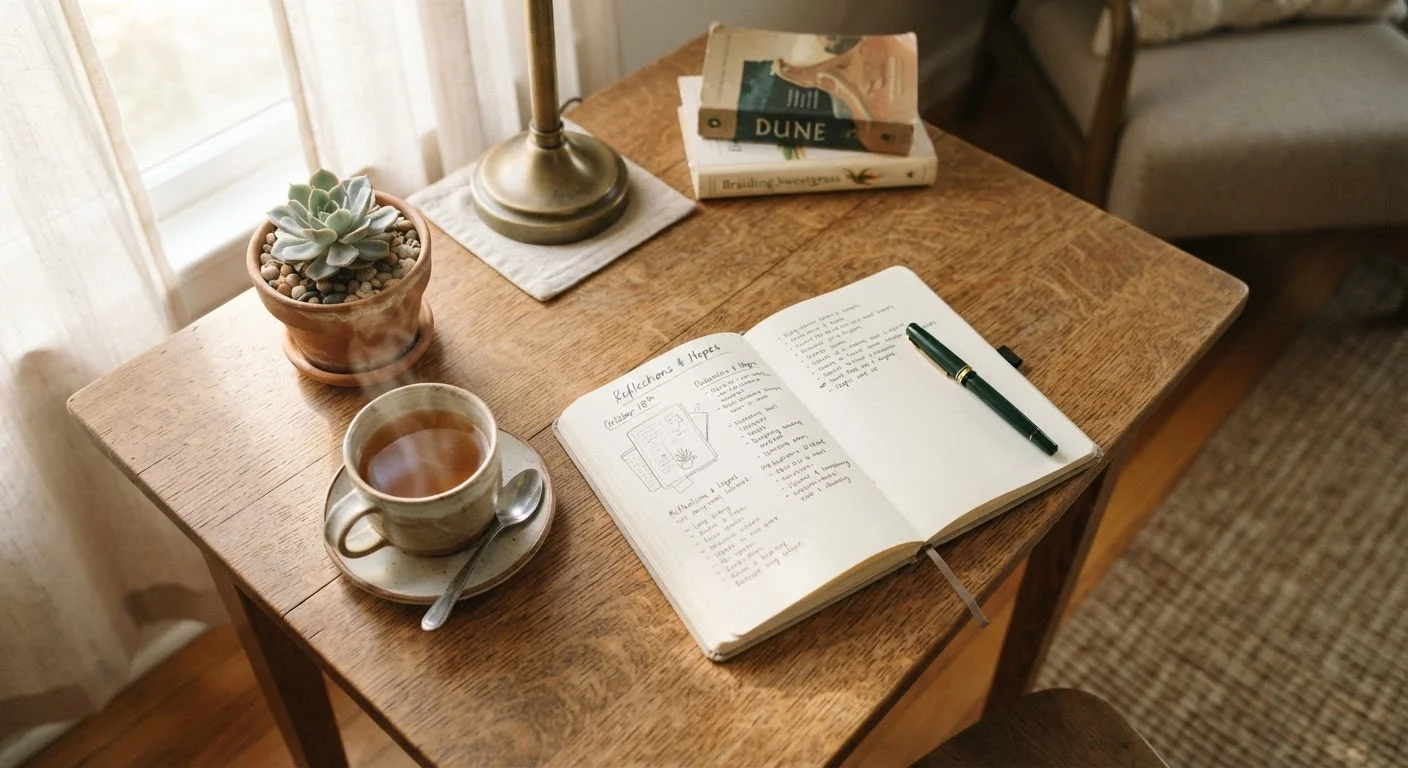
Writing about thoughts and feelings — sometimes called expressive writing — has been studied extensively and is associated with reduced stress and improved mood. A simple daily habit of writing three things you are grateful for, or describing how you felt during the day, can be a powerful starting point. You do not need to write at length; even five minutes counts.
Mindfulness and Breathing Practices
Mindfulness involves paying deliberate, non-judgmental attention to the present moment. Controlled breathing exercises — such as slow, deep breaths where the exhale is longer than the inhale — can help activate the body's natural calming response. Free guided sessions are widely available through reputable nonprofits and public health organizations.
Physical Movement
Regular physical activity is one of the most well-established contributors to positive mental health. Even a short daily walk can support mood regulation. If you live with a chronic condition or have physical limitations, consult a healthcare professional before changing your activity level.
Start with just one practice
Trying to adopt several new habits at once often leads to burnout and abandonment. Choose a single strategy — perhaps five minutes of journalling or one short breathing exercise — and stick with it for two weeks before adding anything else. Consistency with one small habit builds more lasting momentum than occasional effort across many.
For a broader overview of the tools available, see the landscape of self-help resources.
Community and Peer Support as Wellness Tools
Connection with others is a fundamental psychological need, and peer support — whether in person or online — is a legitimate and often underused mental wellness resource. Sharing experiences with people who understand what you are going through can reduce isolation and reinforce that help-seeking is a sign of strength, not weakness.
Community-based options include:
- In-person peer support groups — often organized through community centers, faith organizations, or nonprofits, these offer structured spaces for shared experience.
- Online forums and moderated communities — look for those affiliated with recognized mental health organizations to ensure a safe, constructive environment.
- Structured group programs — some community organizations offer free or low-cost group sessions based on evidence-informed approaches such as cognitive-behavioral principles.
If anxiety is a particular concern, a gentle first week of anxiety management offers practical community-friendly starting points.
Online communities vary widely in quality
Not all peer support spaces online are equally safe or helpful. Prioritize communities that are actively moderated, affiliated with reputable mental health organizations, and have clear community guidelines. Avoid spaces that discourage professional help-seeking or promote unverified health claims.
How to Build on These Foundations
Once you have experimented with a few practices, the next step is weaving them into a consistent routine. Research suggests that habit formation — anchoring a new behavior to an existing one — helps practices stick. For example, a few minutes of breathing exercises right after making your morning coffee, or journalling before bed as part of a wind-down ritual.
Self-compassion is the glue that holds a wellness routine together. Being kind to yourself when you miss a day or feel like progress is slow is not just nice advice — it is a psychologically meaningful practice. Learn more in our guide to self-compassion as a mental wellness practice.
Ready to design something more structured? Building a personal mental wellness routine walks you through a practical, realistic framework. And if you plan to use a workbook or formal self-guided programme, getting the most from a self-help workbook will help you engage with it meaningfully.
Self-help has limits — know when to reach out
If you notice that low mood, anxiety, or emotional distress is persistent, worsening, or interfering with your daily life, self-help strategies alone may not be sufficient. Please reach out to a licensed mental health professional or, in a crisis, contact a crisis helpline such as the 988 Suicide and Crisis Lifeline (call or text 988 in the US). Early professional support often leads to better outcomes.
This article is for general informational and educational purposes only and does not constitute medical or psychological advice. If you are experiencing significant distress, persistent mental health symptoms, or a crisis, please contact a qualified healthcare professional or an appropriate crisis resource promptly.