
What Is the Menstrual Cycle — Really?
Most of us learned that a period comes once a month and lasts a few days. That's true — but it's only a small part of the story. The menstrual cycle is a carefully orchestrated hormonal sequence that prepares the body for a potential pregnancy every single cycle, whether or not conception occurs.
Menstrual cycle
The monthly hormonal process that prepares the uterus for a potential pregnancy, beginning on the first day of one period and ending the day before the next.
Ovulation
The release of a mature egg from one of the ovaries, typically once per cycle, and the key event required for natural conception.
Follicular phase
The first half of the menstrual cycle, during which rising estrogen causes follicles in the ovaries to grow and one egg to mature.
Luteal phase
The second half of the cycle, after ovulation, when progesterone rises to prepare the uterine lining for a possible fertilized egg.
Fertile window
The roughly six-day period in each cycle — including the five days before ovulation and ovulation day itself — when conception is biologically possible.
Anovulatory cycle
A menstrual cycle in which ovulation does not occur, even though bleeding may still happen; more common during times of stress, illness, or hormonal disruption.
The cycle is typically divided into four phases: menstruation, the follicular phase, ovulation, and the luteal phase. During the follicular phase, rising estrogen levels stimulate the growth of follicles in the ovaries, each containing an egg. One follicle becomes dominant and matures. Ovulation follows — more on that shortly. The luteal phase then prepares the uterine lining for implantation; if pregnancy doesn't occur, hormone levels drop and menstruation begins again.
Cycle length is measured from the first day of one period to the first day of the next. A range of 21–35 days is broadly considered normal, and it's entirely common for this to shift slightly month to month. Understanding your own pattern is more useful than comparing yourself to an average. For a deeper look at how these patterns shift across your lifespan, see how reproductive health evolves from your 20s through your 50s.
Ovulation: The Heart of Fertility
Ovulation is the moment an egg is released from the ovary — and it's the event that makes conception biologically possible. It's typically triggered by a surge in luteinizing hormone (LH), which signals the dominant follicle to release its egg. That egg then travels through the fallopian tube, where it can be fertilized by sperm for approximately 12–24 hours.
Because sperm can survive in the reproductive tract for up to five days, the fertile window — the days when conception is most likely — generally spans about six days: the five days before ovulation plus ovulation day itself.
Track Signs, Not Just Dates
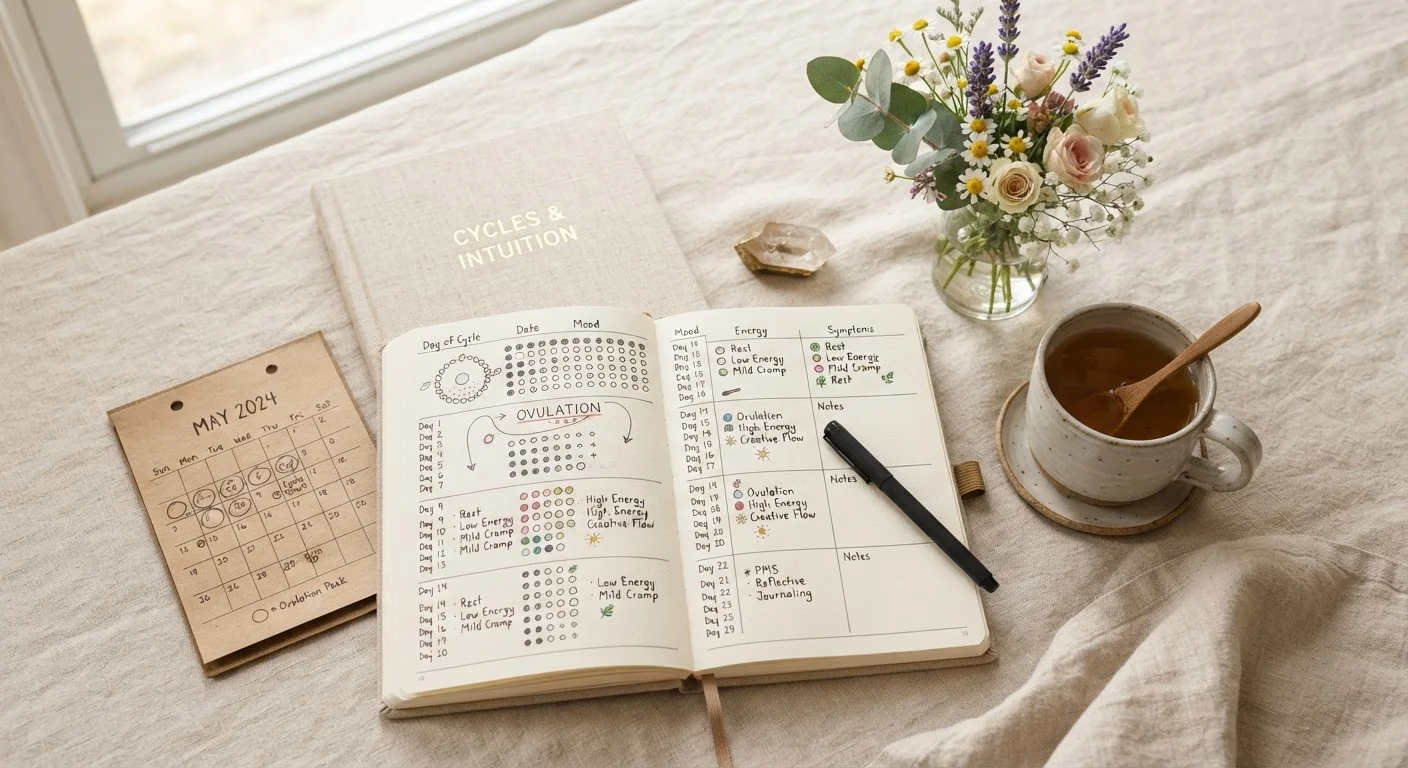
Relying solely on a calendar app to predict ovulation can be misleading, especially if your cycle length varies. Combining calendar data with physical signs — like basal body temperature and cervical mucus changes — gives you a much clearer picture. Even a basic journal noting these signals can be revealing over two to three months.
Many women assume ovulation always happens on day 14, but this is a simplification based on an idealized 28-day cycle. In reality, the timing of ovulation varies considerably, even in people with regular cycles. Tracking physical signs — such as changes in cervical mucus or a slight temperature shift — can help you identify your personal pattern. Learn more in our guide on cycle-tracking methods and what the data reveals.
It's also worth knowing that some cycles are anovulatory — meaning ovulation doesn't occur — even if a bleed still happens. This is more common during periods of stress, illness, or hormonal imbalance, and it's one reason that menstruation alone isn't a reliable indicator of fertility. If you're uncertain about common assumptions around this topic, our article on widely held fertility myths offers a useful reality check.
Key Factors That Influence Reproductive Health
Fertility doesn't exist in a vacuum. A range of modifiable and non-modifiable factors shape how the reproductive system functions.
- Hormonal balance: The hormonal health hub on this site explores how hormones affect far more than reproduction — including mood, energy, and metabolism. Imbalances in thyroid hormones, prolactin, or androgens can all affect the menstrual cycle and ovulation.
- Nutrition: Adequate intake of key micronutrients — particularly folate, iron, and vitamin D — supports the hormonal environment needed for regular cycles. Our guide on key nutrients every woman should know covers these in plain language. For broader dietary context, the Women's Nutrition hub is a helpful starting point.
- Body weight: Both significantly low and high body weight can disrupt hormone production and interfere with ovulation. This is not about appearance — it's about the metabolic signals fat tissue and energy availability send to the reproductive system.
- Stress and sleep: Chronic stress activates the body's cortisol response, which can suppress reproductive hormones. Poor sleep has a similar effect. These aren't minor lifestyle factors — they're physiologically significant.
- Age: Egg quantity and quality naturally decline with age, particularly after the mid-30s. This doesn't mean conception is impossible later in life, but it does shift the probability landscape.
Individual Variation Is the Norm
No two women's cycles are identical, and the same woman's cycle can shift across different life stages or circumstances. What's described here represents general patterns based on available evidence. If your experience seems to differ significantly from these benchmarks, that's worth exploring with a healthcare provider — not a cause for alarm on its own.
When to Talk to a Healthcare Provider
Understanding your cycle is empowering — but it doesn't replace professional evaluation. There are specific situations where reaching out to a healthcare provider is genuinely important, and doing so sooner generally leads to better outcomes.
Consider scheduling an appointment if you experience any of the following:
- Cycles consistently shorter than 21 days or longer than 35 days
- Periods that have stopped for three or more months (without pregnancy or known cause)
- Extremely heavy bleeding or severe cramping that disrupts daily life
- Bleeding between periods
- Trying to conceive for 12 months without success (or 6 months if you're over 35)
If you're unsure what to ask at your next appointment, you're far from alone. Many women leave important questions unspoken. Our article on reproductive health conversations worth having with your doctor can help you feel more prepared.
This article is for general informational purposes only and does not constitute medical advice. Always consult a qualified healthcare professional for guidance specific to your health situation.