Why Movement Patterns Matter More Than Individual Exercises
When most beginners walk into a gym or open a workout app, they think in terms of exercises - bicep curls, crunches, bench press. But exercise science takes a bigger-picture view: almost every movement the human body performs in training falls into one of a small number of fundamental movement patterns. A movement pattern is a category of motion that involves similar joint actions and muscle groups, regardless of the specific exercise.
Think of these patterns as a movement vocabulary. Once you understand them, any new exercise you encounter becomes easier to learn, because you recognize the underlying structure. More importantly, building competency in each pattern trains your body to move safely and efficiently - reducing the risk of injury and laying the groundwork for long-term progress.
Before diving into specific programs, it helps to familiarise yourself with the major exercise categories every beginner should know. This article goes one level deeper, breaking down the six foundational movement patterns you should prioritise above everything else.
The Squat
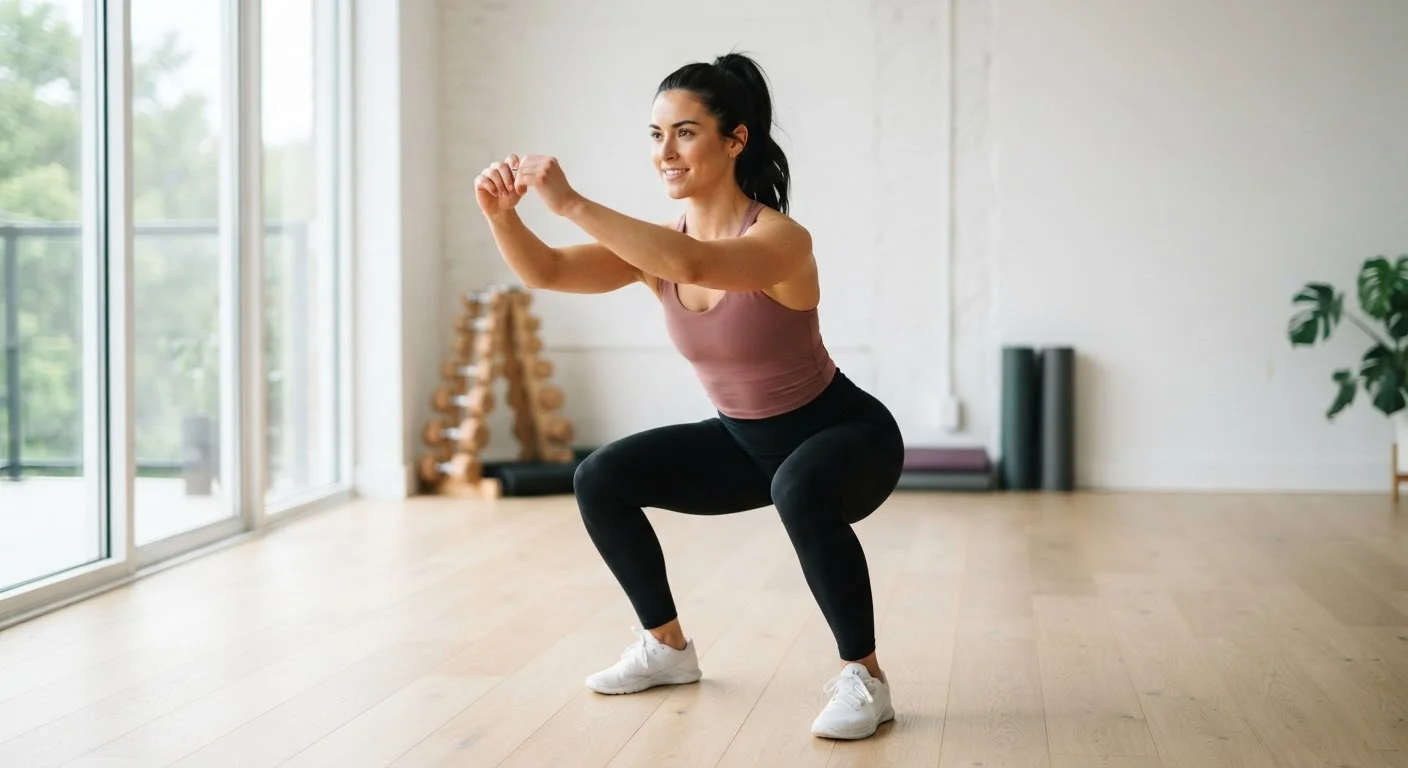
The squat pattern involves bending at both the hips and knees simultaneously while keeping the torso upright. It mimics everyday actions like sitting down and standing up. Primary muscles worked: quadriceps (front of thigh), glutes, and core.
Start with a bodyweight squat: stand with feet roughly shoulder-width apart, toes pointing slightly outward, and lower yourself as if sitting back onto a chair. Keep your chest tall and knees tracking in line with your toes. Return to standing by pressing through your heels.
Mastering the squat before adding weight protects your knees and lower back and builds the leg strength that transfers to almost every other exercise you will do.
The squat is the foundation of lower-body strength and mirrors movements you perform every single day.
The Hip Hinge
The hip hinge is a controlled forward bend driven by the hips, not the lower back. It is the foundation of deadlifts, Romanian deadlifts, and kettlebell swings. Primary muscles worked: hamstrings (back of thigh), glutes, and lower back.
Practice the pattern by standing with feet hip-width apart, soft bend in the knees, and pushing your hips backward while keeping your spine long and neutral - imagine you are trying to close a door behind you with your hips. Your torso will hinge forward. Then drive the hips forward to return upright.
Many beginners confuse the hinge with a squat. The key difference: in a hinge, the hips move back and the knees stay relatively still; in a squat, both hips and knees bend deeply.
The hip hinge, not the lower back, should do the work - a distinction that protects you from common injury.
The Push
Push patterns involve pressing a load away from your body - either horizontally (like a push-up or chest press) or vertically (like an overhead press). Primary muscles worked: chest (pectorals), front of shoulder (anterior deltoid), and triceps.
The push-up is the most accessible entry point. Begin from your knees if needed. Place hands slightly wider than shoulder-width, keep your body in a straight line from head to hips, and lower your chest toward the floor before pressing back up.
Push patterns develop upper-body pressing strength that supports posture and everyday tasks like pushing open a heavy door or lifting objects overhead.
Push patterns build pressing strength while reinforcing core stability - two qualities beginners often overlook early on.
The Pull
The pull pattern is the complement to pushing: drawing a load toward your body horizontally (like a row) or vertically (like a pull-up). Primary muscles worked: upper back (latissimus dorsi and rhomboids), rear shoulder (posterior deltoid), and biceps.
Many beginners over-prioritise pushing and neglect pulling, which can create muscle imbalances and contribute to shoulder discomfort. A resistance band row is an excellent starting point: anchor a band at waist height, hold both ends, step back to create tension, and pull your elbows behind you while squeezing your shoulder blades together.
Incorporating equal amounts of pulling and pushing in your training supports healthy shoulder function and balanced posture. You can learn more about how these movement types fit together in key fitness terms every beginner should know.
Balancing push and pull movements is one of the most important - and most overlooked - habits a beginner can build.
The Lunge (Single-Leg Pattern)
Lunge patterns - including forward lunges, reverse lunges, and lateral lunges - train each leg independently. This challenges balance, corrects strength imbalances between legs, and builds functional lower-body strength. Primary muscles worked: quadriceps, glutes, and hip stabilizers.
The reverse lunge is typically safest for beginners. Stand tall, step one foot directly back, and lower your back knee toward the floor while keeping your front shin vertical. Press through your front heel to return to standing.
Because each leg works on its own, unilateral (single-side) exercises like lunges tend to reveal strength differences between sides - valuable information for building a balanced, injury-resistant body.
Single-leg patterns reveal hidden strength imbalances and build the hip stability that protects knees over time.
The Carry
The carry pattern - walking while holding a load - is one of the most functional and underrated movement patterns in beginner training. It trains grip strength, core stability, and posture simultaneously. Primary muscles worked: core (particularly the obliques and deep stabilizers), traps, and grip.
A simple farmer's carry involves picking up a moderately heavy object in each hand - dumbbells, kettlebells, or even loaded bags - and walking a set distance while standing tall with shoulders pulled back and core braced.
Carries directly translate to real-life tasks like carrying groceries, lifting luggage, or moving furniture. They also reinforce the upright posture and core tension habits that make every other movement pattern safer and more effective.
The carry pattern may be the most underrated beginner exercise - it trains grip, core, and posture all at once.
How to Put These Patterns Into Practice
You do not need a fully equipped gym to begin practising these patterns. Every one of them has an effective bodyweight version - a wall-supported squat, a hip hinge with no weight, a push-up from the knees, a resistance band row, a suitcase carry with a water jug, or a slow reverse lunge. Start there.
Start With Bodyweight, Always
Before adding any external load - dumbbells, barbells, or machines - spend at least two to four weeks practising each pattern using only your bodyweight. This gives your nervous system, joints, and stabilising muscles time to adapt. If a bodyweight version feels too easy, focus on slowing the movement down and perfecting your form rather than reaching for added weight immediately.
As you grow more comfortable, you can gradually add resistance - a concept known as progressive overload (gradually increasing the challenge over time). If you want a deeper look at how that works, our beginner's guide to strength training covers the full picture.
One common pitfall is rushing past fundamentals to attempt complex or heavy exercises too soon. This is one of the early exercise mistakes that can slow progress or lead to injury. Spending two to four weeks on bodyweight pattern work - even if it feels easy - pays dividends for months ahead.
Once these six patterns feel natural, you will find that most exercises are simply combinations or loaded variations of them. Compound movements like squats and deadlifts, for example, are direct expressions of the patterns covered here, and they remain central to effective training at every level.
This article is for informational purposes only and does not constitute medical or professional fitness advice. If you have any health conditions, injuries, or concerns, please consult a qualified healthcare or fitness professional before starting a new exercise routine.