
What Compound Movements Actually Are
Walk into any well-run gym and you'll see the same movements anchoring almost every serious training session: squats, deadlifts, rows, presses. These are compound movements - and understanding what separates them from other exercises is one of the most useful things a beginner can learn.
The defining feature is simple: compound lifts involve multiple joints working at the same time, which means multiple muscle groups are recruited in a single movement. A barbell squat, for instance, requires coordinated effort from your quads, hamstrings, glutes, hip flexors, lower back, and core - all at once. That's a dramatically different demand than a seated leg extension, which isolates just the quadricep muscle across a single joint.
This multi-joint nature is what makes compound movements so central to strength training. To understand how they fit into the broader picture of fitness, see how strength training compares to other exercise types.
Compound vs. Isolation: Not Either/Or
Choosing compound movements as the foundation of your training doesn't mean isolation exercises have no place. Curls, lateral raises, and similar single-joint movements can complement compound lifts by targeting muscles that may not receive enough stimulus from multi-joint work alone. Most well-designed programs use both - with compound lifts at the center. See an overview of the major exercise categories to understand how different movement types fit together.
The Core Compound Lifts and What They Train
While many exercises qualify as compound movements, five patterns do the most work across the widest range of muscle groups:
- Squat: Targets the quads, glutes, hamstrings, and core. The foundational lower-body movement pattern.
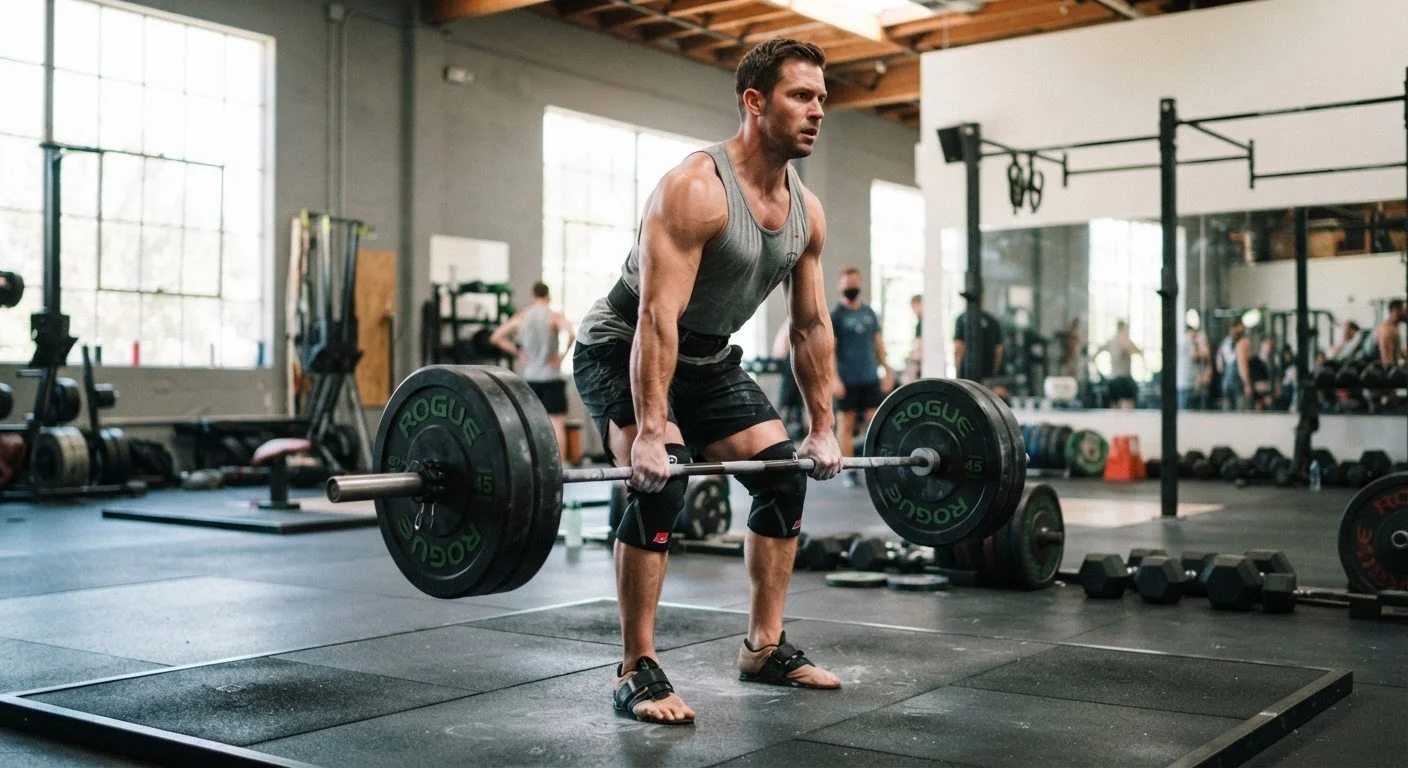
- Hip hinge / Deadlift: Engages the posterior chain - glutes, hamstrings, and lower back - along with the upper back and core. The deadlift is the strongest expression of the hinge pattern.
- Horizontal push / Bench Press: Works the chest, anterior deltoids (front of shoulder), and triceps together.
- Vertical or horizontal pull / Row and Pull-Up: Recruits the lats, rhomboids, rear delts, and biceps - the muscles responsible for pulling and posture.
- Overhead Press: Trains the deltoids, upper traps, and triceps while demanding significant core stability.
These five patterns are explored in more detail in our guide to fundamental movement patterns every beginner should learn.
8+
Major muscle groups activated by a single deadlift
Exercise physiology literature consistently identifies the deadlift as one of the most total-body demanding resistance exercises due to the number of joints and muscles involved.
~2×
Greater muscle activation vs. isolation exercises
Studies comparing compound and isolation movements have found compound lifts recruit significantly more total muscle mass per set, contributing to higher energy expenditure and broader strength adaptations.
Why Compound Lifts Produce Stronger Training Adaptations
Recruiting more muscle mass per exercise has meaningful physiological consequences. When a large portion of your body is working simultaneously, the metabolic demand is higher - you burn more energy per set and stimulate a greater systemic response.
Research consistently shows that multi-joint compound exercises produce a more pronounced acute hormonal response compared to isolation exercises, including elevated levels of testosterone and growth hormone following heavy compound training sessions. This response is one mechanism through which compound lifts drive overall muscle and strength development.
There's also the efficiency argument. Training time is finite. A program built around compound movements can develop strength across the entire body in fewer total sets than a program relying primarily on isolation work. For most men - particularly beginners - this makes compound-first programming the most practical and evidence-supported approach.
For a deeper look at what actually happens inside muscle tissue during resistance training, read our article on what happens to your muscles when you lift.
“If I had to choose just a handful of exercises to build a strong, capable body, they would all be compound movements. The squat, deadlift, and press patterns cover the majority of what most people will ever need from resistance training.”
— Brad Schoenfeld, Exercise scientist and researcher specializing in skeletal muscle hypertrophy
Form, Progression, and How to Approach These Lifts Safely
The same qualities that make compound movements productive also raise the stakes for technique. Because multiple joints and muscle groups are involved, a breakdown in form - a rounded lower back on a deadlift, knees caving on a squat - can place stress on structures that aren't equipped to handle it.
The practical guidance is consistent across most qualified strength coaches: prioritize movement quality before adding load. Learn the pattern with a manageable weight, build consistency, then increase the challenge gradually over time. That principle of progressive, incremental challenge is called progressive overload - and it's the core mechanism behind long-term strength development.
Start Light, Learn the Pattern First
When beginning any compound lift, use a weight that feels almost too easy. This gives your nervous system the opportunity to learn proper movement mechanics without the added risk that comes with heavier loads. Consistency in form across many sessions builds the neuromuscular foundation that makes heavier training safe and productive over time.
If you're new to resistance training, working with a qualified personal trainer or strength coach for even a handful of sessions can meaningfully reduce injury risk and accelerate your progress. This article is general educational information and does not substitute for personalized guidance from a qualified fitness or healthcare professional.
This article is for informational purposes only and does not constitute medical or professional fitness advice. Consult a qualified healthcare provider or certified trainer before beginning any new exercise program, especially if you have existing health conditions or injuries.