
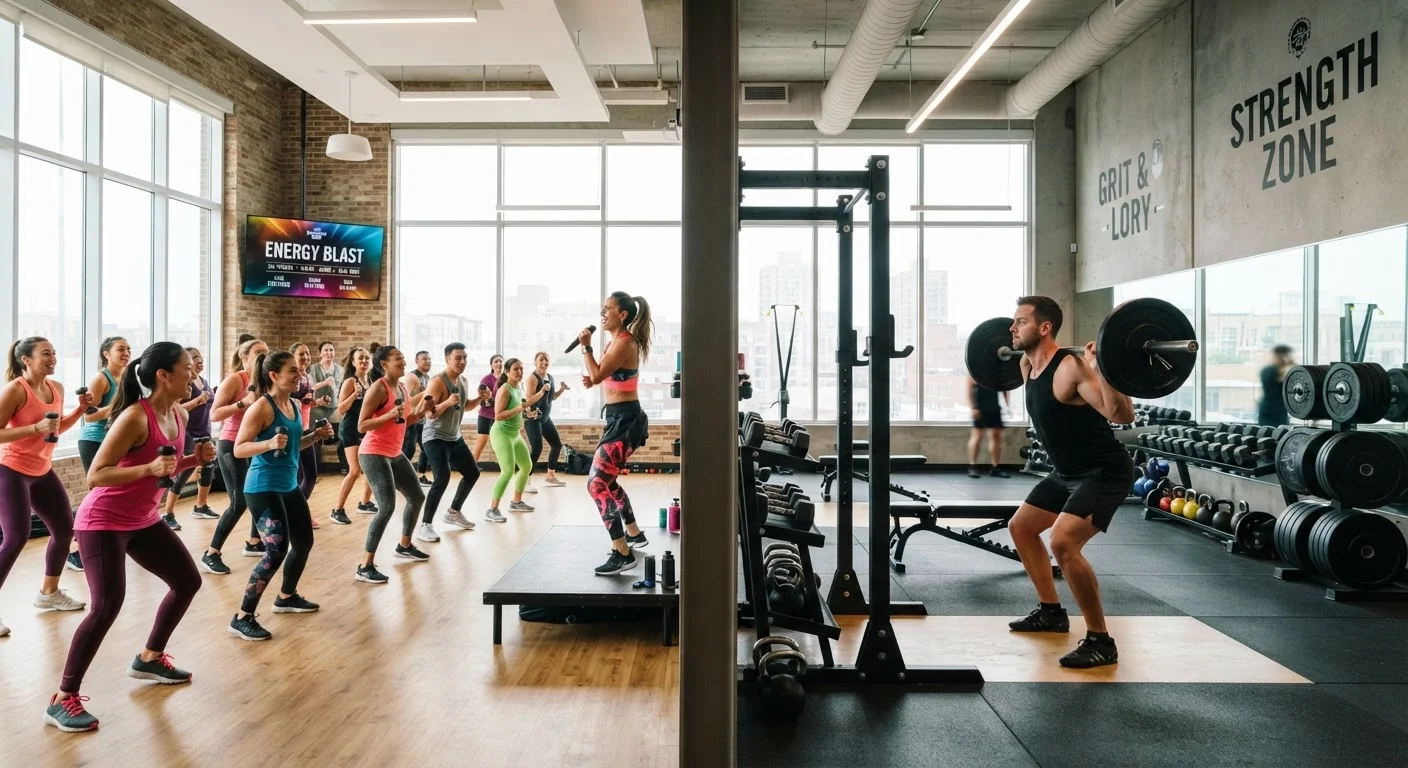
Why Your Training Environment Matters More Than You Think
When most beginners focus on fitness, they zero in on what exercises to do - squats, cardio, stretching. But where and with whom you train shapes whether you stick with it long enough to see results. Group exercise classes and solo training represent two fundamentally different environments, each with its own psychology, logistics, and practical trade-offs.
This article breaks down both options side by side so you can make a more informed choice - or decide when to use each. For a related comparison of training structure, see our guide to full-body vs. split programmes.
Built-in structure removes decision fatigue
A class has a set start time, a planned sequence, and an instructor guiding every move - removing the intimidating question of 'what do I do next?' that trips up many beginners.
Social energy boosts effort and enjoyment
Research in exercise psychology consistently links exercising alongside others with higher perceived enjoyment and greater output, often called the 'Köhler effect' - the tendency to work harder when part of a group.
Accountability makes skipping harder
Booking a class, especially one with a cancellation fee or a friend attending, creates a social commitment that significantly reduces the likelihood of skipping a session.
Instructor guidance reduces injury risk for beginners
Qualified instructors cue proper form in real time, which is especially valuable when you're learning movement patterns for the first time and don't yet know what correct technique feels like.
Exposure to exercise variety you wouldn't choose alone
Classes introduce formats - Pilates, HIIT, dance cardio - that many people wouldn't select on their own, potentially uncovering activities they genuinely enjoy.
The Case Against Group Classes
Group classes aren't the right fit for every person or every goal. Before signing up, it's worth understanding where this format falls short.
Fixed schedules limit flexibility
Classes run on set timetables that may not fit irregular work hours, childcare, or travel. Missing a class often means skipping the session entirely rather than rescheduling it.
Pace is set for the group, not for you
Instructors must cater to an average participant. If you need more rest, slower progressions, or faster intensity, a group format rarely accommodates that without modification.
Cost can add up quickly
Boutique fitness classes in particular carry premium price points per session, and monthly memberships for studios can exceed standard gym fees substantially.
Crowded environments can feel intimidating
For some beginners, exercising in front of others - especially in mirrored studios - triggers self-consciousness that undermines the experience and may deter continued attendance.
Limited personalisation for specific goals
If your aim is to build strength progressively, train around an injury, or follow a specialised programme, a general group class rarely matches what an individualised plan provides.
~95%
Gym members who attend group classes regularly
Industry data from fitness associations suggests that group exercise participants show notably higher gym attendance rates than those who train solo, underscoring the accountability benefit.
20%+
Greater effort output exercising alongside others
Studies examining the Köhler motivation effect have found that exercising with a partner or group can increase effort and time-on-task by over 20% compared to training alone.
How to Decide - or Combine Both
The choice isn't always binary. Many exercisers use group classes for cardio-based sessions - think cycling or aerobics - while reserving solo time for strength work they can progress at their own pace. If you're just starting out, group classes can build the habit and baseline fitness, after which solo training becomes more manageable and enjoyable.
Consider these questions when deciding:
- Do you need external accountability? If skipping is easy when no one is watching, a class schedule helps.
- Do you have a specific goal? Highly targeted outcomes - like powerlifting or rehabbing an injury - usually require individualised programming.
- What does your schedule allow? Fixed class times don't suit everyone; solo training adapts to shifting hours.
If you're weighing equipment choices alongside your environment, our comparison of bodyweight training vs. gym machines is a useful next read. You might also explore low-impact exercise options if joint comfort is a concern in either setting.
Mixing Both Approaches Is Common Practice
There's no rule that says you must commit exclusively to one format. Many fitness professionals encourage beginners to use group classes to build consistency and movement confidence, then introduce structured solo sessions as skills and self-awareness develop. Think of the two formats as complementary tools rather than competing options. If you're exploring how to balance different training types, combining cardio and strength training offers a useful framework.
This article is for general informational purposes only and does not constitute medical or personal fitness advice. Speak with a qualified healthcare or fitness professional before beginning a new exercise programme, particularly if you have any health conditions or injuries.