
Three Distinct Conditions, One Confusing Symptom Overlap
Abdominal cramping, urgent trips to the bathroom, unpredictable bowel habits - these symptoms are shared by IBS, IBD, and Crohn's disease. Because the symptoms look so similar on the surface, these three conditions are frequently confused. But their underlying causes, long-term implications, and treatment approaches are meaningfully different.
IBS stands for irritable bowel syndrome. It is classified as a functional gut disorder, meaning the digestive system is not structurally or visibly damaged - it simply does not work as it should. IBD stands for inflammatory bowel disease, an umbrella term for conditions involving chronic immune-driven inflammation that physically damages the digestive tract. Crohn's disease is one of the two main forms of IBD; the other is ulcerative colitis.
For a broader look at common gut symptoms and what they typically signal, see our practical digestive symptom reference guide.
| Criterion | IBS | IBD / Crohn's Disease |
|---|---|---|
| Type of condition | Functional disorder | Inflammatory / immune-mediated disease |
| Visible tissue damage | None | Yes - ulceration, inflammation |
| Location affected | Entire gut (functionally) | Any part of GI tract (Crohn's); colon only (UC) |
| Key diagnostic tool | Symptom criteria (exclusion) | Colonoscopy, biopsy, blood/stool tests |
| Cancer risk | Not elevated | Elevated with long-term inflammation |
| Primary treatment | Diet, lifestyle, symptom relief | Immunosuppressants, biologics, possibly surgery |
| Bleeding as symptom | Rare / not typical | Common, especially in UC and Crohn's |
What Happens Inside the Body
With IBS, there is no inflammation, no ulceration, and no structural change visible on a scope or scan. Researchers believe IBS involves altered communication between the gut and the brain - sometimes called the gut-brain axis - leading to heightened sensitivity to normal digestive activity. Stress, diet, and gut microbiome composition all appear to play a role, though the precise mechanisms remain an active area of research.
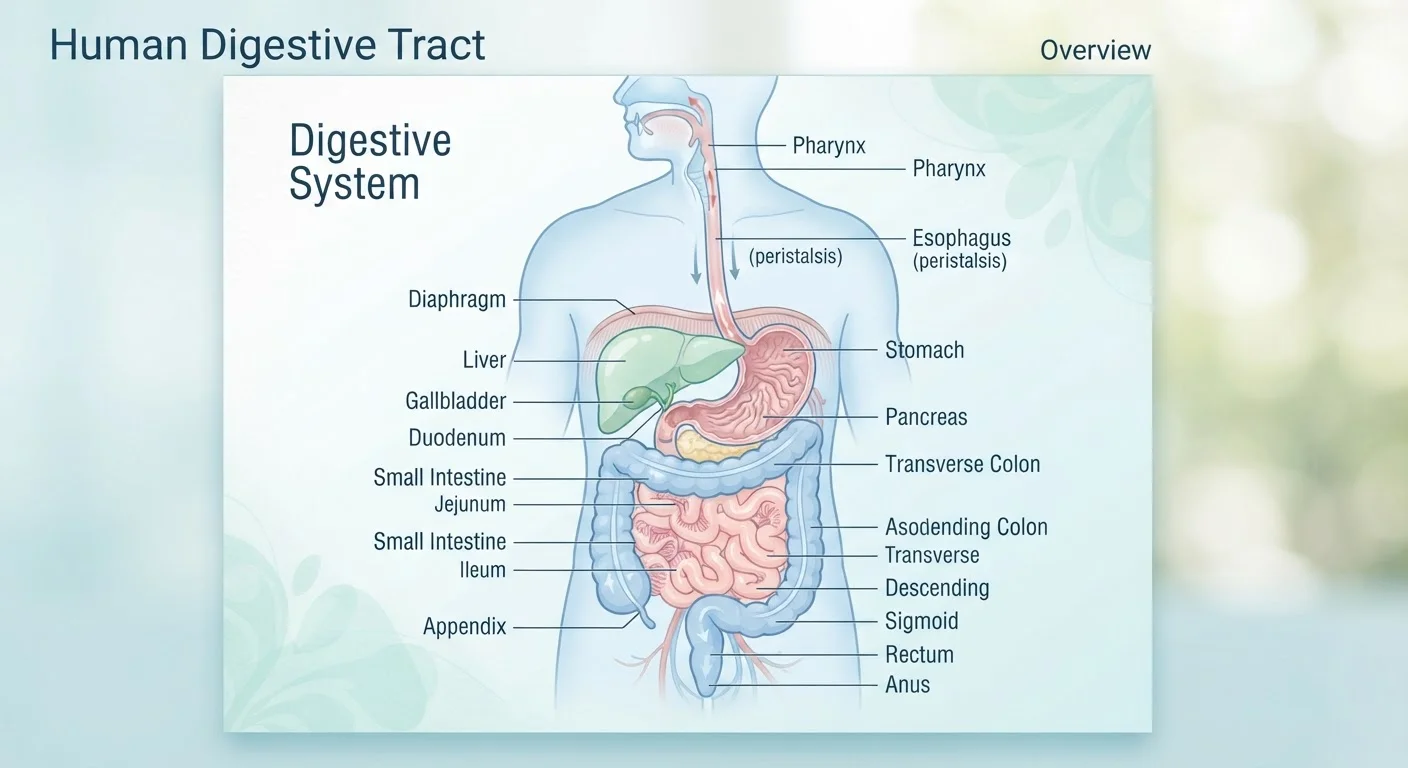
IBD, by contrast, involves the immune system mistakenly attacking the lining of the digestive tract. In Crohn's disease, this inflammation can occur anywhere from the mouth to the anus, though it most commonly affects the end of the small intestine (the ileum) and the beginning of the large intestine. Crucially, Crohn's can penetrate all layers of the intestinal wall, which can lead to complications such as fistulas (abnormal tunnels between organs) or strictures (narrowing of the intestine). Ulcerative colitis is confined to the inner lining of the colon and rectum.
IBD and IBS Can Co-Exist
Research suggests that some people with IBD also meet the diagnostic criteria for IBS. This overlap can complicate diagnosis and management, since IBS-like symptoms may persist even when IBD inflammation is well controlled. If you have an existing IBD diagnosis and continue to experience unexplained gut symptoms, this is worth discussing with your gastroenterologist.
Because diet and gut bacteria are implicated in all three conditions, many people explore nutritional strategies as part of their management. Our article on probiotics vs. prebiotics explains how these approaches may support digestive health.
Diagnosis, Risk, and Long-Term Management
Diagnosing IBS is largely a process of exclusion - a doctor will rule out IBD, celiac disease, infections, and other structural causes before arriving at an IBS diagnosis, often using the Rome IV criteria (a standardized set of symptom-based diagnostic guidelines). There is no single definitive test for IBS.
IBD and Crohn's disease require objective evidence of inflammation. Diagnosis typically involves a combination of blood tests (looking for inflammatory markers), stool tests, colonoscopy with biopsy, and sometimes imaging such as MRI or CT scans.
~10-15%
Estimated global prevalence of IBS
According to estimates published in gastroenterology research literature, IBS affects roughly 10-15% of adults worldwide, making it one of the most common functional gastrointestinal disorders.
~3 million
Americans living with IBD
The U.S. Centers for Disease Control and Prevention (CDC) estimates that approximately 3 million U.S. adults have been diagnosed with IBD, including both Crohn's disease and ulcerative colitis.
Management differs substantially. IBS is managed primarily through lifestyle modifications - dietary changes such as a low-FODMAP diet (which reduces fermentable carbohydrates), stress management, and sometimes medications to ease specific symptoms. IBD and Crohn's disease often require prescription medications that modulate or suppress the immune system, including biologics. Some people with severe IBD require surgery.
Importantly, IBS does not increase the risk of colorectal cancer and does not cause permanent intestinal damage. Prolonged, poorly controlled IBD, however, is associated with an elevated long-term risk of colorectal cancer, which is why regular monitoring matters. For context on how gut symptoms like irregular bowel habits fit into the broader picture, see our guide to constipation vs. diarrhoea.
This article is for general informational purposes only and does not constitute medical advice. If you are experiencing persistent or concerning digestive symptoms, please consult a qualified healthcare professional for an accurate diagnosis and personalized guidance.