
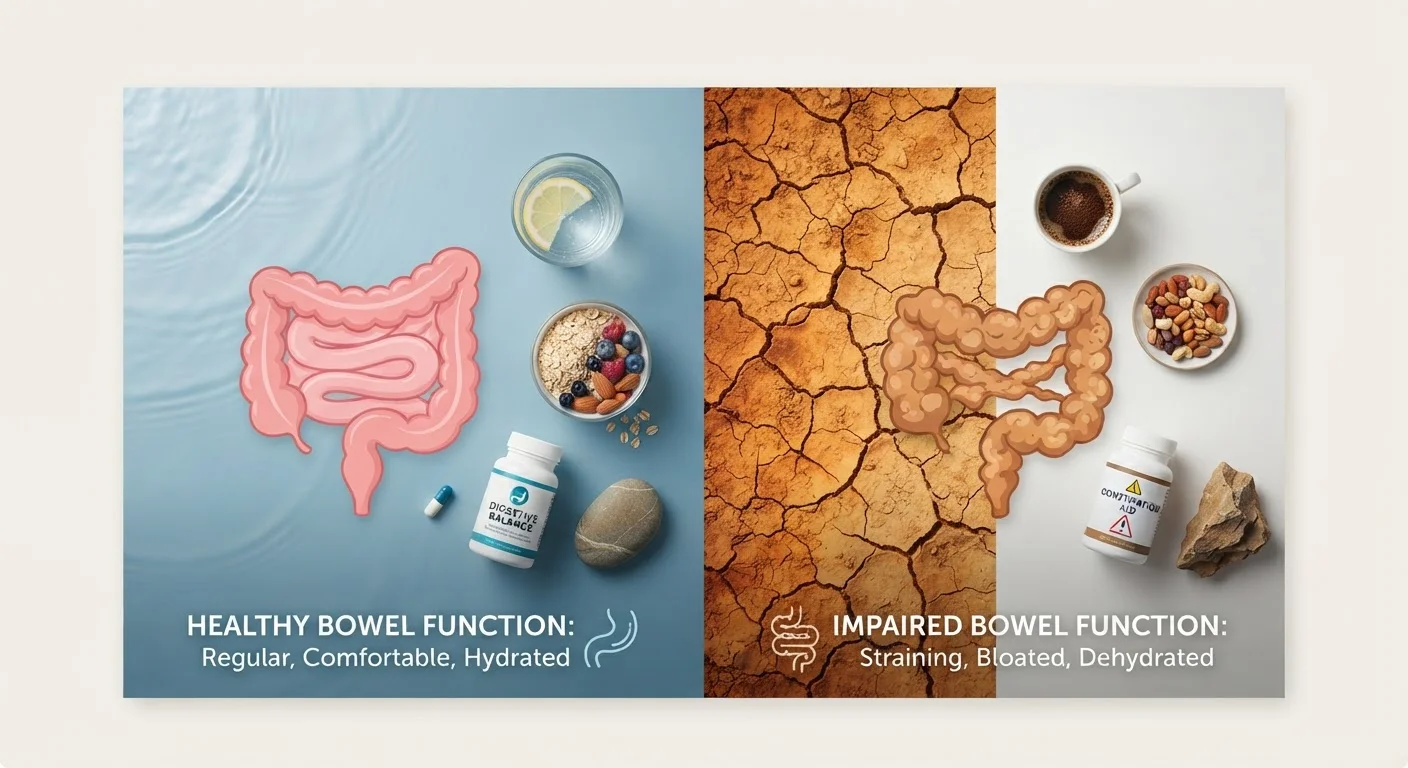
Defining the Two Ends of the Bowel Spectrum
Normal bowel habits vary widely between individuals - most healthy adults move their bowels anywhere from three times a day to three times a week. What matters more than frequency alone is whether the pattern has changed, and whether it's causing discomfort. To understand your gut, it helps to know how clinicians define each extreme.
Constipation is typically defined as having fewer than three bowel movements per week, combined with symptoms such as straining, a sense of incomplete emptying, hard or lumpy stools, or the need for manual maneuvers to pass stool. The Rome IV criteria - a widely used clinical framework - require these symptoms to be present for at least three months to qualify as chronic constipation.
Diarrhoea, on the other hand, is characterized by three or more loose or watery stools within a 24-hour period. It is classified as acute (lasting fewer than 14 days), persistent (14-30 days), or chronic (more than 30 days). Each category carries different implications for cause and management.
For a plain-language overview of how your gut processes food before things go wrong, see Your Digestive System, Explained.
| Criterion | Constipation | Diarrhoea |
|---|---|---|
| Frequency | Fewer than 3 times per week | 3 or more times in 24 hours |
| Stool consistency | Hard, dry, lumpy | Loose, watery, unformed |
| Primary mechanism | Slow colonic transit; excess water absorbed | Rapid transit or excess fluid secretion |
| Common causes | Low fibre, dehydration, medications, inactivity | Infection, food intolerance, antibiotics, stress |
| Immediate risk | Discomfort, straining, hemorrhoids | Dehydration, electrolyte loss |
| Typical duration (acute) | Days to weeks without intervention | Usually resolves within 1-3 days |
| Key red flags | Blood in stool, weight loss, new onset after 50 | Blood, high fever, signs of dehydration |
Causes, Triggers, and Underlying Mechanisms
Despite sitting at opposite ends of the spectrum, constipation and diarrhoea share several root causes - including diet, stress, medications, and infection - but their mechanisms diverge significantly.
In constipation, stool moves too slowly through the large intestine (colon). The colon absorbs excess water from the stool as it lingers, making it harder and more difficult to pass. Common triggers include low fibre intake, inadequate hydration, physical inactivity, certain medications (especially opioids, some antidepressants, and iron supplements), and hormonal shifts such as those during pregnancy.
In diarrhoea, transit is accelerated or fluid secretion into the intestine increases - meaning stool does not have time to solidify. Causes range from viral or bacterial infections (the most common cause of acute diarrhoea) to food intolerances such as lactose intolerance, antibiotic use, anxiety, or inflammatory gut diseases. Some people experience osmotic diarrhoea when certain poorly absorbed substances (like high-dose magnesium or artificial sweeteners) draw water into the bowel.
It's worth noting that some conditions, particularly irritable bowel syndrome (IBS), can produce both extremes in the same individual. To understand conditions that sit behind recurring bowel changes, see IBS, IBD, and Crohn's Disease: What Sets Them Apart.
16%
Adults affected by chronic constipation globally
A systematic review published in the American Journal of Gastroenterology estimates that roughly 16% of adults worldwide meet criteria for chronic constipation.
1.7 billion
Cases of childhood diarrhoea annually
The World Health Organization estimates approximately 1.7 billion cases of diarrhoeal disease occur in children each year, making it a leading cause of child mortality globally.
~30%
IBS patients who alternate between both extremes
Clinical studies suggest that around 30% of people with IBS experience a mixed subtype, alternating between constipation and diarrhoea at different times.
Recognizing Symptoms and When to Seek Help
Both constipation and diarrhoea involve more than just stool consistency. Recognizing accompanying symptoms helps distinguish a routine episode from one that needs medical attention.
With constipation, watch for bloating, abdominal cramping, a persistent feeling of fullness, or visible straining. Occasional constipation is common and usually resolves with simple lifestyle measures. However, you should consult a healthcare provider if constipation is new, lasts longer than three weeks, is accompanied by blood in the stool, unintentional weight loss, or severe pain - as these can signal conditions requiring investigation.
With diarrhoea, the most immediate concern is dehydration. Signs include dry mouth, reduced urination, dizziness, and dark-colored urine. Seek prompt medical care if diarrhoea contains blood or mucus, is accompanied by a high fever, occurs in someone who is elderly, very young, pregnant, or immunocompromised, or has persisted beyond two days without improvement.
For a broader reference on gut symptoms and what they might indicate, Reading Your Digestive Symptoms: A Practical Reference Guide offers a helpful lookup resource.
Bowel Habits Change With Age
Gut transit time and motility can shift significantly across life stages, making constipation more common in older adults and certain types of diarrhoea more frequent in young children. Hormonal changes, medication use, and changes in diet and physical activity all contribute to these shifts. For a comprehensive look at how digestion evolves over a lifetime, see Digestive Health Across Life Stages. If you are managing symptoms in a child, older adult, or during pregnancy, always seek guidance from a qualified healthcare professional before making changes.
Dietary and Lifestyle Approaches That Support Both Extremes
General lifestyle habits play a meaningful role in regulating bowel function at both ends of the spectrum - although dietary adjustments should be tailored to the specific problem.
For constipation, gradually increasing dietary fibre (from vegetables, whole grains, legumes, and fruit) is a well-supported first-line approach. Adequate fluid intake - particularly water - is equally important, since fibre requires water to work effectively. Regular physical activity helps stimulate intestinal motility (the natural muscle movements that move food along the gut).
For diarrhoea, the priority shifts to replacing fluids and electrolytes lost through loose stools. Oral rehydration solutions are particularly effective. During recovery, easily digestible foods are typically better tolerated, and high-fibre or fatty foods may temporarily worsen symptoms. Identifying and avoiding specific food triggers - such as dairy, certain artificial sweeteners, or high-FODMAP foods - can help those with recurring episodes.
Both conditions benefit from stress management strategies, since the gut and brain are closely connected through what researchers call the gut-brain axis. For evidence-based dietary strategies that support overall gut health, see Fibre, Fermented Foods, and Hydration: Building a Gut-Friendly Eating Pattern.
This article is for general informational purposes only and does not constitute medical advice. Always consult a qualified healthcare professional for personal symptoms, diagnosis, or treatment decisions.