
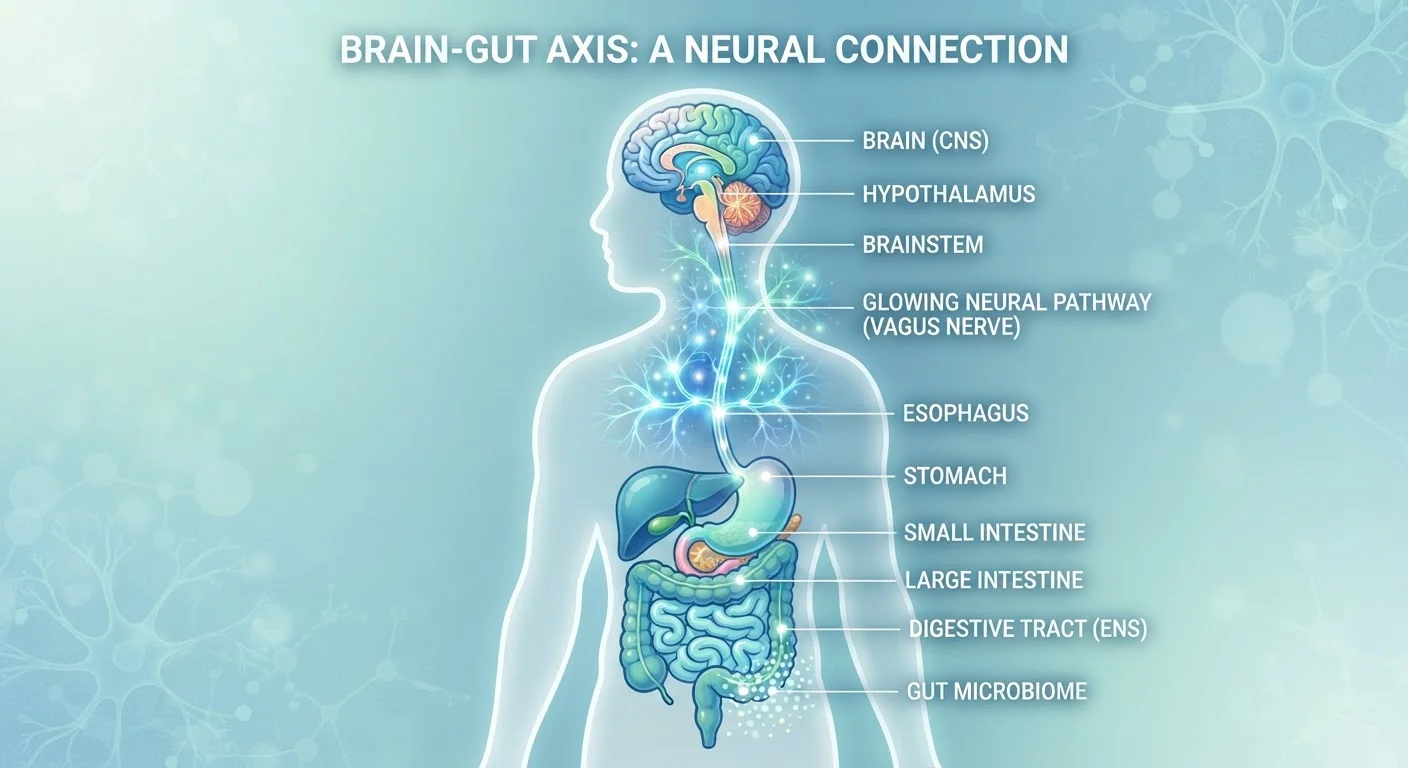
Your Gut Has Its Own Nervous System
Most people think of the brain as the body's command center - but the digestive system contains its own elaborate network of nerve cells known as the enteric nervous system (ENS). Spanning the entire length of the gastrointestinal tract, the ENS contains an estimated 500 million neurons and can coordinate complex digestive processes without input from the brain. This is why scientists sometimes call it the "second brain."
The ENS communicates with the central nervous system - your brain and spinal cord - primarily through the vagus nerve, which runs from the brainstem down into the abdomen. Crucially, around 80-90% of the signals traveling along this nerve move from the gut to the brain, not the other way around. That means your digestive system is constantly feeding your brain information about what's happening inside your body.
The Gut-Brain Axis Is Still Being Studied
Much of the research on the gut-brain connection is still emerging, and while the evidence is promising, many findings come from animal studies or small human trials. Scientists have established that the relationship is real and significant, but the precise mechanisms and clinical applications are areas of active investigation. Interpreting individual symptoms through this lens should always involve a qualified healthcare provider.
Serotonin: A Mood Chemical Made in the Gut
When most people hear about serotonin, they think of the brain. But approximately 90% of the body's serotonin is produced in the gastrointestinal tract. Serotonin is a neurotransmitter - a chemical messenger - that plays a central role in regulating mood, sleep, and appetite. While the serotonin made in your gut does not directly cross into the brain, it influences gut function and communicates with the nervous system in ways that ultimately affect how you feel.
This is one reason why digestive conditions such as irritable bowel syndrome (IBS) are so commonly associated with anxiety and depression. The relationship isn't simply psychological - it reflects a genuine biochemical overlap between gut function and emotional regulation. For a closer look at how everyday habits shape this system, see our article on habits that quietly undermine your digestive health.
~90%
Of the body's serotonin produced in the gut
According to research published in gastroenterology and neuroscience literature, the gastrointestinal tract is the body's primary site of serotonin production.
500 million
Neurons in the enteric nervous system
The enteric nervous system, lining the gastrointestinal tract, contains roughly 500 million nerve cells - more than the spinal cord.
80-90%
Of vagus nerve signals travel gut-to-brain
Research on vagal nerve anatomy indicates the large majority of signals along this key pathway originate in the gut, not the brain.
The Role of the Gut Microbiome
Your gut is home to trillions of bacteria, fungi, and other microorganisms collectively known as the gut microbiome. This community is not merely a passenger in your digestive system - it actively participates in the gut-brain axis. Gut bacteria produce a wide range of neuroactive compounds, including short-chain fatty acids and precursors to neurotransmitters, that influence brain function and behavior.
Research published in peer-reviewed journals has found associations between lower microbiome diversity and higher rates of mood disorders, though scientists are careful to note these are associations rather than proven cause-and-effect relationships. Diet is one of the most powerful levers available for shaping the microbiome. Explore how fibre, fermented foods, and hydration can support a healthier gut environment.
Supporting Your Gut May Support Your Mood
Including a variety of plant-based foods, fermented options like yogurt or kefir, and adequate hydration in your daily diet can help support microbiome diversity. A diverse microbiome is associated with more stable mood and better stress resilience, though diet is just one piece of the broader wellbeing picture. Speak with a dietitian or healthcare provider before making significant dietary changes.
Stress, Anxiety, and the Gut
The gut-brain connection runs in both directions. Just as gut health can influence mood, emotional states - particularly stress and anxiety - can significantly alter how the gut functions. When the brain perceives a threat, it activates the fight-or-flight response, releasing stress hormones like cortisol and adrenaline. This diverts energy away from digestion, slows gut motility (the movement of food through the intestines), and can increase intestinal permeability.
Over time, chronic stress can shift the composition of the gut microbiome, reduce the effectiveness of the gut's protective lining, and amplify sensitivity to pain signals from the intestines. This may explain why people with anxiety disorders often report gastrointestinal symptoms, and vice versa. Our companion article on stress and the gut dives deeper into this process. For broader context on emotional wellbeing, visit our Mood & Emotions hub.
This article is for general informational purposes only and does not constitute medical advice. Always consult a qualified healthcare professional regarding any health concerns, symptoms, or treatment decisions.