
What the Digestive System Actually Does
Your digestive system is, at its core, a sophisticated processing plant. Its job is to break down everything you eat and drink into molecules small enough for your bloodstream to absorb - then move waste efficiently out of the body. Without this system working well, even the most nutritious meal cannot sustain you.
Digestion involves two broad types of work. Mechanical digestion is the physical breakdown of food - chewing, churning, and moving material along. Chemical digestion relies on enzymes (proteins that speed up reactions) and stomach acid to dissolve complex molecules into simpler ones your cells can use.
The system also serves as a major immune barrier. Roughly 70% of the body's immune cells are located in or around the gut, according to research published by institutions including the National Institutes of Health. This makes digestive health inseparable from overall health.
Enzyme
A protein that speeds up a specific chemical reaction in the body. Digestive enzymes break large food molecules into smaller ones that can be absorbed.
Peristalsis
The wave-like muscle contractions that push food and waste through your digestive tract from start to finish.
Gut microbiome
The vast community of microorganisms - mostly bacteria - living in your large intestine. They aid digestion, produce certain vitamins, and influence immune function.
Villi
Tiny, finger-like projections lining the small intestine that greatly increase its surface area, allowing more nutrients to be absorbed into the bloodstream.
Chyme
The thick, semi-liquid mixture of partially digested food and stomach acid that passes from the stomach into the small intestine.
Motility
The ability of the digestive tract muscles to contract and move food, liquid, and waste along their path through the body.
The Journey of Food: Organ by Organ
Food takes a precisely choreographed path through your body. Here is what happens at each stage:
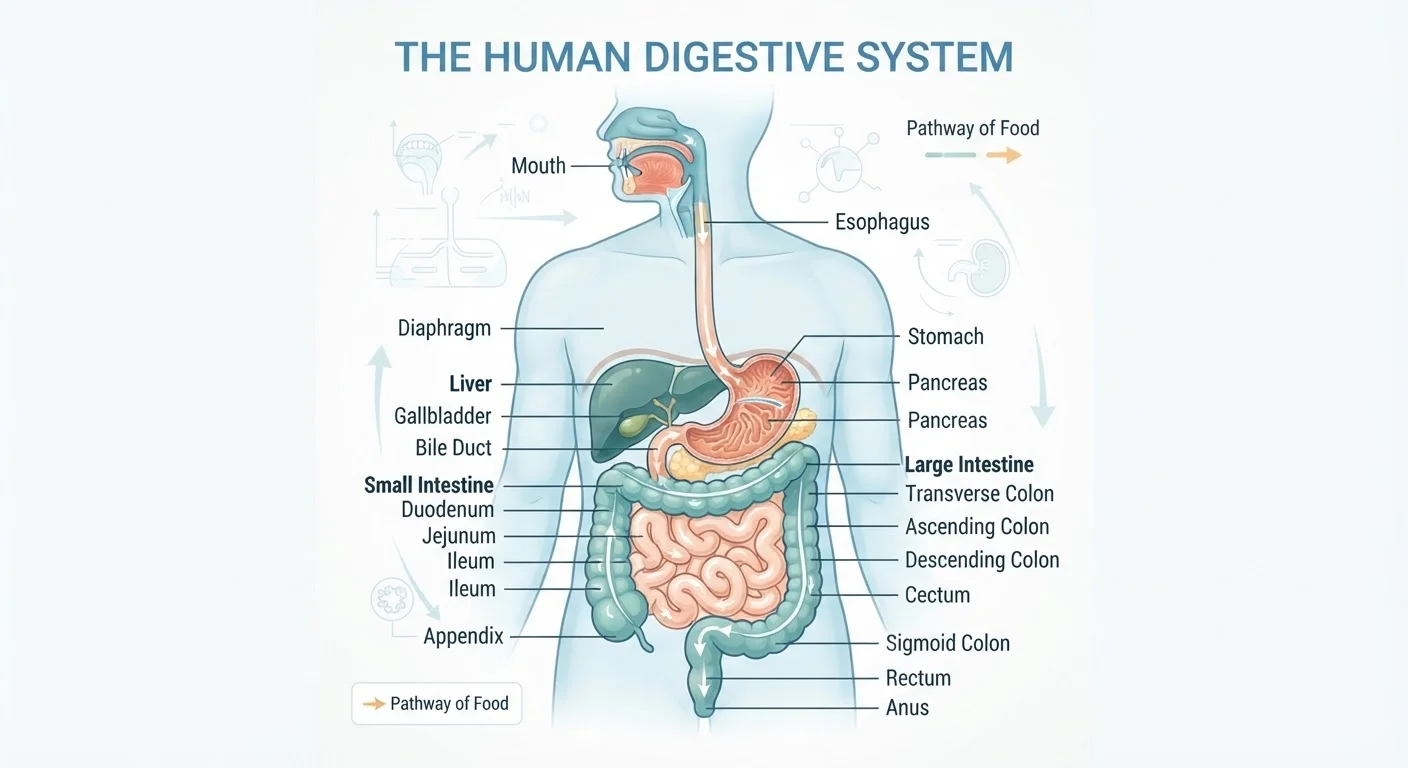
- Mouth: Chewing breaks food into smaller pieces, and saliva begins chemical digestion of starches with an enzyme called amylase. Swallowing triggers a coordinated reflex that moves food into the esophagus.
- Esophagus: A muscular tube connects your throat to your stomach. Rhythmic contractions called peristalsis propel food downward - gravity plays only a minor role, which is why astronauts can swallow in zero gravity.
- Stomach: Gastric acid and enzymes break down proteins. The stomach churns food into a semi-liquid called chyme, which it releases gradually into the small intestine.
- Small intestine: This 20-foot tube is where most nutrient absorption occurs. The pancreas and liver contribute digestive juices and bile here. Microscopic finger-like projections called villi dramatically increase the absorptive surface area.
- Large intestine (colon): Water and electrolytes are reabsorbed, and the gut microbiome ferments remaining fiber. Waste is compacted into stool.
- Rectum and anus: Stool is stored and eventually eliminated.
Understanding how nutrients are absorbed helps clarify why diet quality matters - and connects directly to topics like vitamins and minerals and the roles they play in the body.
Chew More Than You Think You Need To
Digestion is more efficient when food arrives at the stomach well broken down. Chewing each bite thoroughly reduces the work your stomach and small intestine have to do. A simple goal: aim for 20-30 chews per bite for dense foods like meat or raw vegetables. This also slows your eating pace, which helps with recognizing fullness.
Common Signs Your Digestion Needs Attention
Many digestive symptoms are mild and temporary. Others are persistent signals worth discussing with a healthcare provider. Knowing the difference is important.
Common, often benign symptoms include occasional bloating, gas after high-fiber meals, or loose stools during stressful periods. These usually resolve without intervention.
Symptoms that warrant medical evaluation include:
- Blood in stool or black, tarry stools
- Persistent heartburn or difficulty swallowing
- Unexplained weight loss
- Chronic constipation or diarrhea lasting more than a few weeks
- Severe or recurring abdominal pain
It is also worth knowing that the digestive system and brain are in constant communication - a relationship explored in detail in our article on the gut-brain connection. Stress and anxiety can manifest as very real physical digestive symptoms.
Do Not Self-Diagnose Digestive Conditions
Symptoms like bloating or irregular bowel movements overlap across many conditions, from minor dietary intolerances to more serious disorders. Attempting to self-diagnose - or self-treat with supplements or elimination diets - can delay appropriate care or cause nutritional gaps. If symptoms persist, are worsening, or include any of the red-flag signs listed above, please consult a healthcare provider.
Supporting a Healthy Digestive System
While no single habit guarantees perfect digestive health, several practices have strong evidence behind them:
- Eat enough fiber. Dietary fiber - found in vegetables, fruits, legumes, and whole grains - feeds beneficial gut bacteria and supports regular bowel movements. Most American adults consume well below the generally recommended amounts.
- Stay hydrated. Water helps move material through the intestines and softens stool. Dehydration is a common contributor to constipation.
- Eat at a reasonable pace. Rushing meals leads to swallowing excess air and can reduce chewing quality, both of which contribute to bloating and indigestion. Our guide on habits that quietly undermine your digestive health explores this in greater depth.
- Move your body regularly. Physical activity helps stimulate gut motility - the rhythmic contractions that move food along.
- Limit alcohol and avoid smoking. Both are established risk factors for serious digestive conditions, including certain cancers and liver disease.
Digestive function also changes meaningfully as we age, which is covered in our article on digestive health across life stages. If you have ongoing concerns, a gastroenterologist - a doctor who specializes in digestive conditions - is the appropriate first contact.
This article is for general informational purposes only and does not constitute medical advice. Always consult a qualified healthcare provider for personal health questions or before making changes to your diet or health routine.