
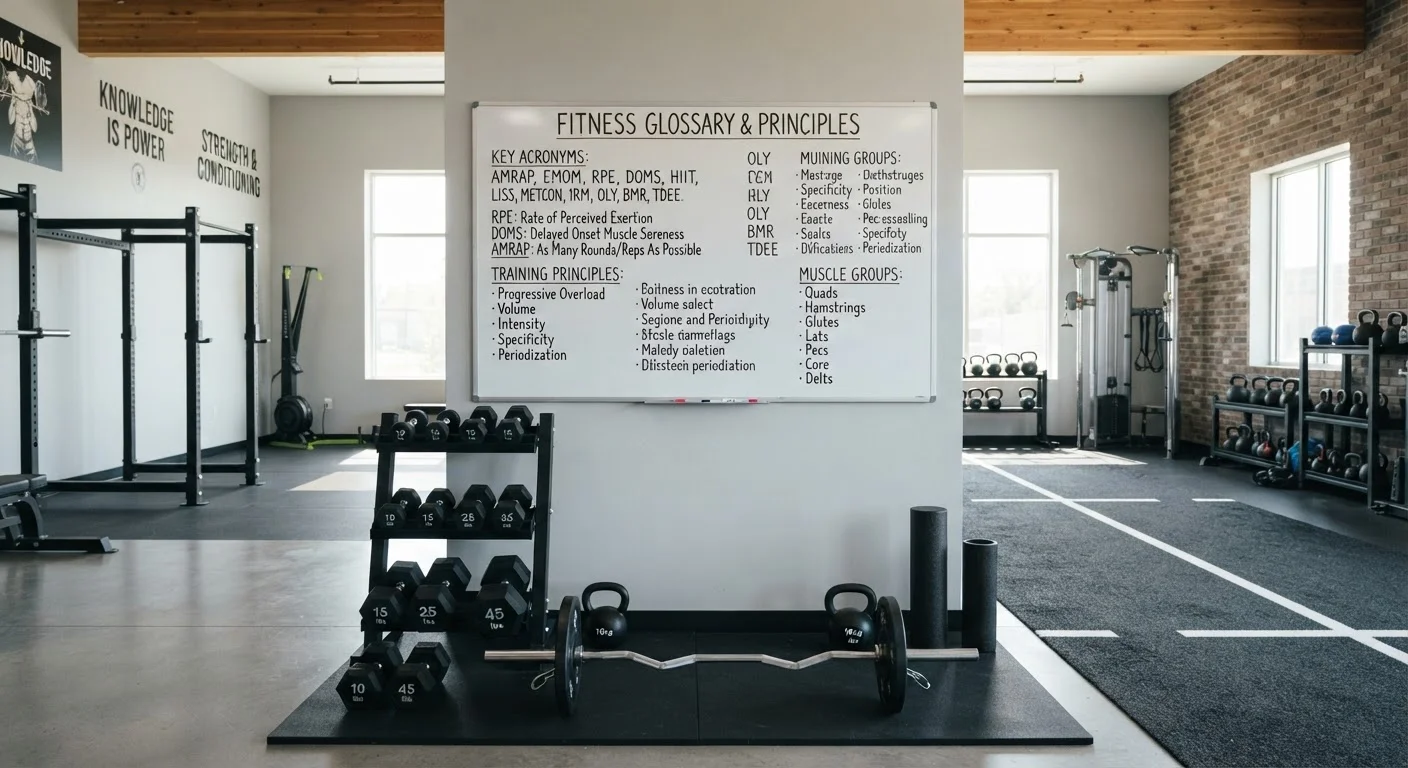
Why Fitness Jargon Matters for Beginners
Walk into any gym, open a training app, or browse a fitness forum and you'll encounter a wall of abbreviations and technical language: AMRAP, RPE, 1RM, DOMS. For someone new to structured exercise, this vocabulary can feel like a barrier rather than a guide.
It doesn't have to be. Understanding these terms helps you follow programmes accurately, communicate with coaches, and make sense of the research behind training methods. This glossary covers the terms you're most likely to see - alongside a companion article on foundational exercise vocabulary such as reps, sets, and HIIT.
This Is a Reference Guide, Not Medical Advice
These definitions are provided for general educational purposes. If you have an underlying health condition, are new to exercise, or experience pain during training, consult a qualified healthcare professional or certified fitness specialist before starting or changing a programme.
For a broader orientation to the types of training these terms apply to, see our guide on the major exercise categories every beginner should know.
The Full Glossary: 12 Terms Explained
Many of these concepts interconnect. For example, progressive overload is the principle that drives both hypertrophy and strength gains - and periodisation is the structured method for applying progressive overload safely over time. Understanding the relationships between terms makes each one more useful.
Nutrition language overlaps with fitness training more than most beginners expect. If terms like macros or energy balance come up in your programme, our men's nutrition reference guide provides a detailed companion glossary covering everything from BMR to amino acids.
Putting the Terms Into Practice
| Number of terms in this glossary | 12 core fitness terms |
| DOMS onset window | 12-48 hours post-exercise (General exercise physiology consensus) |
| Typical deload frequency | Every 4-8 weeks (Common practice in periodised programming) |
| RPE scale range | 1 (rest) to 10 (maximal effort) (Borg CR10 scale, adapted for gym use) |
| Primary macronutrients | Protein, carbohydrates, fats |
Knowing what a term means is step one - understanding how it applies in a session is what builds real-world competence. Here are a few practical examples:
- RPE in daily training: Instead of always chasing a fixed weight, RPE lets you regulate effort based on how you actually feel that day - useful when sleep or stress affects performance.
- DOMS vs. injury: Sharp or joint-focused pain is not DOMS. DOMS is typically a dull, diffuse muscular soreness appearing hours after exercise. If pain is acute or localised to a joint, stop and seek professional assessment.
- Deloads and recovery: Skipping planned deload weeks is a common beginner mistake. The workout recovery hub outlines why rest is a productive - not passive - part of training.
- 1RM and safety: Testing your one-rep max carries injury risk if form breaks down under load. Many coaches recommend estimating it from a multi-rep effort rather than attempting a true maximum without supervision.
If you'd also like a quick-reference breakdown of common exercise movement terms, this reference glossary for beginners covers sets, reps, VO2 max, and more in the same plain-language format.
This article is for informational purposes only and does not constitute medical or fitness advice. Consult a qualified healthcare professional or certified personal trainer before beginning any new exercise programme, especially if you have an existing health condition.