
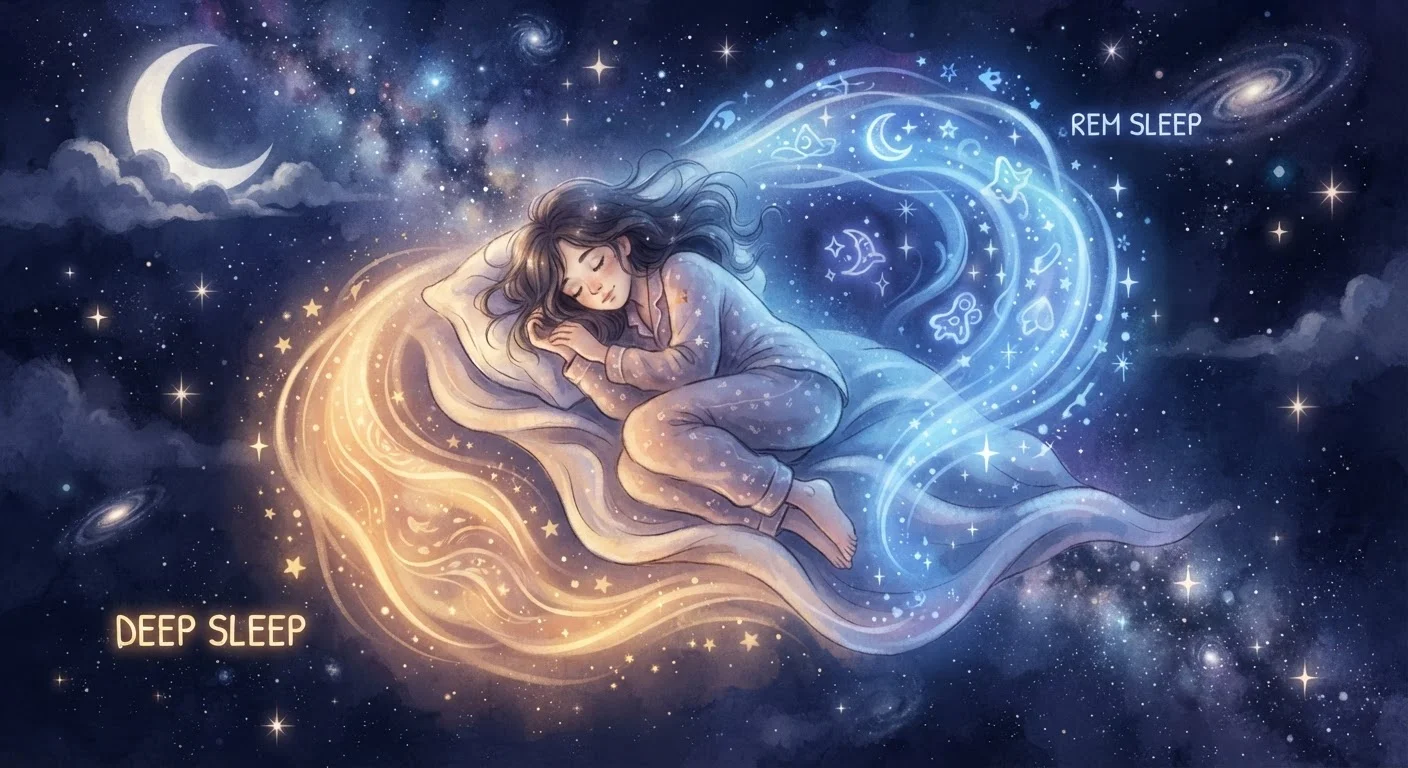
How Your Brain Moves Through Sleep Stages
Sleep is not a single, uniform state - it's an active, structured process. Each night, your brain cycles through distinct stages roughly every 90 minutes. These cycles include lighter stages, deep sleep (also called slow-wave sleep or SWS), and REM sleep (Rapid Eye Movement). Understanding what happens in each stage helps explain why the quality of your sleep matters just as much as the quantity.
Deep sleep is most concentrated in the first half of the night, while REM sleep becomes more prominent in the hours before waking. This means cutting a night short doesn't just reduce total sleep - it specifically shortchanges the stage your brain needs most for emotional processing. As explored in why sleep functions as a mental health tool, restorative sleep is an active process, not passive downtime.
| Criterion | Deep Sleep | REM Sleep |
|---|---|---|
| Brain wave activity | Slow delta waves | Fast, mixed-frequency waves |
| Primary mental function | Memory consolidation, brain restoration | Emotional processing, learning integration |
| Dreaming | Rare or absent | Vivid, narrative dreams common |
| When it peaks | First half of the night | Second half, near waking |
| Effect of deprivation | Mental fog, poor memory recall | Heightened emotional reactivity |
| Impaired by | Noise, fragmented sleep, aging | Alcohol, sleep deprivation, stress |
What Deep Sleep Does for Your Mind
During deep sleep, your brain produces slow, synchronized electrical waves known as delta waves. Neural activity slows dramatically, and the brain takes this opportunity to do essential maintenance work. This is when declarative memories - facts, events, and newly learned information - are transferred from short-term storage in the hippocampus to long-term cortical networks.
Deep sleep also triggers the release of growth hormone, supports immune function, and appears to clear metabolic waste products from the brain through the glymphatic system. Research suggests this clearing process may play a role in long-term brain health. For a deeper look at how sleep stages support memory and clarity, see our guide on cognitive recovery and sleep.
13-23%
Proportion of sleep spent in deep sleep
According to the American Sleep Association, healthy adults typically spend roughly 13-23% of total sleep time in deep slow-wave sleep.
20-25%
Proportion of sleep spent in REM
The American Sleep Association estimates that REM sleep accounts for approximately 20-25% of total sleep time in healthy adults.
90 min
Average length of one full sleep cycle
Sleep researchers widely cite approximately 90 minutes as the average duration of one complete sleep cycle, encompassing all stages.
When deep sleep is disrupted - whether by noise, alcohol, or fragmented schedules - people often report feeling mentally foggy and physically unrestored the next day, even if total sleep time was sufficient.
What REM Sleep Does for Your Emotions
REM sleep is the stage most associated with vivid dreaming, and it plays a particularly important role in emotional regulation. During REM, the brain reactivates emotional memories but does so in a neurochemical environment low in norepinephrine - a stress-related chemical. This unique condition may allow the brain to reprocess difficult experiences with reduced emotional charge, essentially filing them away with less distress attached.
Research from sleep science suggests that people who get insufficient REM sleep show heightened reactivity to negative emotional stimuli the following day. REM sleep also appears to support creative thinking and the integration of new learning with existing knowledge - connecting dots your waking mind may not have linked. This connection between sleep, mood, and mental health is covered in depth in our overview of sleep and mood regulation.
REM Sleep Increases Toward Morning
Because REM sleep is weighted toward the later cycles of the night, waking up even an hour or two earlier than usual can significantly reduce your total REM time. If you consistently feel emotionally reactive or mentally foggy despite what seems like enough sleep, consider whether early waking - from an alarm, noise, or light - may be cutting into your final REM cycles. Maintaining a consistent wake time and sleeping in a dark, quiet environment can help protect these later stages.
Supporting Both Stages Through Better Sleep Habits
You cannot manually schedule deep sleep or REM sleep - your brain moves through these stages automatically when given the opportunity. The most evidence-based way to protect both stages is to prioritize consistent, sufficient, and uninterrupted sleep each night. Most adults need seven to nine hours; individual needs vary.
Several habits are known to undermine specific stages. Alcohol, for instance, suppresses REM sleep even when it initially makes falling asleep easier. Chronic sleep deprivation disproportionately affects REM, since it accumulates in later cycles. Irregular sleep schedules can disrupt the circadian timing that governs when each stage appears. Our article on foundational sleep hygiene habits covers practical, evidence-informed strategies for improving sleep quality across both stages.
This article is for general informational purposes only and does not constitute medical advice. If you are experiencing persistent sleep difficulties or concerns about your mental health, please consult a qualified healthcare professional.