
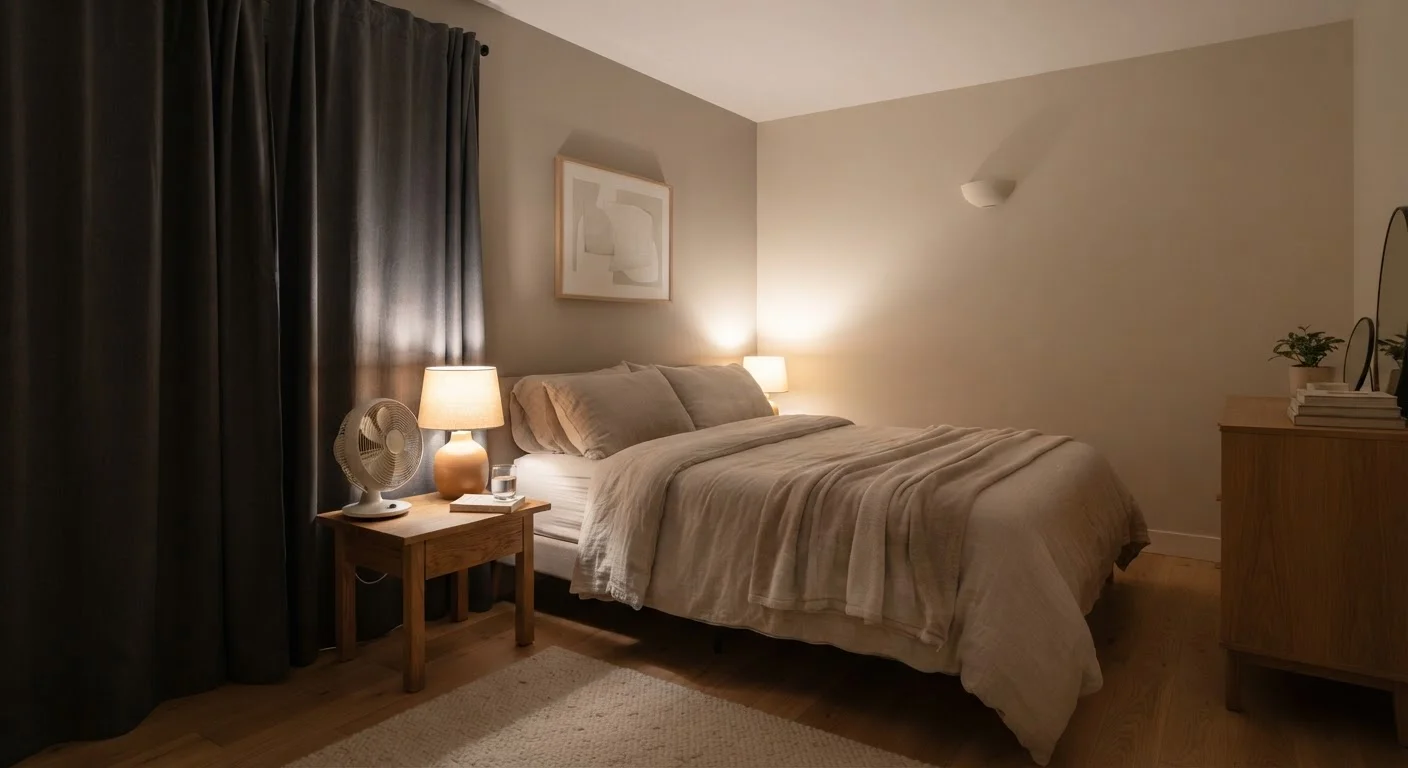
Why Your Environment Is Part of Your Sleep Routine
Most sleep advice focuses on behavior: go to bed at the same time, avoid caffeine late in the day, put down your phone. All of that matters — but the physical space you sleep in is an equally powerful lever, and one that's often overlooked.
Your brain uses environmental cues — temperature, light, sound, and even smell — to determine whether it's safe and appropriate to transition into sleep. When those signals are misaligned, sleep onset can take longer, sleep can become fragmented, and the restorative depth of rest can suffer. As explored in our article on sleep as a mental health tool, the quality of your rest has direct downstream effects on emotional regulation, stress resilience, and cognitive recovery.
This audit is designed to help you walk through your bedroom systematically — assessing temperature, light, sound, your bed setup, layout, and sensory comfort — so you can identify what's working and what may be quietly undermining your sleep.
Blackout Curtains or Window Film
Blocks external light sources that can suppress melatonin and trigger early waking.
White Noise Machine or Fan
Masks unpredictable environmental sounds that cause sleep fragmentation.
Thermostat or Smart Plug with Timer
Helps maintain a consistently cool room temperature throughout the night.
Hygrometer (Humidity Monitor)
Tracks indoor humidity so you can keep air quality in a sleep-friendly range.
Blue-Light Blocking Tape or Device Covers
Eliminates standby LED indicator lights that can disrupt the sleep environment.
How to Use This Checklist
Work through each group at a time you can give the room your full attention — ideally in the evening, when lighting conditions reflect your actual sleep environment. For each item, note whether the current state is already in place, needs adjustment, or not applicable to your situation.
You don't need to overhaul everything at once. Prioritize items marked must first, since these tend to have the greatest impact on sleep onset and continuity. Items marked should are strongly recommended once the basics are in place. Nice-to-have items are optional enhancements that can further refine your sleep space.
Your Bedroom Is a Sleep Signal, Not a Multipurpose Room
One of the most evidence-supported changes you can make is conditioning your brain to associate the bedroom exclusively with rest. Using your bed for work, news, or social media — even occasionally — can erode that association over time. The more consistently your bedroom is reserved for sleep, the stronger the environmental cue for your nervous system to downshift into rest mode.
Light is one of the most impactful factors. Our article on natural light, screens, and your sleep-wake cycle explains how even low-level light exposure at night can delay melatonin release and shift your internal clock.
Once your environment is optimized, pairing it with a consistent pre-sleep routine amplifies the effect. Our evening wind-down framework offers a step-by-step approach to signaling your nervous system that rest is near.
Temperature & Air Quality
Light Control
Sound Management
Bed & Bedding Setup
Layout & Clutter
Scent & Sensory Comfort
After the Audit: Making Sustainable Changes
Once you've completed your walkthrough, you may find that your bedroom is already doing a lot of things right — or you may discover several areas that need attention. Either outcome is useful information.
Start with the changes that require the least effort and cost: covering indicator lights, moving your phone out of arm's reach, or adjusting the thermostat costs nothing. Larger changes — new curtains, a white noise machine, or reassessing your mattress — can be phased in over time.
Persistent Sleep Problems Deserve Professional Attention
An optimized bedroom environment is a helpful foundation, but it is not a treatment for sleep disorders such as insomnia, sleep apnea, or restless legs syndrome. If you've made consistent environmental changes and still struggle with sleep for more than a few weeks, speak with a healthcare provider. Untreated sleep disorders can have significant effects on mental and physical health.
Keep in mind that some sleep challenges are tied to life stage and age-related shifts in sleep architecture, which are worth understanding. Our overview on sleep across the lifespan can help contextualize what's normal at different ages. For a broader picture of how sleep and emotional health interact, sleep, mood regulation, and mental well-being is a comprehensive starting point.
This article is for general informational and educational purposes only. It is not a substitute for professional medical advice, diagnosis, or treatment. If you have ongoing sleep difficulties or concerns about your health, please consult a qualified healthcare provider.