
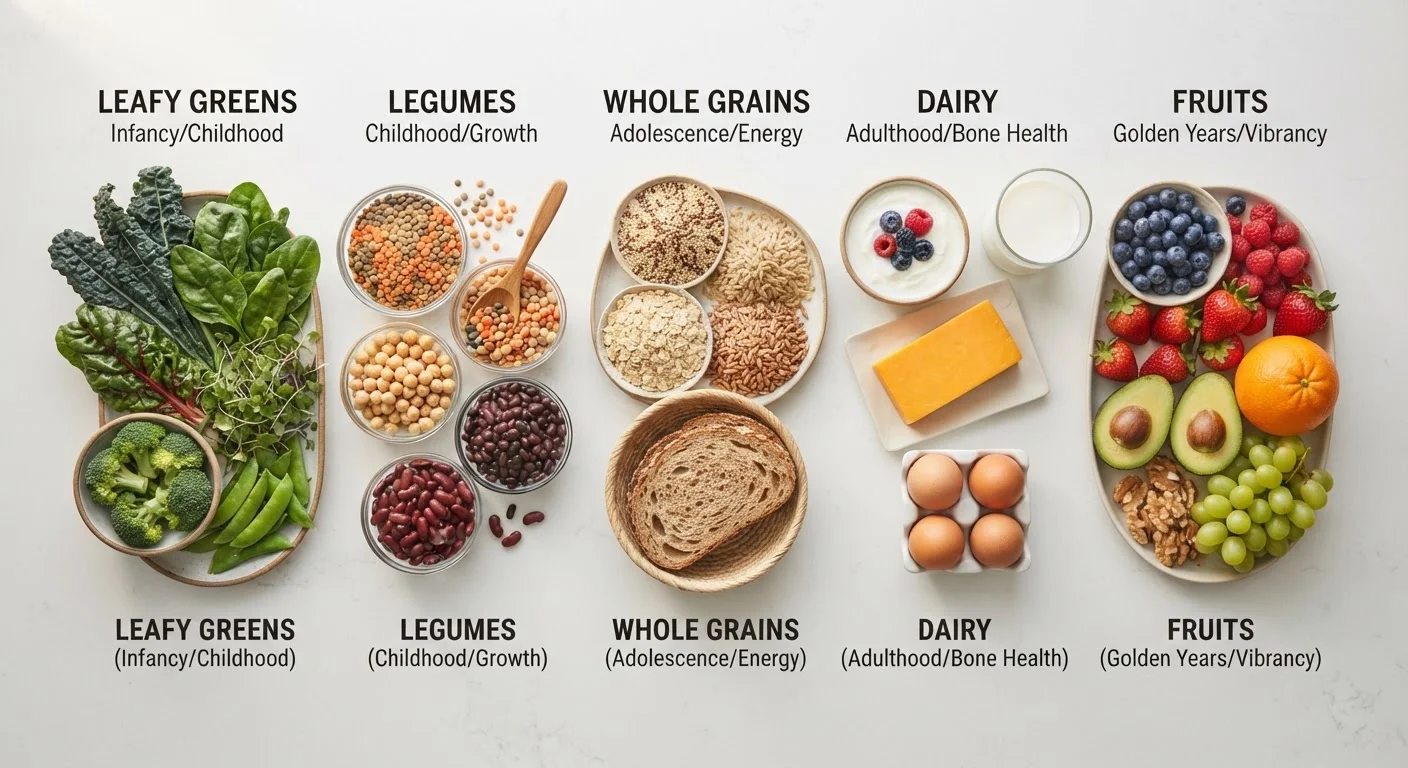
Why Nutritional Needs Change With Age
The human body is not a fixed machine — it shifts in metabolism, hormone levels, muscle composition, and digestive capacity across every decade of life. These biological changes directly affect what nutrients your body needs, how much of them it requires, and how efficiently it absorbs them from food.
For example, basal metabolic rate (the number of calories your body burns at rest) tends to decline gradually after early adulthood, partly because muscle mass decreases with age. Meanwhile, absorption of certain vitamins and minerals — including B12, calcium, and vitamin D — can become less efficient over time. Understanding these shifts helps you make more informed food choices at each stage of life.
See our guide to essential nutrients across the lifespan for a deeper look at how specific nutrient requirements evolve from early life onward.
~30%
Decline in metabolic rate from age 20 to 70
Research published in Science (2021) estimated that adult metabolism is broadly stable between ages 20–60, with more notable decline occurring after 60.
46g vs. 16g
Daily fiber recommended vs. average consumed
The 2020–2025 Dietary Guidelines for Americans recommend 28–38g of fiber daily for adults, while the average U.S. adult consumes roughly 16g per day.
1 in 3
Older adults with low vitamin D levels
According to the NIH Office of Dietary Supplements, vitamin D insufficiency is common among adults over 65 due to reduced sun exposure and impaired skin synthesis.
Nutrition in Your 20s: Building a Foundation
Early adulthood is often considered a window of opportunity for building lifelong dietary habits. Bone density is still being consolidated during the early 20s, making adequate calcium and vitamin D especially important. Iron needs are significant for women of reproductive age due to monthly losses, while folate remains essential for anyone who could become pregnant.
Caloric needs are generally at their peak during this decade for most people, but that doesn't mean nutrition quality should take a back seat to quantity. A diet centered on whole grains, lean proteins, fruits, vegetables, and healthy fats supports energy, mood, and long-term disease prevention.
Start Strong in Your 20s
Use your 20s to build dietary habits that will carry you forward — not just to fuel today's energy demands. Focus on variety, whole foods, and consistent hydration. Habits formed early are far easier to maintain than ones adopted under pressure later in life.
For women, this is also a stage to understand sex-specific nutritional demands. Our article on why women's nutritional needs change across a lifetime explores these patterns in depth.
Nutrition in Your 30s and 40s: Maintaining and Adapting
During the 30s and 40s, metabolism begins a gradual slowdown. Muscle mass can start declining — a process called sarcopenia — if protein intake and physical activity are insufficient. Research suggests that adults in this age range benefit from prioritizing dietary protein to help preserve lean mass.
Fiber also becomes increasingly important during these decades for gut health and cardiovascular support. The 2020–2025 Dietary Guidelines for Americans recommend 25–38 grams of fiber per day for adults, yet most Americans fall well short of this target.
Men have their own set of shifting priorities during this period. How nutrition needs shift as men age through their 30s, 40s, and beyond covers the metabolic and micronutrient considerations specific to men navigating midlife.
When building meals in your 30s and 40s, anchor each plate around a quality protein source first — then fill the rest with vegetables, whole grains, and healthy fats.
Starting with protein helps ensure you meet rising muscle-preservation needs during a decade when muscle loss can begin to accelerate if left unaddressed.
Track your fiber intake for just one week using a food diary — most people are surprised by how far below recommended levels they actually fall.
Awareness is a reliable first step toward behavior change; most people significantly overestimate their dietary fiber intake without objective measurement.
Nutrition in Your 50s: Hormonal Shifts and New Priorities
The 50s mark significant hormonal transitions for many adults — most notably menopause for women. Declining estrogen levels can accelerate bone loss and increase cardiovascular risk, making calcium, vitamin D, magnesium, and heart-healthy fats higher priorities.
For women navigating perimenopause or menopause, dietary choices can play a meaningful supporting role alongside medical care. Our detailed guide on navigating nutrition through perimenopause and menopause covers the most relevant dietary considerations for this transition.
Bone Loss Accelerates After Menopause
Estrogen plays a protective role in maintaining bone density. After menopause, that protection decreases, and bone loss can accelerate significantly in the first few years. Ensuring adequate calcium and vitamin D intake — alongside weight-bearing physical activity — is particularly important during this window. Speak with your healthcare provider about bone health screening and whether supplementation is appropriate for you.
Digestive health also warrants more attention in this decade. Changes in gut motility and microbial composition can affect nutrient absorption and regularity. For more context, see our overview of digestive health across life stages.
Nutrition in Your 60s and Beyond: Supporting Longevity
In older adulthood, several nutritional challenges converge. Appetite often decreases, reducing overall food intake — yet needs for protein, calcium, vitamin D, and B vitamins remain high or increase. Vitamin B12 absorption can become impaired as stomach acid production declines, which is why older adults are often advised to discuss B12 status with a healthcare provider.
Hydration is another concern that deserves more attention with age. The sense of thirst naturally diminishes over time, increasing the risk of dehydration even without obvious symptoms.
Older Adults: Watch for Hidden Deficiencies
Nutrient deficiencies in older adults — particularly B12, vitamin D, iron, and calcium — often develop gradually and without obvious symptoms. Routine blood work during annual check-ups can catch deficiencies before they affect health. Do not self-diagnose or self-supplement without first discussing your results with a healthcare provider.
Social factors — including reduced cooking capacity, isolation, and fixed incomes — can make it harder for older adults to maintain a varied, nutrient-dense diet. Community meal programs, registered dietitians, and primary care providers can all help address these barriers.
Nutrients That Matter at Every Stage
While priorities shift across decades, several nutrients support health throughout all of adulthood:
- Protein: Essential for muscle maintenance, immune function, and tissue repair. Needs may increase proportionally with age even as overall calorie needs decrease.
- Calcium and Vitamin D: Foundational for bone health throughout life, with increasing importance from midlife onward.
- Fiber: Supports digestive health, blood sugar regulation, and cardiovascular function at every stage.
- B Vitamins (including B12 and folate): Critical for energy metabolism and neurological health. Absorption of B12 in particular can decline with age.
- Omega-3 fatty acids: Found in fatty fish, walnuts, and flaxseed; support heart and brain health across adulthood.
For women specifically, the Women's Nutrition hub provides a broader view of how dietary needs map to female physiology at different life stages. Men can explore tailored guidance through the Men's Nutrition hub.
“Nutrition is not a static prescription. As our bodies change across the decades, the foods and nutrients that best support our health must evolve alongside them.”
— National Institute on Aging, U.S. federal institute focused on aging research and health education
Practical Steps for Eating Well at Any Age
No matter your current decade, a few evidence-based principles apply broadly:
- Prioritize whole foods — vegetables, fruits, legumes, whole grains, lean proteins, and healthy fats form the backbone of a nutrient-dense diet at any age.
- Don't ignore micronutrients — vitamins and minerals often receive less attention than macronutrients (protein, carbohydrates, fat), but they are equally essential to long-term health.
- Stay hydrated — water supports digestion, circulation, and cognitive function. Thirst is not always a reliable indicator, particularly in older adults.
- Review your diet periodically — as your body changes, your dietary needs do too. Regular check-ins with a registered dietitian or healthcare provider can help you stay aligned.
- Approach supplements cautiously — supplements may address specific deficiencies, but they are not a substitute for a varied diet. Always discuss supplementation with a qualified professional before starting.
Individual Needs Vary Widely
The nutritional guidance in this article reflects general population-level patterns based on established dietary science. Individual needs can vary based on genetics, medical history, activity level, medications, and other factors. This content is intended as a starting point for understanding — not a personal dietary prescription. A registered dietitian can provide guidance tailored to your specific circumstances.
This article is for informational and educational purposes only and is not a substitute for personalized medical or nutritional advice. Please consult a qualified healthcare provider or registered dietitian for guidance tailored to your individual health needs.