
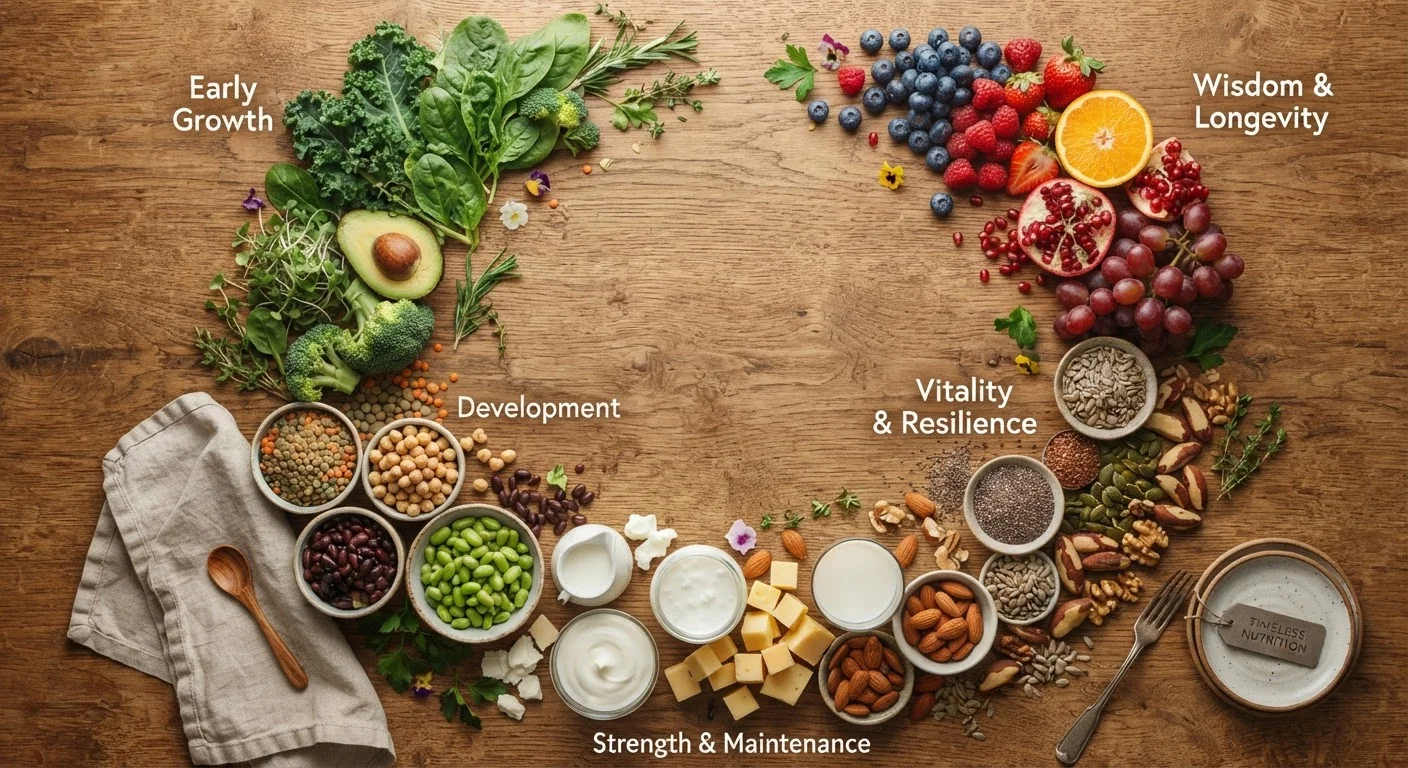
Why Biology Makes Women's Nutrition a Moving Target
Nutrition advice often treats women as a single, static category. But women's bodies are constantly changing — and so are their nutrient requirements. Hormones orchestrate much of this variation: estrogen, progesterone, and other signaling molecules influence bone metabolism, iron regulation, cardiovascular risk, and even appetite cues throughout a woman's life.
Understanding these shifts isn't about following a rigid protocol. It's about recognizing that your nutritional starting point at different life stages is genuinely different, and that's worth knowing. Explore how hormones affect women's overall well-being for broader context on these biological drivers.
18 mg
Daily iron recommendation for women aged 19–50
According to the National Institutes of Health Office of Dietary Supplements — more than double the 8 mg recommended for men of the same age.
90%
Peak bone mass established by age 18
Research cited by the National Osteoporosis Foundation suggests the majority of lifetime bone density is built during adolescence and early adulthood.
1 in 5
Women over 50 affected by osteoporosis
The International Osteoporosis Foundation estimates approximately 1 in 5 women over age 50 will experience an osteoporosis-related fracture in their lifetime.
Adolescence: Building the Foundation
The teenage years bring rapid bone development, the onset of menstruation, and significant muscle and tissue growth. This creates the highest lifetime demands for several key nutrients.
- Iron: Menstruation begins during this window, and iron losses through monthly cycles are substantial. Teen girls are at elevated risk of iron-deficiency anemia, making iron-rich foods — like lean meats, legumes, and fortified grains — particularly important.
- Calcium and vitamin D: Roughly 90% of peak bone mass is established by age 18. Getting adequate calcium and vitamin D during adolescence is one of the most impactful long-term investments in skeletal health.
- Zinc and magnesium: Both support growth and reproductive development, yet are commonly under-consumed in typical teenage diets.
This is also a period when disordered eating patterns can emerge. If you're concerned about a teenager's relationship with food, speaking with a pediatrician or registered dietitian is a valuable first step.
Getting Enough Iron During Your Teens and Twenties
Pairing iron-rich foods — like lentils, tofu, lean red meat, or fortified cereals — with a source of vitamin C, such as bell peppers or citrus, can noticeably improve absorption. Try to avoid drinking coffee or tea right with iron-rich meals, as compounds in these beverages can interfere with uptake.
Reproductive Years: Monthly Demands and Potential Pregnancy
From roughly age 18 to the late 30s or early 40s, many women navigate monthly hormonal cycles alongside potential pregnancy planning. Each element carries distinct nutritional implications.
Monthly cycles mean regular iron loss — the recommended daily intake for women aged 19–50 is 18 mg, more than double the amount recommended for men. Pairing iron-rich foods with vitamin C improves absorption, while consuming them alongside calcium-rich foods or coffee can reduce it.
Before and during pregnancy, folate (vitamin B9) is critical. Adequate folate in the weeks before conception and during the first trimester helps prevent neural tube defects. The CDC recommends that women of reproductive age who could become pregnant consume 400 mcg of folic acid daily. Iodine, choline, omega-3 fatty acids, and additional iron also become priorities during pregnancy. Given the complexity, pregnant women should work directly with their healthcare provider on nutrition planning.
Perimenopause and Menopause: Shifting Priorities
The hormonal transition into menopause — typically beginning in the mid-40s and completing by the early 50s — reshapes nutritional needs once more. Estrogen's decline has wide-ranging metabolic effects:
- Bone density: Bone loss accelerates post-menopause. Calcium needs increase to 1,200 mg per day for women over 50, and vitamin D is essential for absorption and bone remodeling.
- Cardiovascular risk: Estrogen had a protective effect on heart health. After menopause, dietary patterns that support healthy cholesterol and blood pressure — such as those emphasizing fiber, healthy fats, and reduced sodium — become increasingly relevant.
- Muscle mass: Lean muscle naturally declines with age; adequate protein intake helps preserve it. Some research suggests older women may benefit from distributing protein across meals rather than concentrating it in one sitting.
For a deeper look at eating strategies during this transition, see our guide on navigating nutrition through perimenopause and menopause.
Menopause Timing Varies Widely
The average age of menopause in the U.S. is 51, but perimenopause — the transition phase — can begin anywhere from the late 30s to mid-50s. Nutritional adjustments don't need to wait for a formal menopause diagnosis; starting to prioritize bone and cardiovascular health in your 40s is a reasonable and evidence-supported approach.
Later Life: Absorption, Muscle, and Micronutrient Gaps
After 60, calorie needs generally continue to ease — but micronutrient needs do not. In fact, some increase. Vitamin B12 absorption becomes less efficient as stomach acid production declines with age, making deficiency a real concern for older women, particularly those on plant-forward diets. Learn why B12 matters more as you age for more detail.
Protein is also worth highlighting. Sarcopenia — age-related muscle loss — affects physical independence and metabolic health. Higher protein intake, combined with resistance-based movement, is associated with better muscle preservation. See our broader look at how nutrition evolves across adulthood for context across all life stages.
“Nutrition science consistently shows us that women are not simply smaller men. Hormonal biology, reproductive life events, and aging create a genuinely distinct nutritional profile — one that deserves specific research attention and individualized care.”
— Dr. Dariush Mozaffarian, Cardiologist and nutrition researcher, Dean for Policy at the Friedman School of Nutrition Science and Policy, Tufts University
This article is for general informational purposes only and is not a substitute for professional medical advice. Always consult a qualified healthcare provider before making significant changes to your diet or supplement routine.