
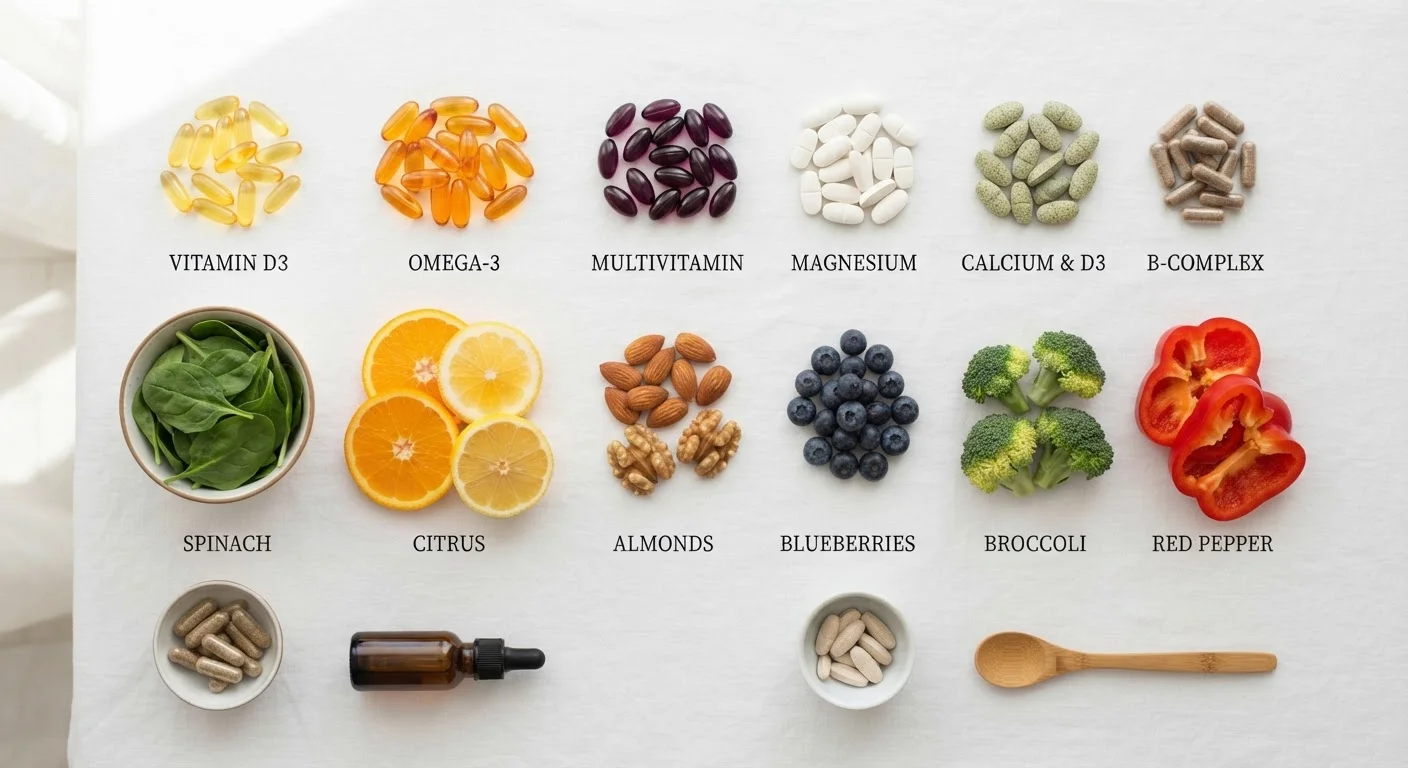
Why Nutrients Don't Always Work in Isolation
When most people think about nutrition, they focus on getting enough of each vitamin or mineral individually. But the body doesn't process nutrients in isolation — they interact constantly during digestion and metabolism. Understanding what vitamins and minerals do lays the groundwork for seeing why these interactions matter.
These interactions fall into two broad categories. Synergistic interactions occur when one nutrient helps another function better or be absorbed more efficiently. Antagonistic interactions occur when one nutrient blocks, competes with, or diminishes the effect of another. Both types have real consequences for how well your body actually uses what you eat or supplement.
Interactions Are Dose-Dependent
Most nutrient competition becomes significant at supplemental doses — amounts much higher than you'd typically get from food. The calcium naturally present in a cup of yogurt is unlikely to dramatically affect iron absorption the way a 1,000 mg calcium supplement might. Context and dose matter considerably when evaluating these interactions.
This is particularly relevant for people taking multiple supplements, because isolated nutrients in pill form are delivered at concentrations that rarely occur naturally in food — making competition between nutrients more likely.
Common Nutrient Rivalries: Who Competes With Whom
Several nutrient pairs are well-documented competitors. Here are the most practically relevant ones:
- Calcium and Iron: Calcium can inhibit the absorption of both heme iron (from meat) and non-heme iron (from plants) when consumed together in large amounts. Taking a calcium supplement at the same time as an iron-rich meal may reduce how much iron you absorb.
- Zinc and Copper: High zinc intake over time can deplete copper levels. The two minerals compete for absorption, and excessive supplemental zinc — far above normal dietary amounts — is associated with copper deficiency.
- Zinc and Iron: These two share intestinal transport proteins, so a large dose of supplemental zinc can limit iron uptake. The interaction is dose-dependent and primarily a concern with supplements.
- Vitamin E and Vitamin K: Very high doses of vitamin E may interfere with vitamin K's role in blood clotting, which is especially relevant for people taking blood-thinning medications. This underscores why supplement doses matter.
For more on how different minerals scale in the body's requirements, see macrominerals vs. trace minerals.
~33%
Reduction in iron absorption from calcium co-ingestion
Research has shown calcium can reduce both heme and non-heme iron absorption by roughly one-third when consumed together in supplemental amounts, according to studies reviewed in the American Journal of Clinical Nutrition.
2–3×
More iron absorbed when paired with vitamin C
Studies indicate that consuming vitamin C alongside plant-based iron sources can increase non-heme iron absorption by two to three times, according to established nutritional research.
Nutrients That Help Each Other
Not all interactions are problematic. Some nutrients genuinely enhance each other:
- Vitamin D and Calcium: Vitamin D increases the intestinal absorption of calcium. Without adequate vitamin D, the body can only absorb a fraction of the calcium you consume — making bone-health efforts less effective.
- Vitamin C and Iron: Vitamin C converts non-heme iron (plant-based) into a more absorbable form. Pairing iron-rich plant foods — like lentils or spinach — with vitamin C sources like citrus or bell peppers can meaningfully improve iron uptake.
- Magnesium and Vitamin D: Magnesium is needed to activate vitamin D in the body. Low magnesium levels may impair vitamin D's effectiveness, even when intake is adequate. Learn more about magnesium's wide-ranging roles in the body.
Use Food Pairings to Your Advantage
You don't need supplements to apply nutrient synergy. Try adding sliced strawberries to iron-fortified oatmeal, or eating vitamin D-rich fatty fish alongside calcium-rich greens. These combinations leverage natural nutrient teamwork. If you do take supplements, a registered dietitian can help you time them strategically.
Practical Takeaways for Everyday Choices
Understanding these interactions doesn't require a degree in biochemistry — a few simple habits can make a meaningful difference:
- Separate competing supplements by a few hours when possible (e.g., calcium and iron supplements).
- Pair synergistic nutrients intentionally — add a vitamin C-rich food alongside plant-based iron sources.
- Avoid assuming more is better. High-dose supplements amplify interaction risks. Common misconceptions about supplements often lead people to overdo single nutrients without considering their effects on others.
- Prioritize whole foods where possible. Getting nutrients from food tends to deliver them in more naturally balanced ratios that reduce antagonistic interactions.
This article is for general informational and educational purposes only and is not a substitute for professional medical advice, diagnosis, or treatment. Always consult a qualified healthcare provider before making changes to your supplement routine or diet, particularly if you have a health condition or take medication.