
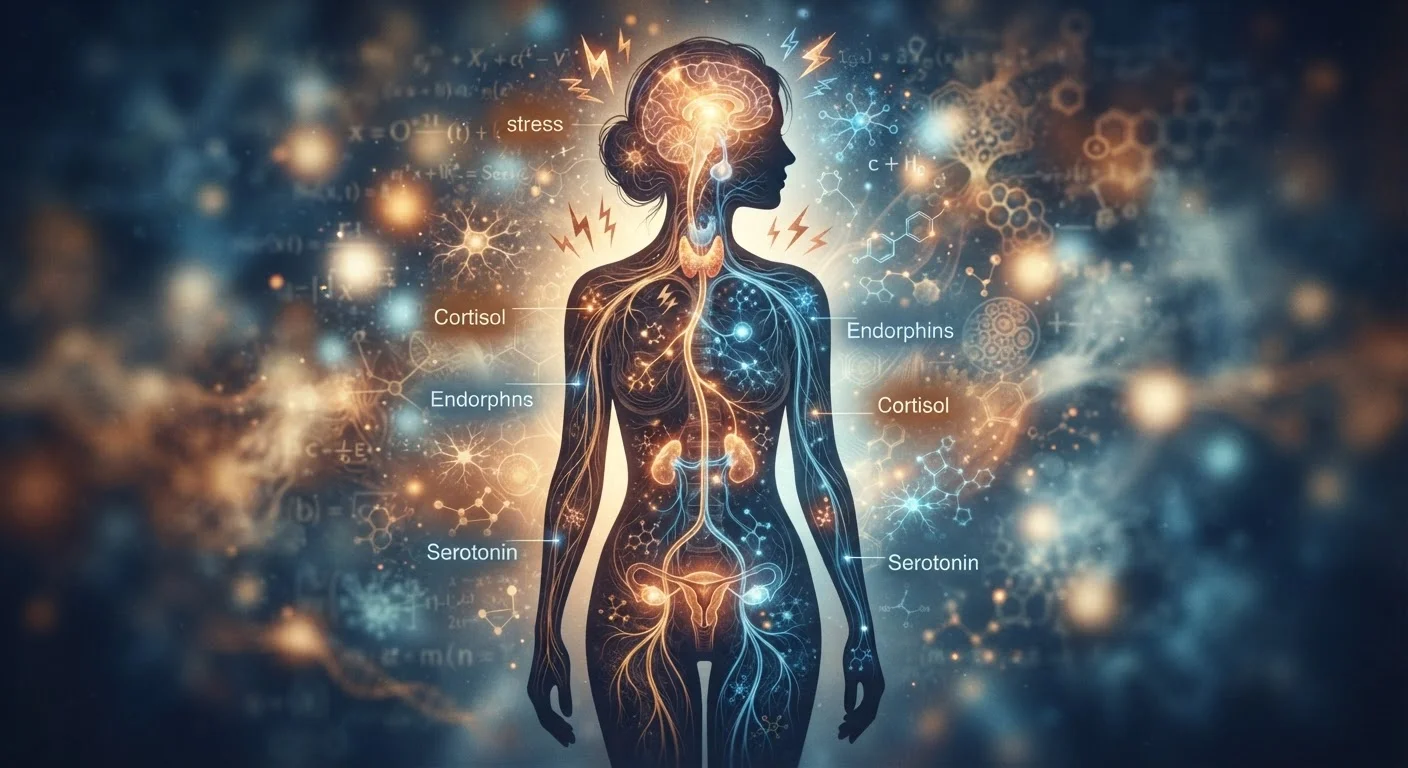
The Stress-Hormone Connection Explained
When your brain perceives a threat — whether that's a looming deadline or a difficult relationship — it triggers a cascade of events along the hypothalamic-pituitary-adrenal (HPA) axis. The hypothalamus signals the pituitary gland, which in turn prompts the adrenal glands to release cortisol. In short bursts, this is protective and adaptive. The problem begins when the trigger never fully turns off.
Chronic stress keeps this system in near-constant activation. The body continues churning out cortisol even when no immediate danger exists. Because the HPA axis shares regulatory pathways with the reproductive and thyroid hormone systems, prolonged cortisol elevation doesn't stay contained — it spreads its influence throughout the hormonal network.
Acute vs. Chronic Stress: An Important Distinction
A single stressful event — like a difficult presentation or a minor accident — triggers a short-lived cortisol spike that resolves quickly. Hormonal disruption is associated with chronic, sustained stress lasting weeks or months, not isolated episodes. Most people's hormonal systems recover smoothly from brief stress responses.
How Elevated Cortisol Affects Reproductive Hormones
The hypothalamus does more than manage the stress response — it also releases gonadotropin-releasing hormone (GnRH), which sets the menstrual cycle in motion by signaling the pituitary to release LH and FSH (the hormones that drive ovulation). When cortisol is chronically high, it can suppress GnRH release, essentially putting the brakes on the reproductive hormone cascade.
The practical consequences for women can include delayed or absent ovulation, shortened luteal phases, and changes in estrogen and progesterone balance. Some women experience missed or irregular periods; others notice intensified PMS symptoms. Research also suggests that high cortisol may reduce the sensitivity of hormone receptors, meaning that even when estrogen and progesterone are produced, cells respond less effectively.
“The reproductive axis is exquisitely sensitive to the body's perception of safety and resource availability. Chronic stress essentially signals the brain that conditions are not favorable for reproduction, and hormone output adjusts accordingly.”
— Dr. Jerilynn Prior, Professor of Endocrinology, University of British Columbia, and founder of the Centre for Menstrual Cycle and Ovulation Research
The Thyroid and Metabolic Effects
Thyroid hormones govern metabolism, energy, and mood — and they're not immune to the effects of chronic stress. Cortisol can impair the conversion of inactive thyroid hormone (T4) into its active form (T3), potentially contributing to symptoms like persistent fatigue, difficulty concentrating, or unexplained weight changes. These symptoms often overlap with those of anxiety or burnout, which can make the hormonal dimension easy to overlook.
Stress can also elevate insulin and influence blood sugar regulation. Over time, this interaction between cortisol and insulin may affect energy metabolism and contribute to hormonal imbalances associated with conditions like polycystic ovary syndrome (PCOS), though research in this area is still developing.
If you're experiencing persistent symptoms alongside high stress, evidence-based stress management strategies may be a meaningful part of your overall wellness picture — but always discuss symptoms with a qualified healthcare provider first.
~40%
Women reporting stress-related cycle changes
Survey data from reproductive health researchers suggests a substantial portion of women notice menstrual irregularities during periods of high psychological stress.
2–3x
Cortisol elevation during chronic stress vs. baseline
Studies on occupational and psychological stress indicate that sustained stressors can keep cortisol measurably elevated well above resting levels for extended periods.
The Sleep Connection and Compounding Effects
Hormonal disruption rarely happens in isolation. Elevated cortisol is known to interfere with melatonin production, making restful sleep harder to achieve — and poor sleep, in turn, further elevates cortisol the next day. This creates a self-reinforcing loop that compounds hormonal imbalance over time. For a deeper look at this cycle, see why stress and poor sleep reinforce each other.
Stress can also alter gut function — affecting nutrient absorption, microbiome balance, and estrogen metabolism through a pathway sometimes called the estrobolome. You can explore the digestive dimension further in our piece on how stress affects the gut.
Understanding these interconnections matters because it clarifies that hormonal balance isn't determined by a single factor. Stress is one meaningful lever — and addressing it thoughtfully, alongside proper medical evaluation, is a reasonable place to start.
This article is for general informational purposes only and does not constitute medical advice. If you are experiencing hormonal symptoms or significant stress, please consult a qualified healthcare professional for personalized guidance.