
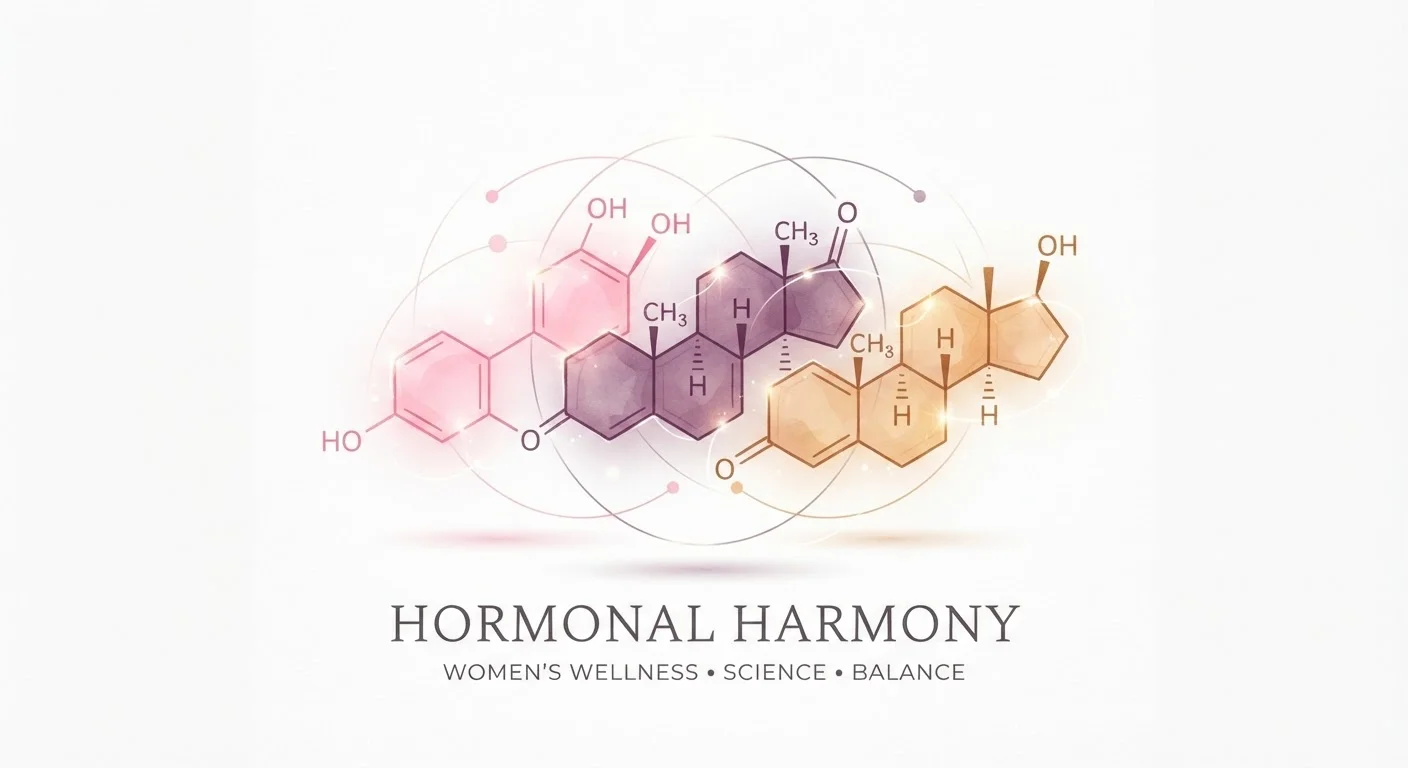
Why These Three Hormones Matter
When most people think about female hormones, oestrogen tends to dominate the conversation. But a woman's hormonal landscape is far richer than that. Oestrogen, progesterone, and testosterone work as an interconnected system — each influencing the other, and together shaping everything from your menstrual cycle and mood to bone density and libido.
Understanding what each hormone actually does can help you make sense of how you feel at different life stages, and recognize when something may be off. For a closer look at the signals your body sends when these hormones fall out of sync, see Signs Your Hormones May Be Out of Balance.
| Primary source of oestrogen | Ovaries (also adrenal glands and fat tissue) |
| Primary source of progesterone | Corpus luteum (after ovulation); placenta during pregnancy |
| Primary source of testosterone in women | Ovaries and adrenal glands |
| Key role of oestrogen | Menstrual regulation, bone density, cardiovascular protection |
| Key role of progesterone | Uterine preparation, pregnancy support, mood stabilization |
| Key role of testosterone | Libido, energy, muscle maintenance, cognitive focus |
Oestrogen: The Builder and Regulator
Oestrogen is produced primarily in the ovaries, with smaller amounts made in the adrenal glands and fat tissue. It exists in three main forms — estradiol (the most potent, dominant during reproductive years), estriol (significant during pregnancy), and estrone (more prominent after menopause).
Its responsibilities are broad. Oestrogen drives the development of secondary sex characteristics at puberty, regulates the menstrual cycle, supports uterine lining growth, and maintains vaginal health. Beyond reproduction, it plays a protective role in cardiovascular health, supports bone density by limiting bone breakdown, and influences serotonin pathways — which is part of why fluctuating oestrogen levels can affect mood.
Levels naturally decline at perimenopause and menopause, which can contribute to hot flashes, sleep disruption, and changes in bone and skin health. It's also worth noting that oestrogen doesn't act alone — its effects depend heavily on the balance it maintains with progesterone.
Oestrogen
A group of sex hormones produced primarily in the ovaries that regulate the menstrual cycle, support bone density, and influence mood. Estradiol is the most biologically active form during the reproductive years.
Progesterone
A hormone produced after ovulation that prepares the uterine lining for pregnancy and has a calming effect on the nervous system. It counterbalances oestrogen throughout the menstrual cycle.
Testosterone
An androgen hormone produced in smaller amounts in women by the ovaries and adrenal glands, contributing to libido, energy, muscle strength, and mood.
Corpus Luteum
A temporary gland that forms in the ovary after ovulation and is responsible for producing progesterone during the second half of the menstrual cycle.
Oestrogen Dominance
A hormonal state in which oestrogen levels are disproportionately high relative to progesterone, which may contribute to symptoms such as heavy periods, bloating, and mood changes.
Perimenopause
The transitional phase leading up to menopause, during which hormone levels — particularly oestrogen and progesterone — fluctuate and eventually decline, often spanning several years.
Progesterone: The Stabilizer
Progesterone is produced mainly by the corpus luteum — a temporary structure that forms in the ovary after ovulation each cycle. During pregnancy, the placenta takes over as the primary producer. Its foundational role is preparing and maintaining the uterine lining for a potential fertilized egg, making it essential to conception and early pregnancy.
But progesterone does much more than support reproduction. It has a calming, sedative-like effect on the brain through its influence on GABA receptors — the same receptors targeted by anti-anxiety medications. This is why the drop in progesterone in the days before menstruation can contribute to irritability, poor sleep, and anxiety in some women.
Progesterone also counterbalances oestrogen's proliferative (growth-stimulating) effects on the uterine lining, helping maintain a healthy hormonal ratio. When progesterone is consistently low relative to oestrogen — a state sometimes called oestrogen dominance — symptoms like heavy periods, bloating, and mood swings can emerge. For a broader view of how hormones interact beyond just these three, thyroid function and its role in women's hormonal health adds important context.
Testosterone: The Often-Overlooked Hormone
Testosterone is frequently thought of as exclusively a male hormone — but women produce it too, in the ovaries and adrenal glands, just in smaller amounts. It plays a meaningful role in libido, energy levels, muscle maintenance, cognitive focus, and mood stability.
Levels of testosterone in women peak in the mid-twenties and gradually decline with age, with a more noticeable drop around menopause. Low testosterone in women can contribute to persistent fatigue, reduced sex drive, and difficulty building or maintaining muscle mass, though research in this area is still evolving.
It's important to push back on the myth that testosterone is simply a hormone that makes women feel more aggressive or masculinized. As the science around female hormone myths clarifies, the reality is far more nuanced. Testosterone is part of what helps women feel vital, motivated, and physically strong throughout life.
3 Forms
Main types of oestrogen in the body
Estradiol, estriol, and estrone each dominate at different life stages — reproductive years, pregnancy, and post-menopause respectively.
~50%
Decline in testosterone from peak to menopause
Research suggests testosterone levels in women can fall by roughly half between the mid-twenties and the menopausal transition, according to endocrinological reviews.
This article is for general informational purposes only and does not constitute medical advice. Always consult a qualified healthcare provider for concerns about your hormonal health or any symptoms you're experiencing.