
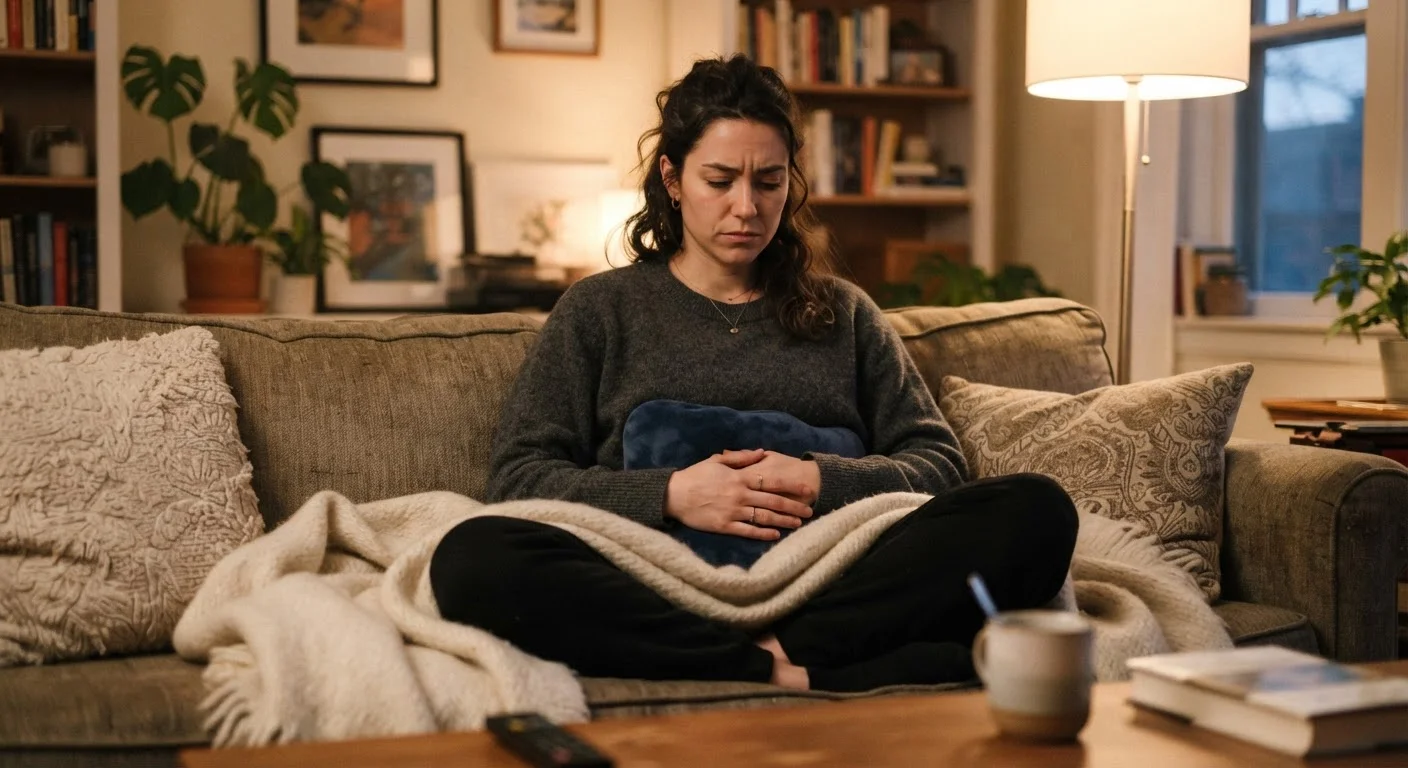
When Cramping Is Considered Typical
Most people who menstruate experience some degree of cramping in the days before or during their period. This discomfort — medically called primary dysmenorrhea — typically begins a day or two before menstruation, peaks in the first 24 to 48 hours, and then eases. It's usually felt as a dull ache or mild to moderate cramping in the lower abdomen.
This type of pain is caused by prostaglandins, natural compounds released by the uterine lining that trigger muscle contractions to help shed the endometrium. Higher prostaglandin levels are associated with stronger contractions and more noticeable discomfort. While unpleasant, this kind of pain generally doesn't worsen cycle after cycle and can be managed with rest, heat, and over-the-counter pain relief.
Heat Can Help With Typical Cramping
Applying a heating pad or warm compress to the lower abdomen is a well-supported, low-risk approach to easing mild to moderate menstrual cramps. Some research suggests heat is as effective as ibuprofen for primary dysmenorrhea. That said, if heat and standard pain relief consistently aren't enough, that's valuable information to share with your doctor.
Signs Your Pain May Be Something More
Pain that goes beyond typical cramping deserves attention. Several warning signs suggest your discomfort may be related to an underlying reproductive condition — known as secondary dysmenorrhea:
- Pain that worsens over time rather than staying consistent cycle to cycle
- Pain that begins before your period and continues well after it ends
- Pelvic pain outside of menstruation, including during sex or bowel movements
- Pain that doesn't improve with standard over-the-counter medications
- Heavy or irregular bleeding accompanying the pain
These patterns don't automatically confirm a diagnosis, but they are signals worth raising with a healthcare provider. Notably, people with conditions involving chronic pelvic or musculoskeletal pain may also find that period pain is more complex to assess — another reason professional evaluation matters.
Pain Tolerance Varies — But Severity Still Matters
People have different pain thresholds, which can make it hard to gauge whether your experience is 'normal.' A useful benchmark isn't comparison to others — it's whether the pain disrupts your ability to function. If your period regularly sidelines you, that's worth exploring medically, regardless of what others report feeling.
Conditions That Can Cause Severe Period Pain
Several well-documented gynecological conditions are associated with significant menstrual pain:
- Endometriosis
- Tissue similar to the uterine lining grows outside the uterus, causing inflammation, scarring, and intense pain. It affects an estimated 1 in 10 women of reproductive age and is notoriously underdiagnosed — with many waiting years before receiving answers.
- Adenomyosis
- The uterine lining grows into the muscular wall of the uterus, leading to heavy bleeding and severe cramping. It is more commonly diagnosed in people in their 30s and 40s.
- Uterine Fibroids
- Noncancerous growths within or around the uterus that can cause painful, heavy periods depending on their size and location.
- Pelvic Inflammatory Disease (PID)
- An infection of the reproductive organs, often caused by untreated sexually transmitted infections, which can result in significant pelvic pain.
1 in 10
Women affected by endometriosis
According to the World Health Organization, endometriosis affects roughly 190 million women and girls of reproductive age worldwide.
7–10 years
Average delay to endometriosis diagnosis
Studies published in peer-reviewed gynecology journals consistently report that women with endometriosis wait an average of 7 to 10 years before receiving a confirmed diagnosis.
Up to 80%
Women who experience period pain
Research estimates that up to 80% of people who menstruate experience dysmenorrhea at some point, though severity varies widely between individuals.
Advocating for Yourself at the Doctor's Office
One of the most important — and often overlooked — aspects of period health is that pain has historically been minimized or dismissed. Research consistently shows that women's pain reports are taken less seriously in clinical settings, contributing to diagnostic delays, particularly for conditions like endometriosis.
If you're concerned about your period pain, consider keeping a symptom diary tracking pain intensity, timing, duration, and any related symptoms like bloating, fatigue, or pain with intercourse. This information helps a clinician see patterns that a brief appointment alone might miss.
Be direct: describe how pain affects your daily functioning — whether it causes missed work, disrupted sleep, or limits your activities. A doctor can then recommend appropriate next steps, which may include a pelvic exam, ultrasound, or referral to a specialist.
This article is for general informational purposes only and does not constitute medical advice. If you are concerned about menstrual pain or any reproductive health symptoms, please consult a qualified healthcare provider for personalized evaluation and guidance.