
Why Midlife Is the Right Time to Pay Attention
For many women, conversations about bone health feel distant — something to worry about in your 60s or 70s. But the science tells a different story. The habits and nutritional choices women make in their 20s, 30s, and 40s directly shape skeletal resilience for decades to come.
As the Women's Health Editorial Team, we hear from readers who are surprised to learn that bone density is already declining by their mid-30s — quietly, without symptoms. Understanding calcium's role before that decline accelerates is one of the most impactful steps a woman can take for her long-term health. For broader context on how nutritional needs evolve across a woman's life, see why women's nutritional needs change across a lifetime.
~99%
Of body calcium stored in bones and teeth
According to the National Institutes of Health Office of Dietary Supplements, nearly all the body's calcium is housed in the skeleton.
1,200 mg
Daily calcium recommendation for women over 50
The NIH recommends women aged 51 and older consume 1,200 mg of calcium daily, up from 1,000 mg for younger adults.
2x
Women's osteoporosis risk compared to men
The National Osteoporosis Foundation notes women are significantly more likely than men to develop osteoporosis, largely due to hormonal differences.
What Calcium Actually Does in Your Body
Calcium is the most abundant mineral in the human body, with roughly 99% of it stored in bones and teeth. Beyond structure, calcium also supports muscle contraction, nerve signaling, and blood clotting — meaning your body will pull calcium from bone reserves if dietary intake runs low. Over time, this borrowing chips away at skeletal strength.
What many people don't realize is that calcium absorption isn't automatic. Vitamin D is essential for the intestine to absorb calcium efficiently. Magnesium, vitamin K2, and overall gut health also influence how much calcium actually reaches your skeleton versus passes through. For a fuller picture of nutrients that work alongside calcium, our guide to key nutrients every woman should know offers a useful reference.
Pair Calcium With Vitamin D for Best Results
Calcium and vitamin D work as a team: without sufficient vitamin D, the intestines absorb far less calcium regardless of how much you consume. Many women in the US have low vitamin D levels, particularly those with limited sun exposure. A simple blood test ordered by your doctor can reveal where you stand, and dietary sources like fatty fish and fortified foods can help fill gaps.
Food Sources Worth Prioritizing
Whole food sources of calcium come packaged with complementary nutrients that support absorption and overall health. Here are some of the most dependable options:
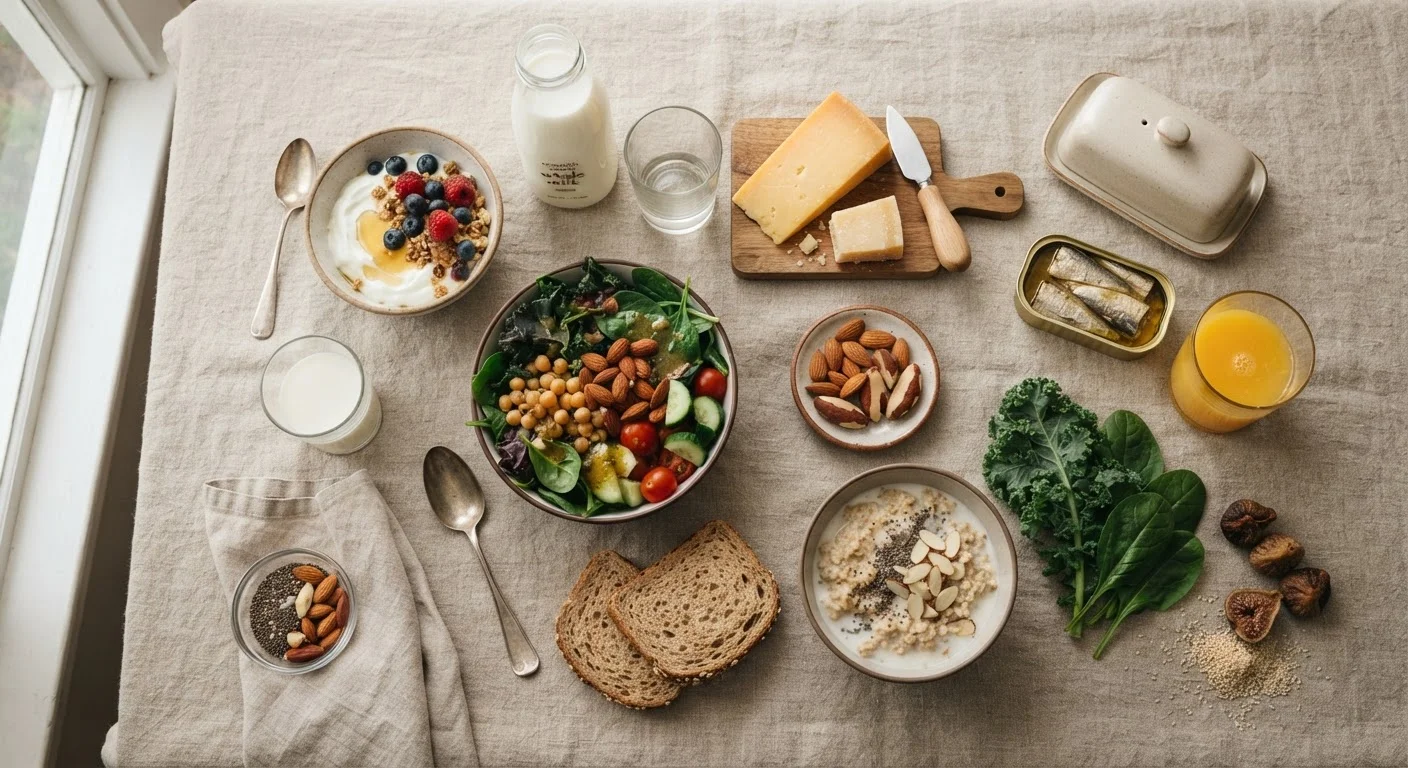
- Dairy products: Milk, yogurt, and cheese are among the most concentrated sources. A single cup of plain yogurt can provide close to 300–400 mg of calcium.
- Fortified plant-based milks: Soy, oat, and almond milks are often fortified to match dairy calcium levels — check labels, as amounts vary.
- Leafy greens: Kale, bok choy, and broccoli offer absorbable calcium, though in smaller amounts per serving than dairy. Spinach, despite its calcium content, contains oxalates that reduce absorption.
- Canned fish with bones: Sardines and canned salmon with soft, edible bones are surprisingly calcium-rich.
- Tofu and legumes: Tofu made with calcium sulfate and white beans both contribute meaningful amounts.
Spacing calcium intake across meals — rather than consuming it all at once — also supports better absorption, since the body absorbs smaller amounts more efficiently.
The Hormonal Connection Women Can't Ignore
Estrogen plays a central role in regulating bone remodeling. When estrogen levels fall during perimenopause and menopause, the balance between bone breakdown and bone formation shifts — and bone loss accelerates. This is why women are disproportionately affected by osteoporosis compared to men of similar ages.
Ensuring adequate calcium and vitamin D intake during and after this transition is particularly important. But nutrition is only part of the equation. Weight-bearing exercise, avoiding smoking, and limiting alcohol also support bone density. Our article on nutrition through perimenopause and menopause covers the broader dietary picture for this life stage.
“The skeleton is a living organ, and the investments women make in bone health during their 20s and 30s pay dividends well into their 70s and beyond. Calcium is foundational, but it works best as part of a broader lifestyle strategy.”
— National Institutes of Health, Office of Dietary Supplements, U.S. federal health authority on nutrition and dietary supplement research
This article is for general informational purposes only and is not a substitute for professional medical advice. Please consult a qualified healthcare provider for guidance tailored to your individual health needs.