
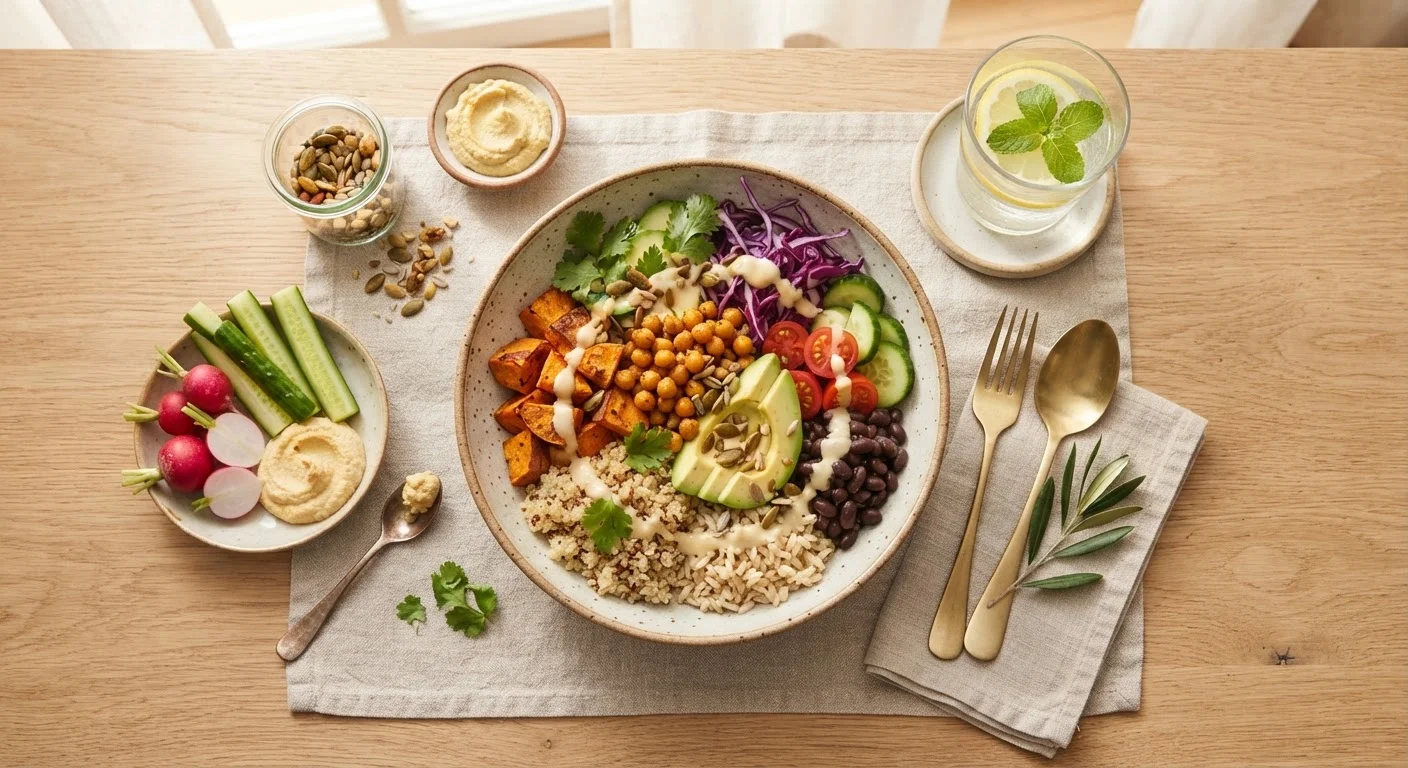
Why Diet Myths Hit Differently for Women
Women receive an enormous volume of conflicting nutrition advice — from glossy magazine cover lines to social media influencers promoting contradictory approaches within the same scroll. The result is that many well-meaning, health-conscious women end up following dietary rules that either lack scientific support or were never designed with women's physiology in mind.
Research on nutrition has historically skewed toward male study participants, which means some widely shared guidance has been extrapolated from data that didn't include women at all. Add in hormonal fluctuations across the menstrual cycle, pregnancy, and menopause, and it becomes clear that women's nutritional needs are genuinely distinct — and genuinely under-researched.
This article works through some of the most persistent diet myths that science has largely called into question. For context on broader misconceptions that affect all genders, see our piece on common nutrition myths. And if hormones are on your mind, our article on myths about female hormones covers related ground.
Myth
Women should eat as little fat as possible to stay healthy and maintain a healthy weight.
Fact
Dietary fat is essential for women's health, supporting hormone production, brain function, and absorption of fat-soluble vitamins A, D, E, and K.
The fat-phobia of the 1980s and 90s left a lasting mark on how many women think about food. But decades of research have clarified that the type of fat matters far more than the total amount. Unsaturated fats found in foods like olive oil, avocados, nuts, and fatty fish are associated with cardiovascular benefits and support the production of sex hormones including estrogen and progesterone. Severely restricting fat can disrupt menstrual regularity and impair absorption of nutrients critical to bone health. The evidence does not support blanket fat restriction as a healthy strategy for women.
Myth
Women don't really need much protein — that's more of a concern for athletes or men who lift weights.
Fact
Adequate protein intake is important for all women, and many fall short of recommended levels, particularly as they age.
Protein supports muscle maintenance, immune function, hormone synthesis, and satiety. Research suggests that many women consume less protein than is optimal, and this gap tends to widen during perimenopause and post-menopause, when muscle loss accelerates. The Recommended Dietary Allowance for protein is a minimum baseline, not an ideal target, and some nutrition researchers argue that women — especially older women or those who are physically active — may benefit from higher intakes. Plant and animal protein sources both count. Dismissing protein as a concern only for male athletes leaves many women under-supported nutritionally. For a comparison of how men's needs differ, see our overview of men's nutrition.
Myth
Eating as few calories as possible is the most reliable way for women to manage their weight.
Fact
Very low calorie intake can trigger metabolic adaptation, muscle loss, nutrient deficiencies, and disrupted hormonal function — outcomes that work against long-term health.
The body responds to significant caloric restriction by becoming more efficient at conserving energy, which can slow metabolic rate over time. For women specifically, chronic undereating has been linked to hypothalamic amenorrhea (loss of menstrual periods), decreased bone density, and impaired thyroid function. Research consistently shows that sustainable, moderate approaches to eating — rather than severe restriction — are more effective for long-term weight management and overall health. Women who have a history of restrictive eating should seek support from a healthcare provider or registered dietitian rather than pursuing further restriction independently.
Myth
Women can get all the calcium they need from diet without paying special attention to intake at different life stages.
Fact
Calcium needs increase significantly during certain life stages — including adolescence, pregnancy, breastfeeding, and post-menopause — and many women do not consistently meet them.
Calcium is central to bone health, and women are disproportionately affected by osteoporosis compared to men. Estrogen helps maintain bone density, so the drop in estrogen during and after menopause raises calcium needs and increases fracture risk. Dairy products are one source of calcium, but it's also found in fortified plant milks, leafy greens, tofu made with calcium sulfate, and canned fish with bones. Whether a woman needs a supplement depends on her diet, life stage, and health history — something best assessed with a healthcare provider rather than assumed either way.
Myth
Iron deficiency is only a concern for women who have heavy periods — others don't need to think about it.
Fact
Iron needs are higher for all women of reproductive age due to monthly blood loss, and inadequate intake is one of the most common nutritional shortfalls worldwide.
Iron is required for making hemoglobin, which carries oxygen through the blood. Women of reproductive age need roughly twice as much iron per day as men, and plant-based eaters face additional considerations because non-heme iron (from plant sources) is absorbed less efficiently than heme iron from animal products. Symptoms of low iron — including fatigue, difficulty concentrating, and feeling cold — are often normalized or attributed to stress. Blood testing is the only reliable way to assess iron status, and supplementation should only be used under medical guidance since excess iron can also be harmful.
Myth
Carbohydrates are uniquely fattening for women and should be severely limited.
Fact
Carbohydrates are a primary fuel source for the body and brain; the evidence does not support the idea that they are inherently more harmful for women than for anyone else.
Carbohydrates have been blamed for weight gain across decades of popular diet culture, but research does not support singling them out as uniquely problematic for women. The quality and context of carbohydrate intake matters: fiber-rich whole grains, legumes, fruits, and vegetables provide sustained energy, gut-supporting fiber, and important micronutrients. Refined carbohydrates and added sugars are worth moderating — but that guidance applies broadly, not specifically to women. Hormonal fluctuations across the menstrual cycle can affect carbohydrate cravings and metabolism slightly, but this does not translate into a need for severe carbohydrate restriction. Eliminating carbs entirely often leads to low energy, poor mood, and difficulty sustaining the approach long-term.
What the Evidence Actually Supports
Cutting through diet mythology isn't about replacing one rigid ruleset with another. It's about understanding that eating well looks different depending on your age, life stage, health history, and individual biology. Women in their twenties have different iron and folate demands than women navigating perimenopause; women who are pregnant or breastfeeding have distinct caloric and micronutrient needs that general advice rarely captures adequately.
~20%
Women with inadequate iron intake
The World Health Organization estimates that iron deficiency anemia affects roughly 1 in 5 women of reproductive age globally, making it one of the most prevalent nutritional deficiencies.
~40–50%
Women not meeting calcium targets
According to data from the National Health and Nutrition Examination Survey (NHANES), a significant proportion of US women fall below recommended calcium intake levels across multiple age groups.
~46%
Clinical nutrition trials with women as majority participants
A 2021 analysis in the journal Nature found that women remain underrepresented in many nutrition and metabolism studies, limiting how well general findings translate to female physiology.
A consistent finding across nutritional research is that dietary variety — prioritizing whole foods, adequate protein, healthy fats, and fiber — outperforms most elimination-focused strategies for long-term health outcomes. Restrictive patterns, by contrast, are frequently associated with nutrient deficiencies, disordered eating patterns, and metabolic adaptation that makes maintaining a healthy weight harder, not easier.
The myths surrounding essential nutrients often lead women to fear entire food groups unnecessarily. Similarly, gut health has its own mythology — our article on common gut health misconceptions unpacks several of those claims. The pattern is consistent: the evidence tends to favor moderation, variety, and individualization over dramatic restriction.
Restriction Is Not Always the Answer
Severely limiting food groups or calories in response to diet myths can cause real harm, including nutrient deficiencies, hormonal disruption, and disordered eating patterns. If you find yourself frequently anxious about food, restricting entire food groups, or struggling with your relationship with eating, speaking with a registered dietitian or mental health professional is a meaningful step — not a last resort.
This article is for general informational purposes only and does not constitute medical or dietary advice. Nutritional needs vary by individual. Please consult a registered dietitian or qualified healthcare provider for personalized guidance.