
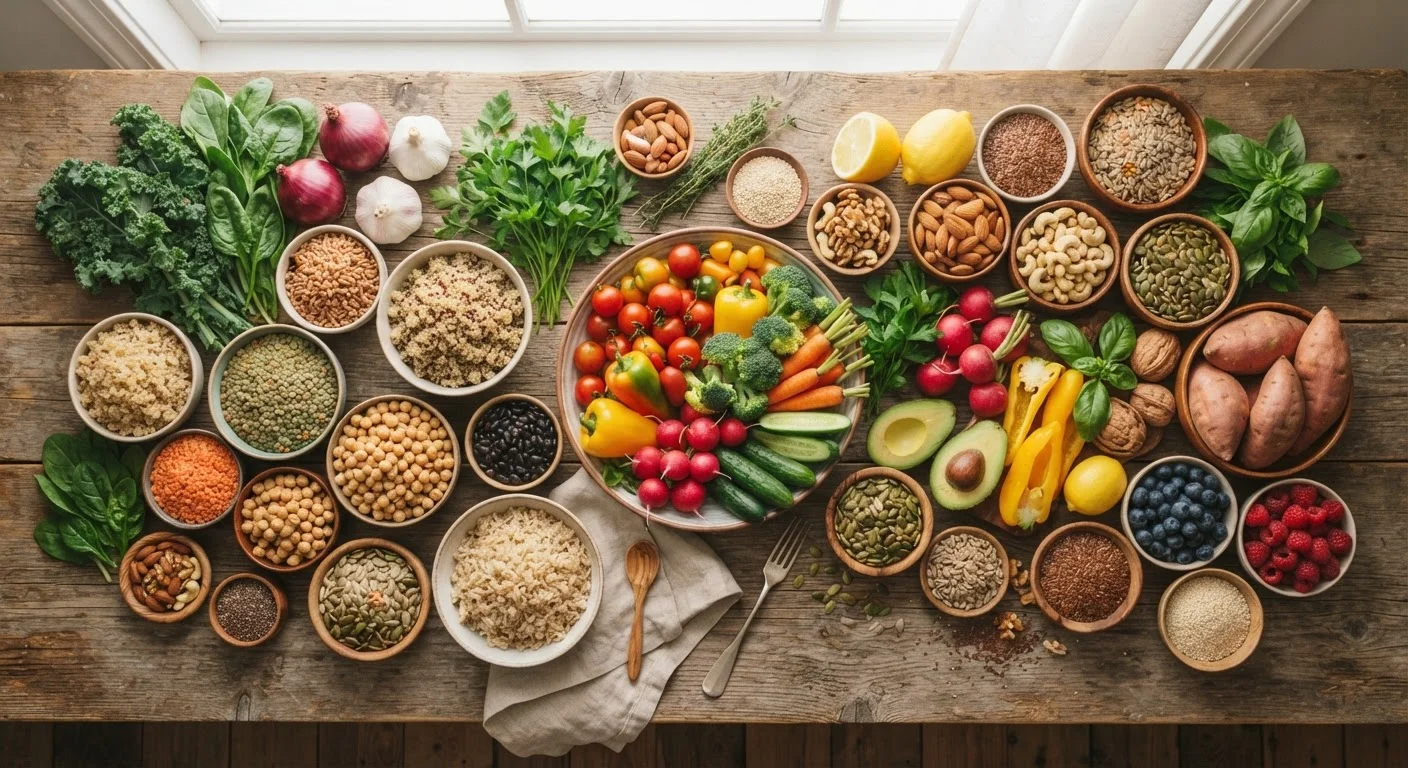
What Plant-Based Eating Actually Means
The term "plant-based" covers a wide spectrum — from fully vegan diets that exclude all animal products to flexitarian patterns that simply emphasize plants while leaving room for occasional meat, fish, or dairy. What unites them is a foundation of vegetables, fruits, legumes, whole grains, nuts, and seeds.
It's worth distinguishing this from simply buying products labeled "plant-based" at the grocery store. A diet of vegan cookies, meat substitutes, and oat milk lattes is technically plant-based but nutritionally very different from one built around whole foods. Research linking plant-forward eating to health benefits generally refers to the latter. For a closer look at dietary patterns with the strongest evidence, it helps to understand what the research is actually measuring.
Associated with lower cardiovascular disease risk
Research consistently links plant-forward diets to improved cholesterol profiles, lower blood pressure, and reduced cardiovascular risk — a leading health concern for women, particularly after menopause.
Rich in fiber supporting digestive and metabolic health
High fiber intake from vegetables, legumes, and whole grains supports gut health, helps regulate blood sugar, and is associated with lower risk of type 2 diabetes — a condition that affects women differently across hormonal life stages.
Supports healthy weight management over time
Plant-based diets tend to be lower in caloric density while remaining satisfying, which research associates with easier long-term weight management — without requiring calorie counting.
Linked to reduced risk of certain cancers
Studies, including large cohort analyses, associate higher consumption of vegetables, fruits, and legumes with modestly reduced risk of colorectal and breast cancers, though diet is one factor among many.
High in anti-inflammatory phytonutrients
Polyphenols, flavonoids, and carotenoids found in plant foods have anti-inflammatory properties that may support long-term health and reduce chronic disease burden.
Where Plant-Based Diets Can Fall Short for Women
Women have distinct nutritional needs that shift across life stages — menstruation, pregnancy, breastfeeding, and perimenopause each alter the demand for specific micronutrients. Plant-based diets, while rich in many nutrients, can create gaps in areas that matter particularly to women.
Non-heme iron is less easily absorbed
Women of reproductive age already have higher iron needs due to menstruation; relying solely on plant sources of iron means paying close attention to absorption-enhancing strategies and monitoring levels with a provider.
Vitamin B12 is essentially absent from plant foods
B12 is critical for nerve function and red blood cell production, and deficiency can develop gradually without obvious early symptoms. Those excluding all animal products need a reliable supplemented source.
Calcium and vitamin D needs may be harder to meet
Bone health is a long-term priority for women, especially approaching menopause. While calcium is available in leafy greens and fortified foods, bioavailability varies, and vitamin D from food alone is rarely sufficient.
Omega-3 fatty acid profile differs from animal sources
Plant foods provide ALA (a short-chain omega-3), but the conversion to DHA and EPA — the forms most relevant to brain and cardiovascular health — is limited in the body. Algae-based supplements can bridge this gap.
Requires more meal planning than omnivorous eating
Meeting protein and micronutrient needs on a plant-based diet takes deliberate food variety and combination — which can be a barrier for those with limited time, cooking skills, or food access.
Iron is a notable example. Plant foods contain non-heme iron, which the body absorbs less efficiently than the heme iron in meat. Women of reproductive age already have higher iron needs due to menstrual blood loss, making this a real concern. Similarly, vitamin B12 is found almost exclusively in animal products — anyone avoiding them entirely generally needs a reliable supplemented source. You can explore the full picture of key nutrients every woman should know to understand how these fit into the broader picture.
These gaps don't make plant-based eating unsuitable — they make awareness essential. Understanding where nutrient gaps commonly appear is the first step toward addressing them.
Zinc and Iodine Are Easy to Overlook
Beyond iron and B12, zinc and iodine are two nutrients that can quietly drop on a plant-based diet. Zinc from plant sources is less bioavailable due to phytates in grains and legumes. Iodine is rarely present in plant foods unless iodized salt or seaweed is consumed regularly. Both play important roles in immune function, thyroid health, and reproductive health — making them worth discussing with a dietitian when transitioning to a fully plant-based pattern.
Protein, Hormonal Health, and Life Stage Considerations
Protein is often the first concern people raise about plant-based eating — and while it's a legitimate one, it's also manageable. Legumes, tofu, tempeh, edamame, seitan, and quinoa all provide meaningful protein. The key is variety and quantity: plant proteins are generally less concentrated, so portion awareness matters. For a deeper look at why this nutrient deserves attention, see why protein intake matters more than most women realise.
Hormonal health adds another layer. Phytoestrogens — plant compounds found in soy, flaxseed, and legumes — interact with estrogen receptors in the body. Current research does not support concerns about moderate soy intake disrupting hormonal balance in healthy adults; in fact, some evidence associates it with modest benefits for heart health. Still, women with hormone-sensitive conditions should discuss dietary choices with their healthcare provider. To understand more about how nutrition intersects with hormones, the hormonal health hub offers a useful starting point.
During pregnancy and breastfeeding, nutritional demands rise significantly, and certain nutrients — including iodine, DHA, vitamin D, and folate — require particular attention on a plant-based diet. This is an area where working with a registered dietitian or OB-GYN is genuinely important rather than optional.
~23%
Lower cardiovascular mortality risk in vegetarians
A large meta-analysis published in JAMA Internal Medicine found vegetarian diets associated with roughly 23% lower risk of death from ischemic heart disease compared to omnivorous diets.
~40%
Women of reproductive age at risk for low iron
The CDC has reported that approximately 40% of women aged 12–49 in the US may have insufficient iron stores, a concern amplified when plant-based iron sources dominate the diet.
Practical Ways to Approach Plant-Based Eating Thoughtfully
A well-constructed plant-based diet doesn't have to be complicated, but it does benefit from intention. A few principles tend to make the biggest difference:
- Prioritize whole foods. Vegetables, legumes, intact grains, nuts, and seeds deliver fiber, micronutrients, and phytochemicals that processed alternatives cannot replicate. See how to build a balanced plate as a practical starting point.
- Pair iron-rich plant foods with vitamin C. Eating lentils or spinach alongside bell peppers or citrus can meaningfully improve non-heme iron absorption.
- Know when supplements make sense. Vitamin B12 is the one nutrient where supplementation is broadly recommended for those avoiding animal products entirely. Vitamin D and long-chain omega-3s (from algae-based sources) may also be warranted depending on individual circumstances. Understanding when supplements genuinely fill gaps can help frame this decision.
- Watch out for ultra-processed substitutes. Many plant-based meat and dairy alternatives are high in sodium and additives. Use them as occasional conveniences, not dietary staples.
For women whose eating patterns may already have shortfalls, it's worth reviewing eating patterns that frequently fall short in women's diets alongside any shift toward plant-based eating.
This article is for general informational purposes only and is not a substitute for personalized medical or dietary advice. If you have questions about your nutritional needs at any life stage, please consult a qualified healthcare provider or registered dietitian.