
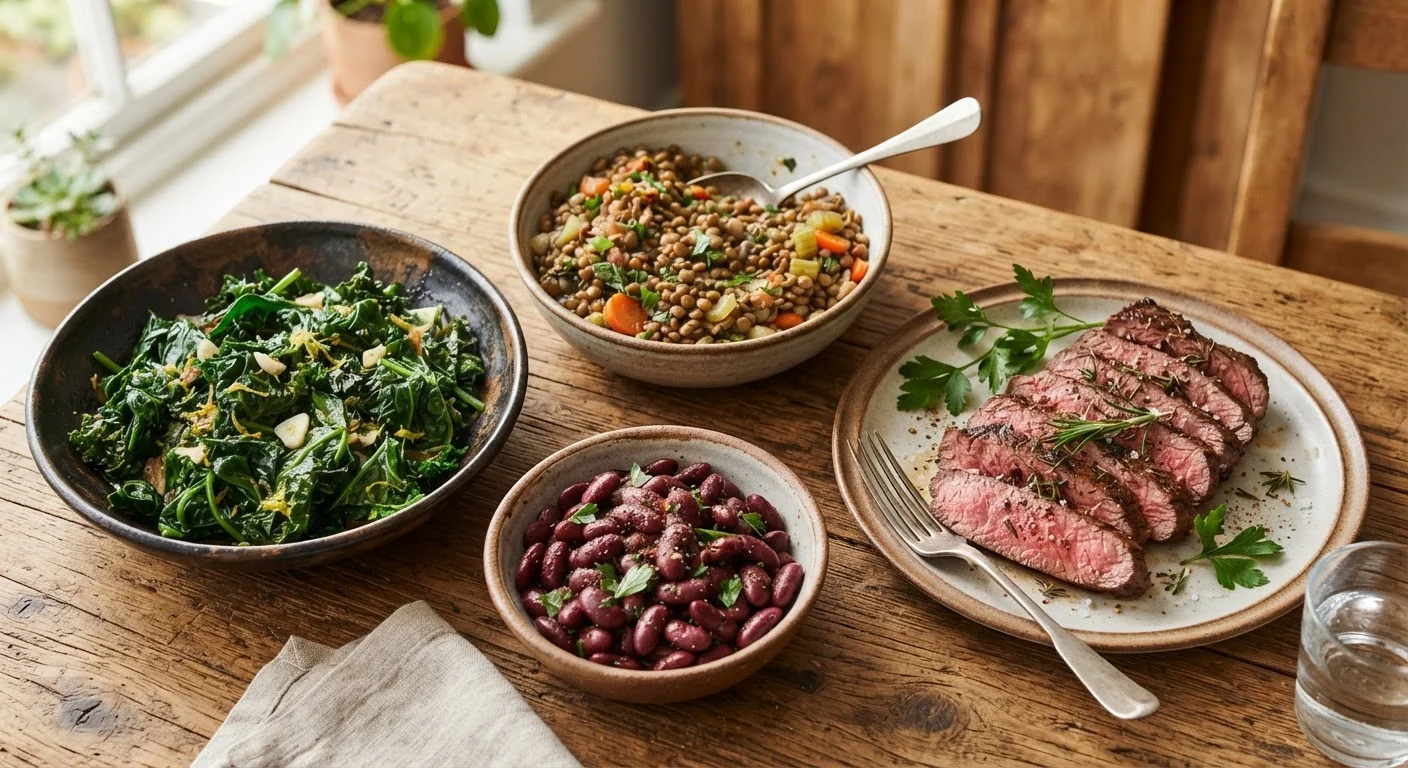
Why Women Face a Higher Iron Burden
Iron deficiency doesn't affect everyone equally. For women, the biology of menstruation creates a monthly iron loss that fundamentally shifts nutritional requirements. The National Institutes of Health recommends that women aged 19–50 consume 18 mg of iron per day — more than twice the 8 mg recommended for men of the same age. Yet research consistently shows that many women fall significantly short of this target.
This gap isn't simply a matter of dietary choices. It reflects a structural nutritional challenge: women often consume fewer total calories than men, which means less opportunity to meet higher micronutrient needs through food alone. Add in vegetarian or plant-forward eating patterns — more common among women — and the challenge compounds further.
~30%
Of women globally affected by iron deficiency
The World Health Organization estimates iron deficiency is the most prevalent nutritional disorder worldwide, with women of reproductive age disproportionately represented.
18 mg
Daily iron recommended for women aged 19–50
According to the National Institutes of Health Office of Dietary Supplements, premenopausal women require more than double the iron intake recommended for adult men.
15–35%
Heme iron absorption rate from animal foods
Nutritional research shows heme iron from meat and fish is absorbed at substantially higher rates than non-heme iron from plant sources.
Pregnancy represents another critical window. During gestation, blood volume expands dramatically and the developing fetus draws on maternal iron stores, pushing requirements to 27 mg per day. This is one reason prenatal care routinely includes iron monitoring. If you're pregnant or planning to become pregnant, always speak with your OB-GYN about your individual iron needs before taking any supplement.
How the Body Processes Dietary Iron
Not all dietary iron is created equal. The body recognizes two chemically distinct forms, and it absorbs them very differently.
- Heme iron — found in animal foods like red meat, poultry, and fish — is bound to hemoglobin and myoglobin structures that the gut absorbs efficiently. Absorption rates typically range from 15–35%, according to nutritional science literature.
- Non-heme iron — found in plant foods like lentils, spinach, fortified cereals, and tofu — is absorbed at a considerably lower rate, generally between 2–20%, depending on what else is eaten at the same meal.
Several dietary factors influence how much non-heme iron your body actually takes in. Vitamin C (ascorbic acid) consumed alongside plant iron can substantially enhance absorption by converting iron into a more soluble form. On the other hand, certain compounds in tea, coffee, and calcium-rich foods can inhibit absorption when consumed at the same meal.
Boost Plant-Based Iron Absorption Simply
Squeeze lemon juice over a spinach salad, add sliced strawberries to iron-fortified oatmeal, or pair a bean-based dish with roasted red bell peppers. These small combinations can significantly improve how much non-heme iron your body absorbs from each meal. Aim to include a vitamin C source at the same sitting as your plant-based iron foods for the greatest benefit.
Understanding these interactions is especially important for women following vegetarian or plant-based eating patterns. For a broader look at the nutrients most relevant to women, visit our guide to key nutrients every woman should know.
The Link Between Iron and Energy — and Why It's Complicated
Fatigue is the symptom most commonly associated with low iron, and the connection is real: when hemoglobin levels drop, oxygen delivery to muscles and the brain is impaired, leading to tiredness, reduced concentration, and diminished physical capacity. But the relationship is more nuanced than a simple cause-and-effect.
Many women experience notable fatigue even when their hemoglobin falls within the normal range — a state sometimes described as iron depletion without frank anemia. Research suggests that ferritin (a marker of stored iron) may be a more sensitive indicator of functional iron status than hemoglobin alone. Our detailed explainer on iron and fatigue explores these layers in more depth.
It's also worth noting that fatigue has many potential causes — thyroid dysfunction, vitamin D deficiency, sleep disorders, and others — which is why a proper clinical evaluation matters before drawing conclusions. Symptoms alone are not sufficient to diagnose iron deficiency, and blood tests remain the gold standard.
Building an Iron-Supportive Eating Pattern
Improving dietary iron intake doesn't require dramatic overhauls. Small, consistent changes in food selection and meal composition can make a meaningful difference over time.
- Diversify iron sources: Include a mix of heme and non-heme iron foods throughout the week. Even modest amounts of meat or fish alongside plant foods can enhance overall iron absorption at that meal.
- Strategic pairing: Add a vitamin C source — citrus juice, bell peppers, strawberries — to iron-rich plant meals like lentil soup or fortified oatmeal.
- Timing of inhibitors: Consider having tea or coffee between meals rather than with iron-rich foods to minimize competition for absorption.
- Fortified foods: Iron-fortified cereals and grains can contribute meaningfully to daily intake, particularly for those eating little or no meat.
For a broader view of where women's diets commonly fall short, see our article on eating patterns that frequently fall short in women's diets.
Iron Supplementation Requires Medical Oversight
Iron supplements are not appropriate for everyone, and taking more than needed can cause digestive discomfort and, in excess, more serious harm. If you suspect you may be iron deficient, a blood test measuring ferritin, hemoglobin, and transferrin saturation is the right starting point. Work with a healthcare provider to determine whether supplementation is appropriate and at what level — never self-prescribe based on symptoms alone.
This article is for general informational purposes only and does not constitute medical advice. Always consult a qualified healthcare provider for personalized guidance about your nutritional health.