
What Exactly Lives Inside Your Gut?
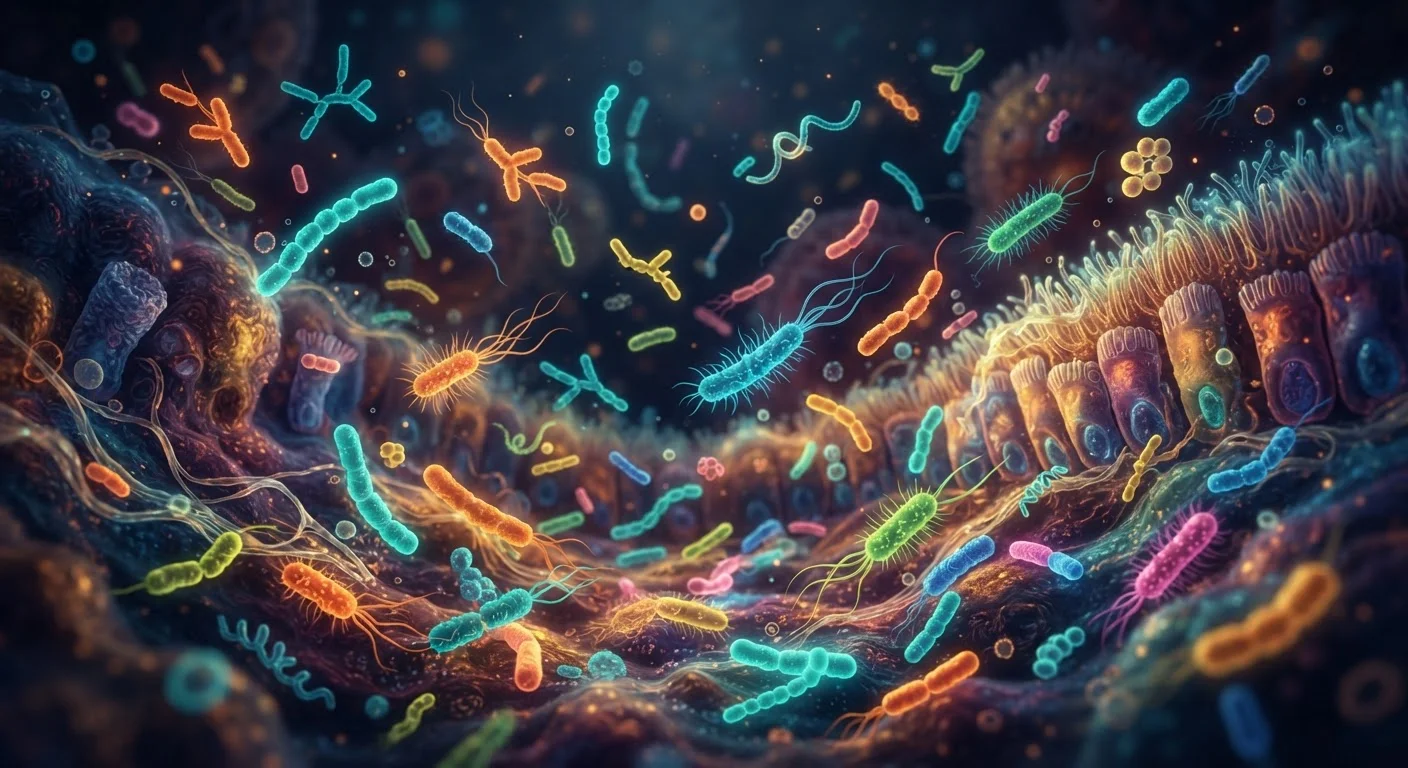
When scientists talk about the gut microbiome, they are referring to an internal ecosystem of extraordinary complexity. Your digestive tract - particularly the large intestine - is home to an estimated 38 trillion microbial cells belonging to thousands of different species. Bacteria are the dominant residents, but viruses, fungi, archaea (single-celled organisms distinct from bacteria), and other microbes are present too.
These organisms are not simply along for the ride. They produce enzymes your body cannot make on its own, synthesize certain vitamins (including some B vitamins and vitamin K), break down dietary fiber into short-chain fatty acids that nourish the gut lining, and train your immune system to distinguish friend from foe. To understand how this fits into the broader story of digestion, see our plain-language guide to how your digestive system works.
~38 trillion
Estimated microbial cells in the human gut
Research published in Cell (Sender et al., 2016) revised earlier estimates, placing gut microbial cell counts roughly on par with total human body cells.
1,000+
Bacterial species identified in human guts
Large-scale projects such as the Human Microbiome Project have catalogued over a thousand distinct bacterial species across human digestive tracts, though individual counts vary.
~90%
Of the body's serotonin produced in the gut
According to research from Caltech and other institutions, the vast majority of serotonin - a key mood-related neurotransmitter - is manufactured in the gastrointestinal tract, often under microbial influence.
Why Diversity Is the Key Metric
Researchers consistently find that a diverse microbiome - one containing many different species - is associated with more resilient health. Think of it like a forest: a woodland with dozens of tree species handles drought, pests, and storms far better than a monoculture plantation. Similarly, a microbiome rich in variety is better equipped to withstand disruptions like illness, a course of antibiotics, or a period of poor diet.
Diversity tends to be higher in populations that eat a wide variety of whole, plant-based foods and lower in those consuming highly processed diets. It also naturally shifts across life stages - a topic explored in detail in our article on how gut health evolves from infancy to older adulthood.
Variety Is More Valuable Than Volume
When it comes to supporting microbial diversity, eating a wide range of different plant foods tends to be more effective than eating large amounts of just one or two. Aim to include different vegetables, fruits, legumes, and whole grains across the week rather than repeating the same meals daily. Small, consistent changes to your food variety add up meaningfully over time.
What Disrupts the Microbiome - and What Supports It
Several everyday factors shape your microbial community, for better or worse. Antibiotics are among the most potent disruptors - they are designed to kill bacteria, but they cannot discriminate between harmful pathogens and beneficial gut residents. Chronic stress, poor sleep, a diet heavy in ultra-processed foods, and certain medications also affect microbial balance. This imbalance, when significant, is called dysbiosis.
On the supportive side, dietary fiber feeds beneficial bacteria; fermented foods introduce live microorganisms; and a varied, plant-rich eating pattern tends to sustain diversity. For a deeper look at the specific dietary habits linked to gut health, explore our guide on fibre, fermented foods, and hydration for gut health.
The Gut-Brain Connection: A Two-Way Street
One of the most striking areas of microbiome research involves its relationship with the brain. The gut and brain communicate constantly via the vagus nerve, the immune system, and chemical messengers - a network researchers call the gut-brain axis. Gut microbes produce or influence the production of neurotransmitters, including an estimated 90% of the body's serotonin, a chemical closely associated with mood regulation.
This does not mean your gut alone controls how you feel - mood is shaped by many factors, including genetics, life circumstances, and mental health conditions. But it does suggest that gut health and emotional well-being are meaningfully linked. For a fuller picture, our article on how the gut influences mood and mental well-being covers the science in accessible detail.
“The gut microbiome is emerging as a key regulator of host health, influencing everything from immune function to metabolic and even mental health outcomes. It represents one of the most exciting frontiers in biomedical research today.”
— Rob Knight, Professor and microbiome researcher, University of California San Diego
This article is for general informational purposes only and is not a substitute for professional medical advice, diagnosis, or treatment. Always consult a qualified healthcare provider with questions about your health or a specific medical condition.