
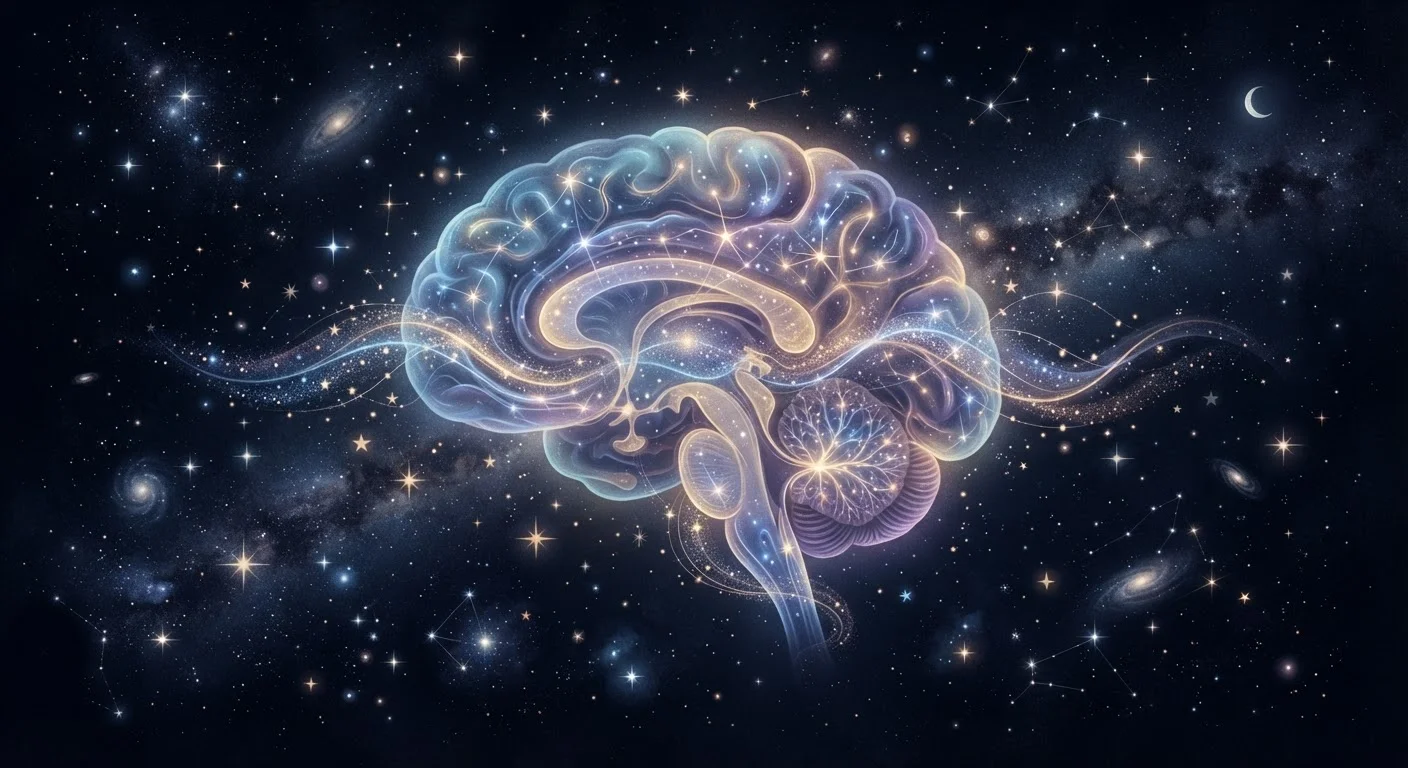
Sleep Is Not a Passive State
Many people think of sleep as simply switching off — a blank pause between one day and the next. In reality, the sleeping brain is extraordinarily active. It shifts through carefully orchestrated phases, each one carrying out work that waking life cannot replicate.
Understanding what happens inside your brain during those hours is one of the most motivating reasons to take sleep seriously as a mental health tool. As we explore in our related guide, sleep is a mental health tool, not just rest — and the science behind that claim starts with what actually unfolds each night.
NREM Sleep
Non-rapid eye movement sleep, which makes up three of the four sleep stages. It includes both light and deep sleep phases and is essential for physical restoration and memory processing.
REM Sleep
Rapid eye movement sleep, the stage where most vivid dreaming occurs. Brain activity is high, and this stage plays a central role in emotional regulation and memory consolidation.
Sleep Spindles
Brief bursts of electrical activity in the brain that occur during Stage 2 sleep. Researchers believe they are involved in transferring information from short-term to long-term memory.
Glymphatic System
A waste-clearance network in the brain that becomes most active during sleep. It uses fluid to flush out metabolic byproducts that build up during the day.
Circadian Rhythm
Your body's internal 24-hour clock that regulates when you feel awake or sleepy. It is influenced by light exposure, meal timing, and daily habits.
Sleep Cycle
One complete pass through all four sleep stages, lasting roughly 90 minutes. A typical night's sleep includes four to six of these cycles.
The Four Stages of Sleep
Sleep is divided into two broad types — NREM (non-rapid eye movement) and REM (rapid eye movement) — which together make up four distinct stages. You cycle through all four roughly every 90 minutes throughout the night.
- Stage 1 (NREM): The lightest sleep, lasting just a few minutes. Muscle activity slows, and the brain produces alpha and theta waves. You can be woken easily.
- Stage 2 (NREM): A deeper but still light sleep. Heart rate slows, body temperature drops, and the brain generates bursts of activity called sleep spindles, which are thought to play a role in memory processing.
- Stage 3 (NREM — Deep Sleep): Also called slow-wave sleep. Brain activity slows significantly, producing long delta waves. This is the most physically restorative stage and the hardest from which to be woken.
- Stage 4 (REM Sleep): Brain activity surges close to waking levels. Most vivid dreaming occurs here. REM sleep is especially important for emotional memory and mood regulation.
For a deeper look at how each of these stages serves your mind specifically, see our article on REM sleep vs. deep sleep.
What the Brain Is Actually Doing Overnight
Beyond the stage structure, several critical biological processes unfold while you sleep:
Memory Consolidation
During deep sleep, the hippocampus — a brain region central to learning — replays experiences from the day and transfers them into longer-term storage. Sleep spindles in Stage 2 appear to support this transfer, helping new information stick.
Emotional Processing
REM sleep allows the brain to reprocess emotionally charged memories, often reducing their intensity. This is one reason a difficult experience can feel more manageable after a full night's sleep. Research in sleep neuroscience suggests REM may act as a kind of overnight emotional therapy.
Glymphatic Clearance
The brain's waste-removal network — the glymphatic system — becomes significantly more active during sleep. It flushes out metabolic byproducts that accumulate during waking hours, including proteins linked to neurodegeneration. This clearance process is one reason chronic poor sleep is considered a risk factor for cognitive decline over time.
You can explore the research behind these processes further in our guide to cognitive recovery and sleep.
Protect Your Final Sleep Hours
Because REM sleep is concentrated in the last portion of the night, cutting sleep short by even an hour disproportionately reduces your emotional processing time. If you can only make one change, prioritising a consistent, full-length sleep window tends to have the greatest impact on mood and cognition the next day.
Why Disrupted Sleep Affects Your Mind
When sleep is cut short or frequently interrupted, the brain misses out on stages it cannot simply skip. REM sleep, which occurs most in the final hours of the night, is often the first casualty of an early alarm or a restless night.
The consequences are measurable. Even a single night of poor sleep can reduce activity in the prefrontal cortex — the region responsible for rational decision-making and emotional control — while amplifying reactivity in the amygdala, the brain's threat-detection centre. Mood instability, reduced concentration, and heightened anxiety are common short-term effects.
Poor Sleep Isn't Just Tiredness
Consistently sleeping fewer than seven hours per night is associated with measurable changes in brain function — not just feelings of fatigue. If you regularly wake unrefreshed, experience significant daytime impairment, or suspect a sleep disorder, it's worth speaking with a healthcare professional rather than simply pushing through.
Over time, habitual sleep deprivation is associated with a higher risk of anxiety disorders, depression, and impaired cognitive function. This is not about occasional bad nights — those are normal and manageable. It's about the cumulative effect of chronically insufficient sleep on the brain's ability to regulate itself.
How to Support Your Brain's Nightly Work
The good news is that the brain is remarkably consistent in what it needs to do this work well: enough uninterrupted time, and the right conditions to cycle through all its stages.
Practical starting points include maintaining a consistent sleep and wake time, keeping your bedroom cool and dark, and avoiding screens and stimulants in the hour before bed. These aren't arbitrary rules — they align with how the brain's circadian rhythm and sleep-stage architecture actually function.
For a structured approach to building those conditions, our article on sleep hygiene habits that support restful nights covers the evidence-based daily routines that make the biggest difference. And for a comprehensive view of how sleep connects to emotional health overall, see sleep, mood regulation, and mental well-being.
This article is for general informational purposes only and is not a substitute for professional medical advice. If you have concerns about your sleep or mental health, please consult a qualified healthcare provider.