
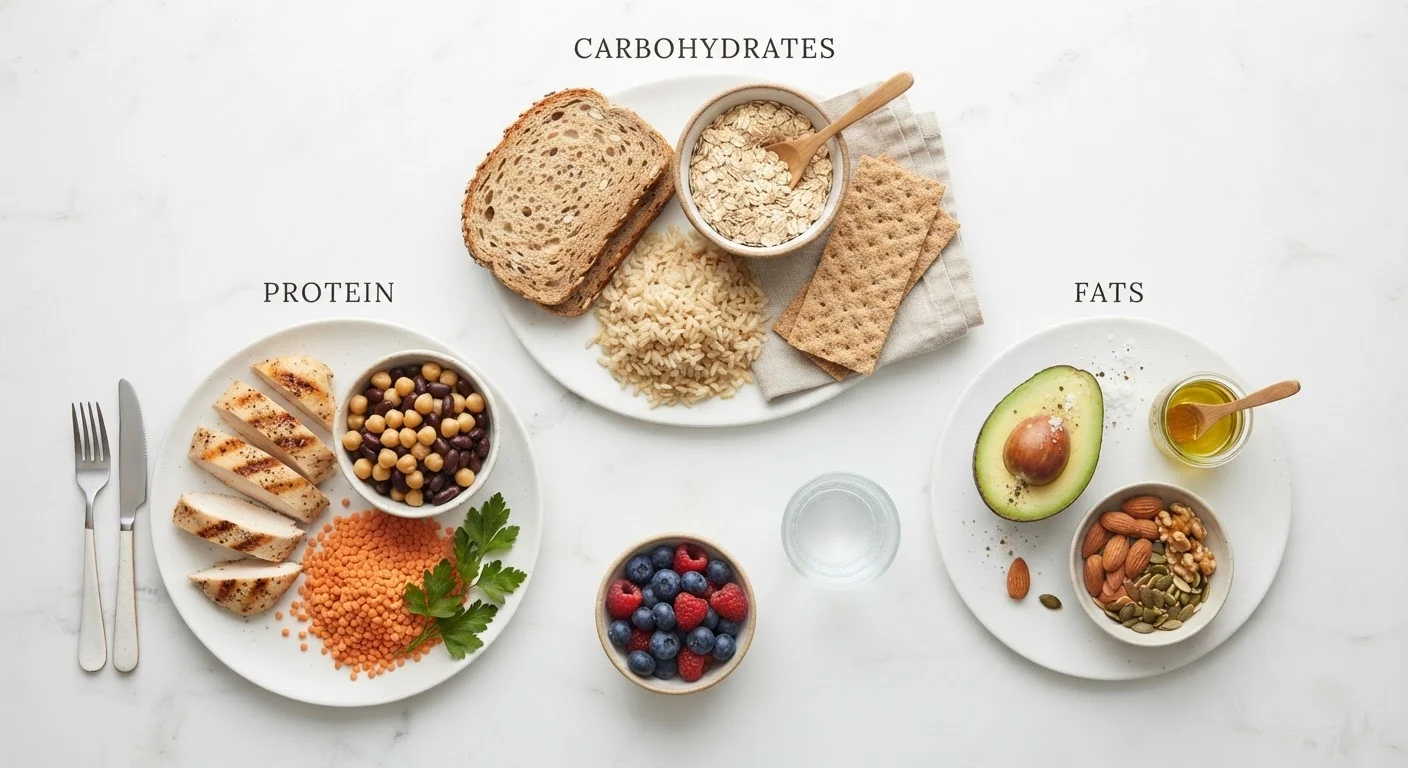
Why Macronutrients Are the Foundation of Your Diet
Every time you eat, your body sorts what it receives into usable components. The largest of these are the three macronutrients: carbohydrates, protein, and fat. Together, they supply nearly all of the energy your body runs on and support nearly every biological process — from keeping your heart beating to repairing a muscle after exercise.
Understanding macronutrients is a practical starting point for anyone trying to eat more intentionally. You don't need to count grams obsessively, but knowing what each one does helps you make more informed choices at every meal. For a broader look at how macronutrients fit alongside vitamins, minerals, and other nutrients, see The Six Essential Nutrient Groups and What Each One Does.
45–65%
Recommended share of daily calories from carbohydrates
According to the USDA Dietary Guidelines for Americans, carbohydrates should make up the largest portion of daily calorie intake for most healthy adults.
0.8 g/kg
Baseline daily protein recommendation for healthy adults
The National Academy of Medicine sets this as the Recommended Dietary Allowance (RDA) for protein per kilogram of body weight in healthy, sedentary adults.
20–35%
Recommended share of daily calories from fat
The USDA Dietary Guidelines recommend that healthy adults obtain between 20% and 35% of their daily calories from dietary fat, with emphasis on unsaturated sources.
Carbohydrates: Your Body's Preferred Fuel
Carbohydrates are the body's primary energy source. When you eat carbs — bread, rice, fruit, or vegetables — your digestive system breaks them down into glucose (a simple sugar), which enters the bloodstream and powers your cells, including your brain.
Not all carbohydrates behave the same way. Simple carbohydrates (like table sugar or white bread) digest quickly, producing rapid spikes in blood sugar. Complex carbohydrates (like oats, legumes, and whole grains) digest more slowly, providing steadier energy and often delivering fiber, which supports digestive health.
Fiber, technically a type of carbohydrate, is worth highlighting separately. It isn't broken down for energy but plays a vital role in gut health, cholesterol management, and keeping you feeling full. Most Americans fall short of the daily fiber recommendation, according to the USDA Dietary Guidelines.
The 'Low-Carb' Debate in Context
Low-carbohydrate diets have grown popular, and some people find them helpful for specific health goals. However, nutrition research shows that carbohydrate quality — choosing fiber-rich whole foods over refined sugars — matters more than the raw amount for most people. Very low-carb or ketogenic approaches are not appropriate for everyone and should be explored with a healthcare professional.
Protein: The Body's Builder and Repair Crew
Protein is made up of smaller units called amino acids — often described as the building blocks of life. Your body uses amino acids to build and repair muscle tissue, produce enzymes and hormones, support immune function, and carry oxygen through the blood via hemoglobin.
There are 20 amino acids in total. Nine are considered essential, meaning your body cannot make them on its own and must obtain them from food. Foods that contain all nine essential amino acids — such as meat, poultry, fish, eggs, and dairy — are called complete proteins. Many plant-based foods (beans, lentils, nuts) are incomplete on their own but can be combined across the day to meet your full amino acid needs.
For a practical breakdown of how protein functions specifically in men's nutrition, visit Protein, Carbohydrates, and Fat: A Practical Breakdown for Men.
Combining Plant Proteins Throughout the Day
You don't need to pair complementary plant proteins at every single meal. Research suggests that as long as you eat a variety of plant-based protein sources across the day — beans, lentils, tofu, whole grains, nuts — your body can meet its essential amino acid needs. Variety over time is what counts.
Fat: Essential, Not the Enemy
Dietary fat has a complicated reputation, but science is clear: fat is an essential macronutrient. It helps your body absorb fat-soluble vitamins (A, D, E, and K), supports brain development and function, insulates your organs, and plays a central role in hormone production.
Types of fat matter significantly. Unsaturated fats — found in olive oil, avocados, nuts, and fatty fish — are widely considered beneficial for heart health. Saturated fats — found in red meat and full-fat dairy — should be consumed in moderation according to most dietary guidelines. Trans fats, largely produced through industrial processing, are associated with cardiovascular risk and have been significantly restricted in the US food supply.
Understanding how carbs, fats, and protein each serve distinct roles is explored in more depth in Carbohydrates, Fats, and Protein: Understanding the Roles of Each Macronutrient.
Putting It All Together: Reading the Big Picture
No single macronutrient is more important than the others — they work as a team. A meal that combines all three (say, salmon with roasted sweet potato and olive oil) delivers sustained energy, structural support, and the fat needed to absorb the vitamins present in the food. Balance and variety across your overall diet matters more than optimizing any single meal.
If you want to understand how to spot macronutrients on a food label, Reading a Nutrition Label Through the Lens of Essential Nutrients offers practical guidance. And to understand how macronutrients compare to micronutrients — the vitamins and minerals your body needs in smaller amounts — see Macronutrients and Micronutrients: What the Difference Actually Means for Your Body.
This article is for general informational and educational purposes only and does not constitute medical or dietary advice. Speak with a qualified healthcare professional or registered dietitian before making significant changes to your diet, especially if you have an existing health condition.