
Why Bodyweight Training Works for Beginners
Building fitness does not require a gym. Bodyweight exercise - using your own body as resistance - is a well-established method for developing muscular endurance, strength, and cardiovascular fitness. For beginners, it offers a uniquely low-risk starting point: movements can be scaled to any fitness level, there is no equipment to learn or misuse, and sessions can happen at home, in a park, or even in a hotel room.
Research consistently shows that progressive bodyweight training produces meaningful strength and fitness gains in untrained individuals. The key word is progressive: the routine must become gradually more challenging over time for your body to continue adapting. That is what makes a structured approach - rather than random exercise - so important.
If you are curious about how bodyweight methods compare to using gym equipment, our bodyweight vs. gym machines comparison explores the trade-offs clearly. And if you eventually want to understand how weighted training fits into the picture, bodyweight vs. weighted exercise covers what changes and what stays the same.
Not a Substitute for Medical Advice
This guide provides general fitness information for healthy adults. If you have a pre-existing health condition, a recent injury, or any concerns about starting exercise, speak with a qualified healthcare professional before beginning any new workout programme. Special caution applies if you are pregnant, postpartum, elderly, or managing a chronic condition.
What You Need Before You Start
One of the biggest advantages of home bodyweight training is how little preparation it requires. Before your first session, gather the basics and set up a small clear space.
What you will need
Yoga or exercise mat
Provides cushioning for floor-based exercises like planks and push-ups.
Timer or interval app
Helps you track work and rest periods accurately during circuits.
Water bottle
Staying hydrated during exercise supports performance and recovery.
If you have never exercised regularly before, consider reading our guide on starting a balanced exercise routine from scratch for broader context on building a sustainable habit across different movement types.
Your Step-by-Step Home Workout Plan
Follow the steps below to set up and complete your first week of home training. Each session follows the same structure: schedule, warm-up, main circuit, cool-down, and tracking. Once this format feels comfortable - typically after two to three weeks - you can explore strength training fundamentals for beginners to understand how to continue progressing safely.
Choose your weekly schedule
Decide which three days each week you will train. Aim to spread sessions out - for example, Monday, Wednesday, and Friday - so you have at least one rest day between each workout. Consistency matters far more than perfection, so pick days that genuinely fit your life rather than an ideal schedule you cannot maintain.
Warm up for five minutes
Never skip the warm-up. Spend five minutes raising your heart rate and loosening your joints with low-effort movements: march in place, do arm circles, perform hip rotations, and complete a few slow bodyweight squats. A brief warm-up increases blood flow to your muscles and reduces the risk of strains.
Complete your main bodyweight circuit
Perform the following six exercises back-to-back as one circuit. Do each exercise for the stated number of repetitions (reps), then rest for 60-90 seconds before moving to the next. Complete two full rounds of the circuit.
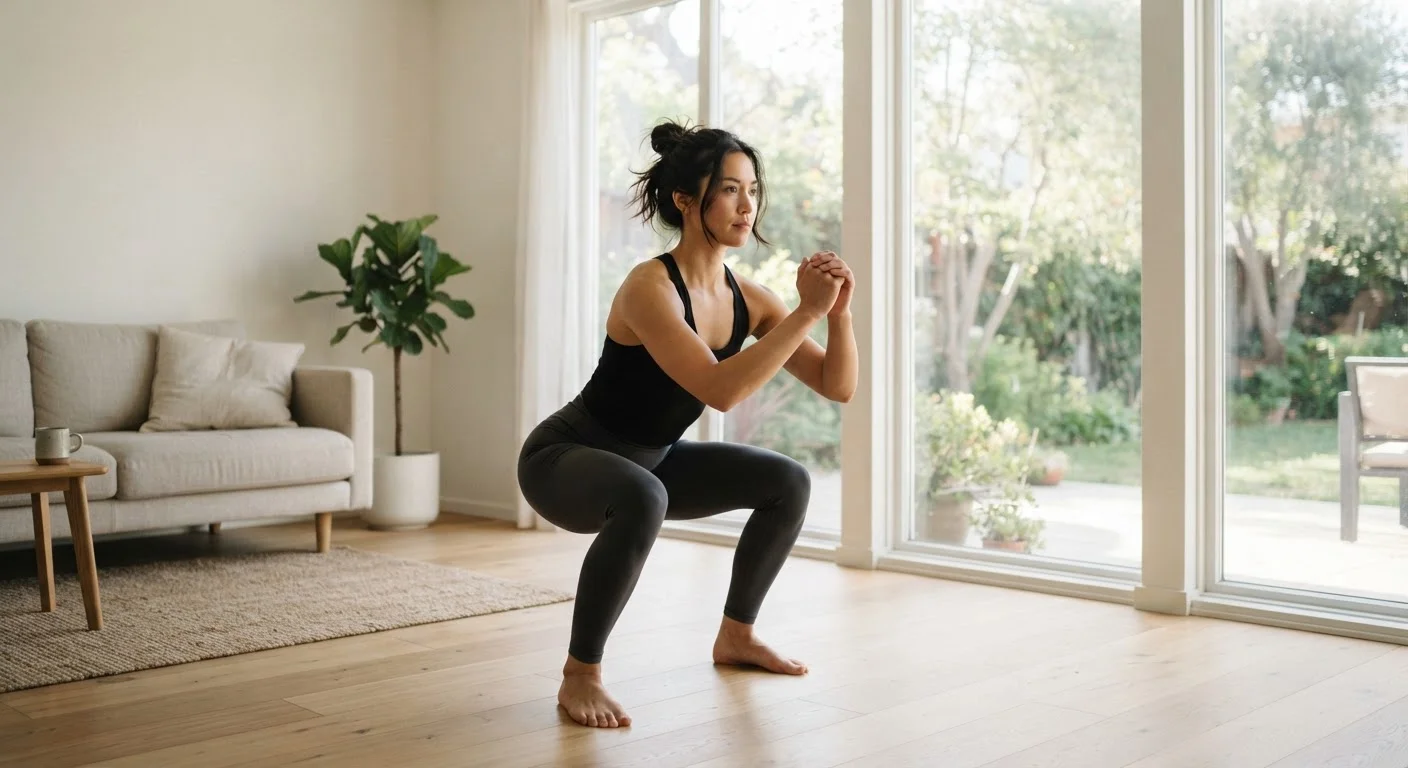
- Bodyweight squats - 12 reps. Stand hip-width apart, lower until thighs are parallel to the floor, then drive back up.
- Push-ups - 8-10 reps. Modify by dropping to your knees if a full push-up is not yet manageable.
- Glute bridges - 12 reps. Lie on your back, feet flat on the floor, and push your hips upward until your body forms a straight line from knees to shoulders.
- Reverse lunges - 8 reps each leg. Step backward and lower your back knee toward the floor, then return to standing.
- Plank hold - 20-30 seconds. Keep hips level and breathe steadily.
- Mountain climbers - 20 reps (10 each leg). From a plank position, drive each knee toward your chest in an alternating rhythm.
Cool down and stretch
After your final circuit round, spend five minutes cooling down. Walk slowly in place to bring your heart rate down, then hold each of the following stretches for 20-30 seconds: standing quad stretch, seated hamstring stretch, child's pose for the lower back, and a doorway chest stretch. Stretching after exercise, when muscles are warm, supports flexibility and can reduce next-day soreness.
Track your sessions and progress
After each workout, jot down what you completed - number of rounds, reps achieved, and how the session felt. A simple notebook or notes app works perfectly. Tracking helps you see genuine progress and signals when it is time to move to harder variations, such as full push-ups instead of knee push-ups, or adding a third circuit round.
Rest Days Are Part of the Programme
Muscle adaptation - getting stronger and more resilient - happens during recovery, not during the workout itself. On rest days, light movement like walking or gentle stretching is fine, but avoid repeating intense circuits. Honoring rest days is one of the most effective habits a beginner can build.
Common Mistakes to Avoid
Beginners often make a few predictable errors that slow progress or lead to unnecessary soreness.
Listen to Pain Signals
Muscle fatigue and mild post-exercise soreness are normal, particularly in the first few weeks. Sharp joint pain, however, is a signal to stop immediately and rest. If pain persists, consult a healthcare professional before continuing your routine.
- Skipping rest days: More is not always better. Overtraining leads to fatigue and increased injury risk, not faster results.
- Rushing through reps: Fast, sloppy repetitions reduce effectiveness and increase strain on joints. Slow down and feel the movement.
- Ignoring the warm-up: A five-minute warm-up takes little time but meaningfully reduces injury risk - treat it as part of the workout, not a formality.
- Comparing your progress to others: Individual results vary based on sleep, nutrition, stress, genetics, and starting fitness level. Focus on your own trajectory.
This article is for informational purposes only and does not constitute medical advice. Always consult a qualified healthcare professional before beginning a new exercise programme, particularly if you have any health conditions or concerns.